Plant-Based Milk Formulation: The Hydrocolloid, Emulsifier, and Protein Stack
Plant-based milks all fight the same physics. A plant base is an oil-in-water emulsion carrying suspended solids, and without help it does three ugly things. The fat creams to the top, the solids sediment to the bottom, and the drink tastes thin compared to dairy, which carries about 3.3 percent protein and 3.5 percent fat.
If you produce oat, almond, soy, or other plant milks, a good formula is a stack of three functions: emulsification, suspension, and body and protein. Here is the data, the mechanism, a worked formula, and the failure modes.
The stabilizer and protein data table
Typical use levels in a finished drinking plant milk. These are starting ranges to tune for your base and process.
| Ingredient | Function | Typical use | Note |
|---|---|---|---|
| Gellan Gum (low-acyl) | Suspension | 0.01 to 0.03% | Fluid-gel network, near-zero viscosity |
| Carrageenan (kappa) | Suspension, protein interaction | 0.01 to 0.04% | Best for chocolate and protein milks |
| Locust Bean Gum | Body, synergy | 0.02 to 0.05% | Pairs with carrageenan or xanthan |
| Sunflower / Soy Lecithin | Emulsification | 0.1 to 0.3% | Sunflower for allergen-free |
| Distilled Monoglyceride | Emulsification (barista) | 0.1 to 0.3% | Tighter emulsion, foam support |
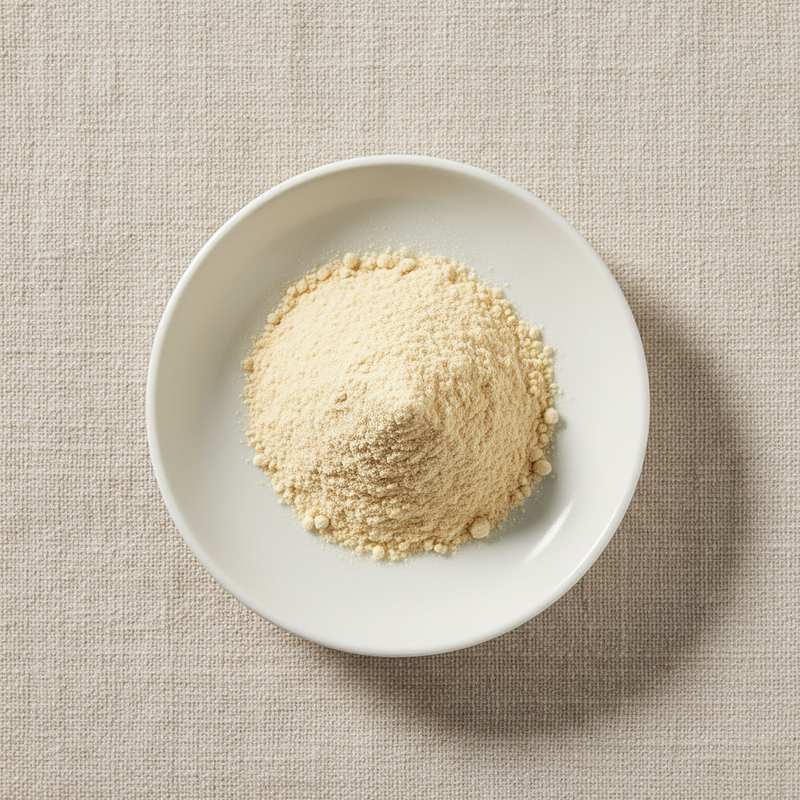
| Isolated Pea Protein | Protein, body, foam | 1 to 3% | Neutral-ish, complete profile |
| Dipotassium phosphate / Sodium Citrate | Buffer (barista) | 0.05 to 0.2% | Stops coffee feathering |
Mechanism: why each problem happens
Why fat creams and solids sediment. By Stokes' law, a particle's rise or fall speed scales with the density difference and the square of its radius, and inversely with the continuous-phase viscosity. Fat droplets are less dense than water and rise (creaming). Insoluble solids are denser and fall (sedimentation). You fight both by shrinking droplet size (homogenization), and by building a weak gel network that physically suspends particles.
Why gellan is the suspension star. Low-acyl gellan forms a weak, brittle fluid-gel: a tenuous three-dimensional network with a yield stress high enough to hold cocoa or calcium particles in place, but low enough that the drink still pours like milk and does not feel thick. That is why it works at 0.01 to 0.03 percent. The mechanism behind each gum is in pectin vs carrageenan vs gellan.
Why barista milk feathers (curdles) in coffee. Espresso is hot (around 90°C) and acidic (pH about 5). Plant proteins are least soluble near their isoelectric point (pea and soy around pH 4.5 to 5), so when the milk hits hot acidic coffee the protein passes through that zone, aggregates, and flecks. Raising the milk's pH with a phosphate or citrate buffer keeps the protein above its isoelectric point long enough to avoid the curdle. Solubility differences are detailed in whey vs soy vs pea protein.
A worked barista oat milk formula (per liter)
| Component | Amount | Role |
|---|---|---|
| Oat base (hydrolyzed) | to 1 L | flavor, mild sweetness |
| Added oil (rapeseed/sunflower) | 15 to 35 g | body, microfoam, mouthfeel |
| Isolated Pea Protein | 10 to 20 g | foam stability, protein |
| Sunflower Lecithin | 1 to 2 g | emulsification |
| Distilled Monoglyceride | 1 to 2 g | tighter emulsion, foam |
| Gellan Gum (low-acyl) | 0.1 to 0.2 g | suspension |
| Dipotassium phosphate | 0.5 to 1.5 g | anti-feathering buffer |
| Tricalcium Phosphate | 1 to 1.5 g | calcium fortification |
Process: blend, hydrate the gellan with heat, homogenize in two stages (for example 200 then 50 bar) to drive droplet size down, then UHT and aseptic fill.
Troubleshooting
| Problem | Likely cause | Fix |
|---|---|---|
| Sediment layer at the bottom | Insufficient suspension network | Raise gellan slightly, check hydration temperature |
| Cream or fat ring at the top | Droplet size too large | Improve homogenization pressure, raise emulsifier |
| Feathering or curdling in hot coffee | Protein at isoelectric point in acidic coffee | Add dipotassium phosphate or citrate buffer, raise milk pH |
| Poor or collapsing foam | Low protein or fat, weak emulsion | Raise protein and added oil, add monoglyceride |
| Chalky or dry mouthfeel | Mineral fortificant, low fat | Use finer Tricalcium Phosphate, raise fat, tune stabilizer |
| Too thick or slimy | Stabilizer overdose | Lower gum, shift toward gellan over xanthan |
Choose by what you produce
- If you produce a plain drinking oat or almond milk, gellan for suspension plus lecithin for emulsification is the core stack.
- If you produce a barista edition, add the phosphate or citrate buffer, more emulsifier, and protein for stable microfoam.
- If you produce a chocolate plant milk, carrageenan is the better choice for cocoa suspension and protein interaction.
- If your finished products are allergen-free, sunflower lecithin and pea protein avoid the soy and dairy allergens.
We supply the whole plant-milk stack, including Gellan Gum, Carrageenan, Locust Bean Gum, Sunflower Lecithin, Isolated Pea Protein, and the mineral fortificants, in bulk with documentation. Tell us your base, whether it is a barista format, and your protein target, and we will spec the stabilizer system and quote it.