Description
A carbohydrate bulking agent rather than a sweetener proper, with mild sweetness rising in proportion to dextrose equivalent (DE) value. Standard food-grade Maltodextrin runs DE 10 to 20, balancing functional bulk with low sweetness contribution.
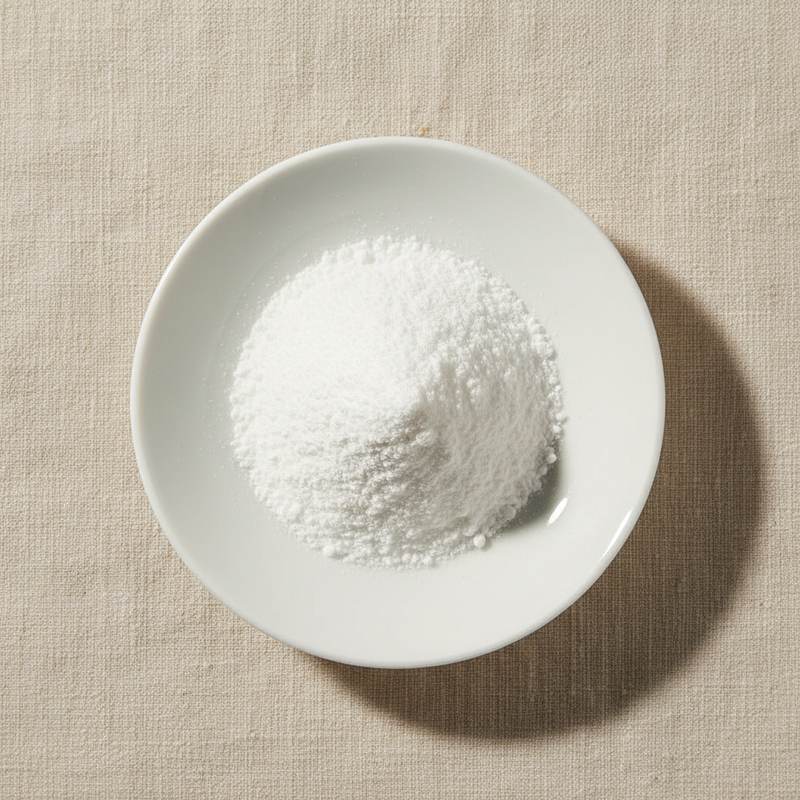
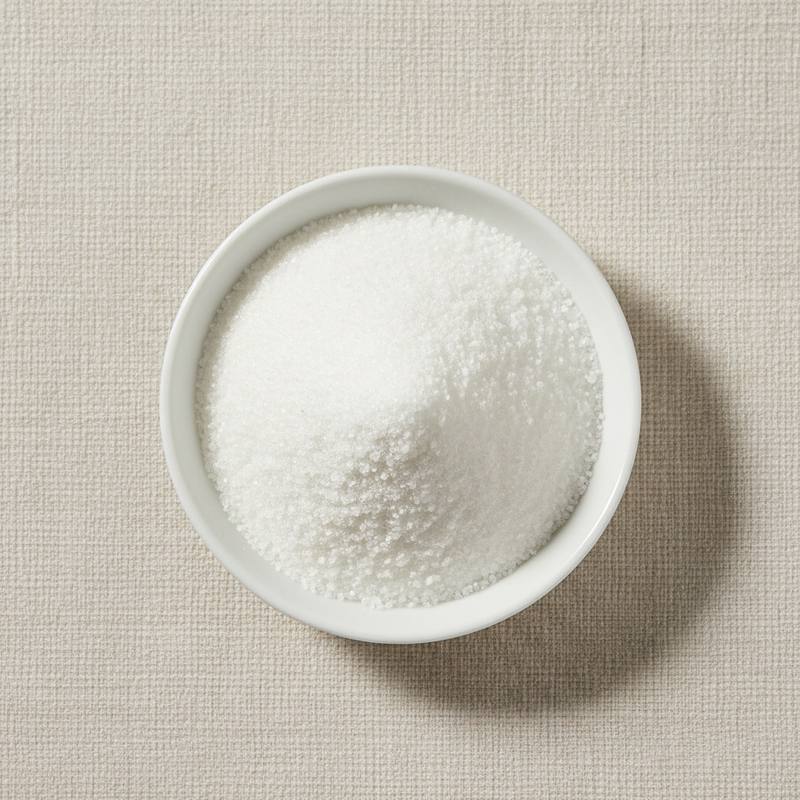
White to off-white free-flowing powder, freely soluble in water. Used as a carrier, bulking agent, and texture builder across food, beverage, supplement, and pharmaceutical formulations.
We supply food-grade Maltodextrin from manufacturers in China holding ISO, Halal, Kosher and other certifications relevant to the product and production. Non-GMO and organic-compliant grades are available on request.
Common market grades include DE 10, DE 15, and DE 18-20 standard food grades, plus DE 5 specialty for encapsulation, Brown Maltodextrin (caramelized), Resistant Maltodextrin for fiber claims, and Low-GI variants.
Bulk and reduced-MOQ shipments. Batch-level COA covering DE, moisture, ash, heavy metals, and microbiology.
Introduction
Maltodextrin is produced by partial enzymatic or acid hydrolysis of starch, most commonly from corn, but also from wheat, tapioca, rice, or potato depending on regional supply.
The dextrose equivalent (DE) value characterizes the degree of hydrolysis on a 0 to 100 scale, where 0 is intact starch and 100 is pure dextrose. Maltodextrin sits between DE 3 and DE 20 by definition; above DE 20 the product is classified as a glucose syrup solid.
Recognized as a permitted food ingredient by the U.S. FDA, the European Food Safety Authority, and equivalent regulatory bodies worldwide. No Acceptable Daily Intake is assigned, reflecting its status as a digestible food carbohydrate rather than an additive.
Caloric value is 4 kcal per gram, identical to other digestible carbohydrates. The glycemic index ranges from 85 to 105 depending on DE, making Maltodextrin one of the highest-glycemic ingredients in common food use, which is the basis for its dominant role in sports nutrition.
Selection across applications is driven by DE, source starch, and purity profile rather than by brand: lower DE grades for bulking and encapsulation, mid-DE for beverage carriers, and higher DE approaching 20 for sweetness contribution and rapid carbohydrate uptake.
Where it is used
- Carrier for high-intensity sweeteners, flavors, and colors in dry blends and beverage powders
- Powdered drink mixes, instant teas, sports drinks, and meal-replacement powders
- Coffee creamers, non-dairy creamer powders, and instant coffee blends
- Sauces, dressings, and condiments; provides body, viscosity, and gloss
- Confectionery and bakery fillings; controls moisture migration and supports texture
- Infant and clinical nutrition formulas; provides easily digestible carbohydrate energy
- Sports nutrition products including pre-workout and recovery powders; rapid carbohydrate availability
- Pharmaceutical tablet binders and granulation aids
- Frozen desserts including ice cream; controls ice-crystal formation and supports body
Technical data
| Item | Specification |
|---|---|
| Appearance | White to off-white powder |
| Dextrose Equivalent (DE) | 10 to 20 (customizable) |
| Moisture | ≤ 6.0% |
| pH (10% solution) | 4.0 to 7.0 |
| Sulphated ash | ≤ 0.6% |
| Heavy metals (as Pb) | ≤ 5 mg/kg |
| Arsenic | ≤ 1 mg/kg |
| Solubility | Freely soluble in water |
| Bulk density | 0.40 to 0.60 g/mL |
| Particle size | Per customer specification |
Related ingredients
Ready to discuss business?
Send us your spec and requirement. We will respond with availability and pricing within 24 hours.