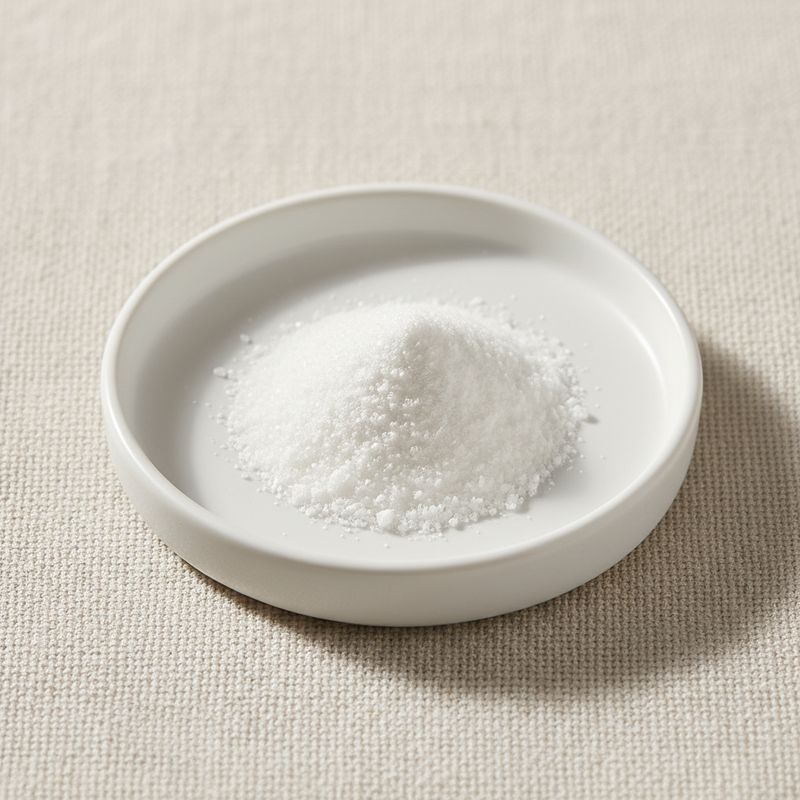
Description
A non-nutritive high-intensity sweetener. 600 times the sweetness of sucrose, with zero calories.
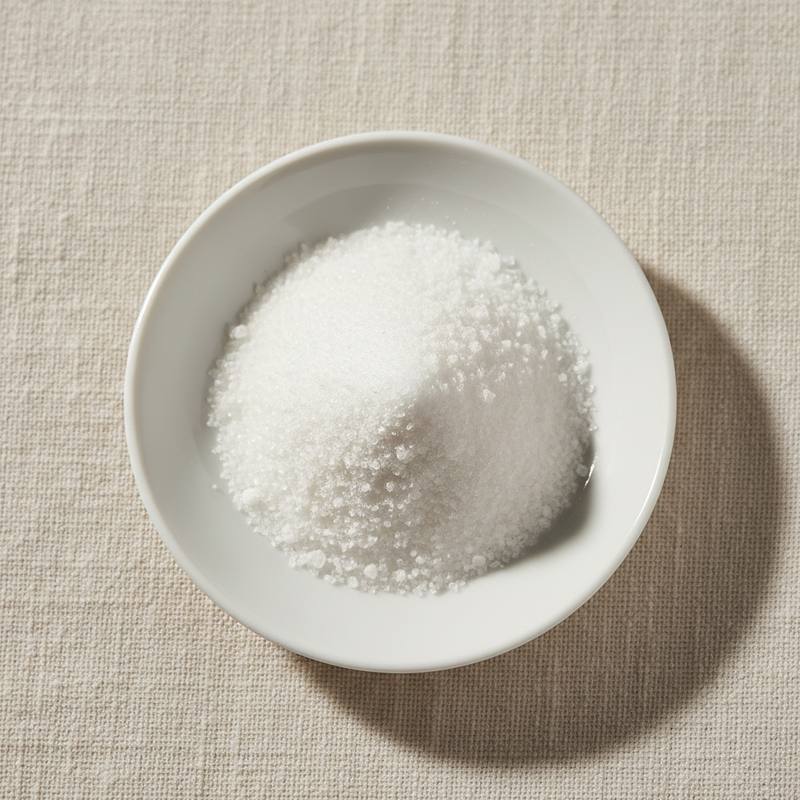
Manufactured by selective chlorination of sucrose. The resulting white to off-white crystalline powder is stable through baking, retort, UHT, and long shelf life at room temperature.
We supply food-grade Sucralose from manufacturers in China holding ISO, Halal, Kosher and other certifications relevant to the product and production.
Common market grades include standard 80-mesh fully passing (the workhorse food-grade format), micronized grades 100 to 200 mesh for tabletop blends and rapid-dissolution applications, and pre-blended Sucralose-with-bulking-agent systems produced to customer specification.
Bulk and reduced-MOQ shipments. Batch-level COA covering assay, specific rotation, residue on ignition, heavy metals, and microbiology.
Introduction
Sucralose was discovered in 1976 by researchers at Tate & Lyle and Queen Elizabeth College London.
It was approved for global food use beginning with Canada in 1991, the U.S. FDA in 1998, and the EU thereafter as E955. JECFA assigns an Acceptable Daily Intake of 15 mg per kg body weight.
The molecule is a tri-chlorinated disaccharide. Three hydroxyl groups on sucrose are replaced with chlorine atoms, producing a compound the body does not recognize as a metabolizable carbohydrate.
What separates Sucralose from earlier high-intensity sweeteners is a clean, sugar-like sweetness profile combined with exceptional stability. It tolerates pH 3 to 7, baking temperatures, retort sterilization, UHT processing, and multi-year storage at room temperature without measurable loss of sweetness.
Approximately 85 percent of an oral dose is excreted unchanged. In commercial practice it is often combined with Acesulfame K to achieve a sucrose-equivalent temporal profile, and with bulking agents that provide volume in dry mixes where high-intensity sweeteners alone leave the formulation underweight.
Where it is used
- Carbonated and still beverages, sports drinks, RTD teas, and flavored waters, dosed at 100 to 250 mg per liter
- Sugar-free baked goods including cookies, cakes, and breakfast cereals; survives oven and extrusion temperatures
- Tabletop sweetener formats: sachets, tablets, liquid drops; common companion to maltodextrin or erythritol bulking agents
- Sugar-free dairy: yogurt, flavored milk, ice cream, frozen desserts; pasteurization and UHT stable
- Sugar-free chewing gum, hard candies, lozenges, chocolate and confectionery coatings
- Pharmaceutical syrups, oral solutions, and chewable tablets; masks bitter actives without aftertaste
- Oral care: toothpaste, mouthwash, dental tablets, breath strips
- Dietary supplements, protein powders, ready-to-mix beverage powders, meal-replacement shakes
- Diabetic and clinical-nutrition formulas; non-glycemic, with no insulin response
- Sauces, dressings, jams, fruit preserves, and sugar-reduced preserves
Technical data
| Item | Specification |
|---|---|
| Appearance | White to off-white crystalline powder |
| Assay (dry basis) | 98.0% to 102.0% |
| Loss on drying | ≤ 2.0% |
| pH (10% solution) | 5.0 to 8.0 |
| Specific rotation | +84.0° to +87.5° |
| Heavy metals (as Pb) | ≤ 10 mg/kg |
| Arsenic | ≤ 3 mg/kg |
| Residue on ignition | ≤ 0.7% |
| Particle size | 100% pass 80 mesh, or per customer specification |
| Total plate count | ≤ 1000 cfu/g |
| Yeast and mold | ≤ 100 cfu/g |
Related ingredients
Ready to discuss business?
Send us your spec and requirement. We will respond with availability and pricing within 24 hours.