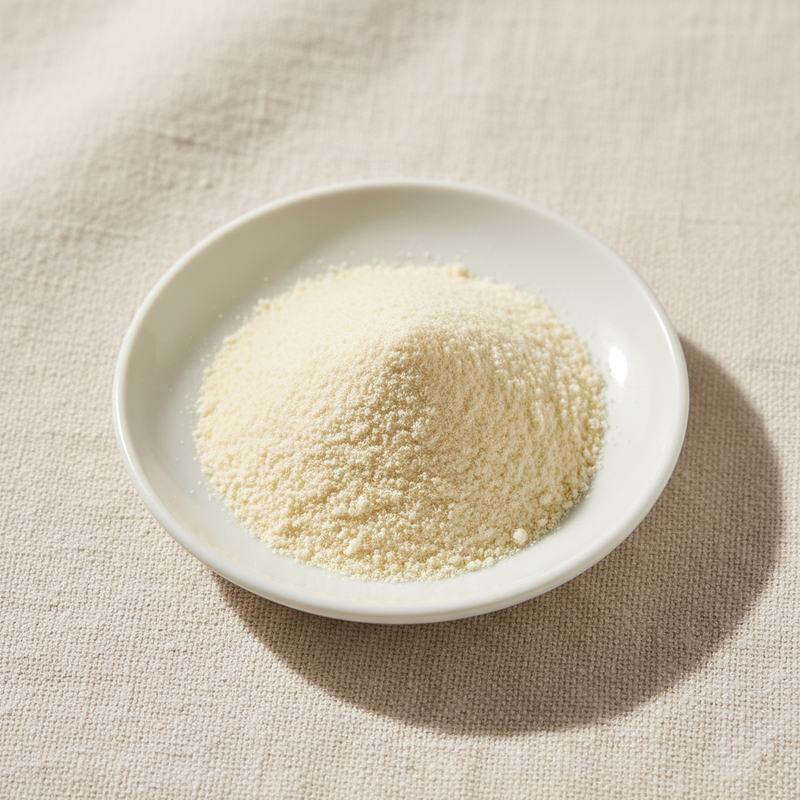
Halal & Kosher Gelatin: Bovine vs Porcine vs Fish, Bloom, and the Certification Reality
Gelatin is the single most-questioned ingredient in religious certification. The reason is simple. It is a pure animal protein with no plant equivalent, so its halal and kosher status is decided entirely upstream, by which animal it came from and how that animal was handled.
If you manufacture confectionery, supplements, dairy, or any product that carries a gelatin line, this guide covers what you actually have to specify: source and tissue, slaughter documentation, Type A versus Type B, bloom strength, the certifying bodies your market recognizes, and the reformulation route when certified gelatin is not available.
If you only need the texture-replacement angle, our companion guide on halal gelatin alternatives covers it. For the broader picture of dairy-derived proteins, see halal and kosher whey protein.
What gelatin is, and why "plant gelatin" does not exist
Gelatin is hydrolyzed collagen, extracted from skin, bone, and connective tissue. The two production routes give the two commercial types, and the distinction matters for both function and certification.
- Type A gelatin. Acid-processed, almost always from porcine skin. Isoelectric point around pH 7 to 9. The cheapest, highest-clarity, fast-setting commodity grade, and the one neither a halal nor a kosher producer can use.
- Type B gelatin. Alkali (lime)-processed, typically from bovine hide and bone. Isoelectric point around pH 4.7 to 5.2. The route where certification is conditionally possible.
- Fish gelatin. Acid-processed from fish skin and scales. The certification-friendly third stream, covered below.
Anything marketed as "plant gelatin," "vegetable gelatin," or "agar gelatin" is not gelatin. It is a different hydrocolloid, usually pectin, agar, carrageenan, or gellan, sold under gelatin's name. Treat that label as a flag to check what is actually in the bag.
Porcine gelatin: ruled out for both
Pig-derived gelatin, the dominant Type A stream, is haram under Islamic law and non-kosher under Jewish law without exception.
It is also the cheapest and most abundant grade on the global market, which is exactly why uncertified bulk gelatin is a real risk. The default commodity drum is the one neither buyer can use. Any "gelatin, food grade" with no source declaration should be assumed porcine until proven otherwise.
Bovine gelatin: the conditional case
Cattle are permitted animals in both traditions, so bovine gelatin can qualify. The conditions differ by religion and by tissue.
Halal: slaughter and the istihalah debate
For halal, the cattle must be slaughtered by zabiha (hand slaughter, throat cut, with the invocation), and the chain from abattoir to gelatin plant has to be documented.
Bone-derived gelatin adds a layer. Most authorities accept bovine bone gelatin on the basis of istihalah, the principle that demineralization and extraction is a substantial transformation that changes the substance. Stricter certifiers still require that the raw bone originate from halal-slaughtered animals. So "bovine bone gelatin" is not automatically halal. For the conservative bodies, the slaughter status of the source herd still governs.
Kosher: shechita and why kosher gelatin is scarce
For kosher, gelatin is one of the most debated ingredients in modern kashrut. The mainstream certifiers (OU, OK Kosher, Star-K, KOF-K) generally certify gelatin only from kosher-slaughtered (shechita) animals or from fish.
A separate, more lenient halachic position treats fully dried bone as having lost its food status, and therefore as not requiring kosher slaughter. Some certifiers historically relied on it. The major US agencies are conservative, and will not put their symbol on hide- or bone-derived bovine gelatin unless the animal was kosher-slaughtered.
In practice this makes genuinely kosher bovine gelatin scarce and expensive. That is why fish gelatin dominates the kosher gummy and capsule market.
Fish gelatin: the closest thing to a universal answer
Fish gelatin sidesteps most of the problem. Fish with fins and scales are kosher and require no ritual slaughter, so fish gelatin is the path of least resistance for kosher. It is also pareve, carrying no meat or dairy status, so it slots into both dairy and meat formulas. And it is widely accepted as halal.
The trade-offs are technical, not religious.
- Lower gelling and melting temperature. Cold-water fish gelatin gels well below mammalian gelatin. Depending on the product this is an advantage (faster melt, cleaner flavor release) or a liability (heat stability).
- Bloom ceiling. Some fish grades top out lower than the high-bloom bovine grades, though high-bloom fish gelatin is increasingly available.
- Allergen. Fish is a declarable allergen.
For many gummy, softgel, capsule, and dairy applications, fish gelatin is the right specification precisely because one material clears every certification at once.
Bloom and grade: the spec that decides what you order
Beyond source, the number that drives the purchase is bloom strength, the measure of gel rigidity. It is not a certification issue, but it has to be specified alongside source, or the wrong material arrives.
| Bloom range | Gel character | Typical use |
|---|---|---|
| Low, ~50 to 125 | Soft, elastic | Dairy, clinical nutrition, soft chews |
| Medium, ~125 to 200 | Standard set | Confectionery, marshmallow |
| High, ~200 to 300 | Firm, strong at low dose | Firm gummies, hard and soft capsules |
The two production types map to source and behavior as follows.
| Type | Process | Usual source | Isoelectric point |
|---|---|---|---|
| Type A | Acid | Porcine skin | ~pH 7 to 9 |
| Type B | Alkali (lime) | Bovine hide and bone | ~pH 4.7 to 5.2 |
| Fish | Acid | Fish skin and scales | varies, lower gel/melt temp |
Switching from porcine Type A to certified bovine Type B or fish gelatin means re-tuning dose and process. Bloom, isoelectric point, and gelling and melting temperature all shift, so a one-for-one swap by weight will usually miss the target texture.
Choose by what you produce, not just by "is it certified"
The right gelatin depends on the finished product and the market it serves.
- If you produce gummies or jellies for a Muslim-majority market (needing JAKIM or MUI recognition), specify zabiha-slaughtered bovine Type B with a recognized halal certificate, or fish gelatin. Confirm the certifier is cross-recognized by your market's authority.
- If you produce kosher-certified confectionery for the US, fish gelatin is almost always the practical answer. Kosher bovine gelatin exists but is scarce and priced accordingly. Confirm pareve status if it goes into a dairy or meat line.
- If you need one material that clears halal and kosher and is pareve, use fish gelatin.
- If you manufacture softgel or hard capsules for supplements, use high-bloom certified bovine or fish gelatin. If the certification chain cannot be documented, move to a non-gelatin shell such as HPMC or pullulan.
- If your finished products are vegan or plant-based, gelatin is out entirely. Go to the plant hydrocolloid route covered in our gelatin alternatives guide.
- If you cannot document the slaughter chain at acceptable cost, reformulate around pectin, agar, carrageenan, or gellan.
The certifiers that matter
A logo on a brochure is not a certificate. What counts is a current, dated certificate from a body your market recognizes.
- Halal: JAKIM (Malaysia), MUI or BPJPH (Indonesia), MUIS (Singapore), GSO or ESMA (Gulf), IFANCA (US), HFA or HMC (UK). Ask which authority recognizes the issuing body. A certificate from an unrecognized certifier is useless for your registration. Our halal sourcing guide explains how recognition chains work.
- Kosher: OU, OK, Star-K, KOF-K. A plain "K" is not a certification. Confirm the pareve designation. See how to read kosher symbols.
What to verify before you buy
- Species and tissue on the CoA: "bovine hide," "bovine bone," "porcine skin," or "fish skin." Never accept "gelatin, Type A/B" alone.
- Type and bloom: Type A or B, and the bloom value matched to your texture.
- The certificate, scoped to the plant and grade: current, dated, naming manufacturer and product.
- Slaughter documentation for bovine halal: zabiha confirmation up the chain, not just at the gelatin plant.
- Pareve status for kosher fish gelatin, and segregation from dairy and meat lines if it matters.
- Allergen statement, with the fish declaration where applicable.
If gelatin cannot clear your certification
When the slaughter chain cannot be documented, or kosher bovine gelatin is prohibitive, the practical step is to reformulate around a plant hydrocolloid.
Pectin covers chewy gummies and jellies. Agar gives firm, heat-stable gels. Carrageenan handles dairy and soft-gel textures. Gellan gives clarity and suspension.
The full mapping, with which one replaces gelatin in which texture role, is in our gelatin alternatives guide. For gummies specifically, see pectin versus gelatin in functional gummies.
We supply bovine and fish gelatin across the bloom range with manufacturer halal and kosher certificates, plus the full hydrocolloid range when a plant route is the cleaner answer. Send us the certification you need, your products and application, and the texture and bloom you are targeting, and we will quote the grade that clears it, with the documents attached.