Description
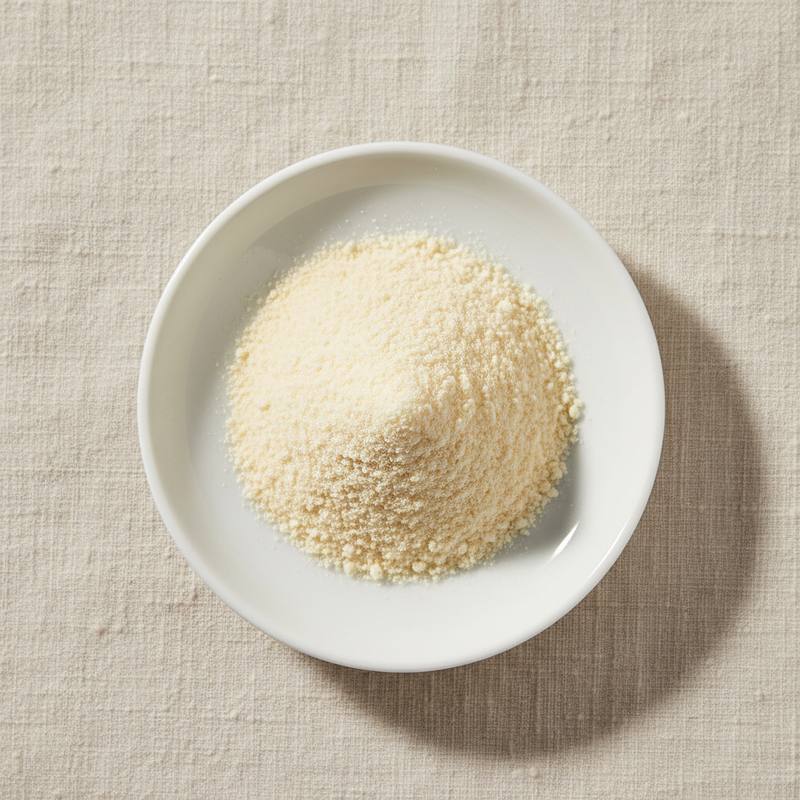
Fish Gelatin is gelatin produced from fish skin and scales of warm-water species (typically tilapia, pangasius, or other aquaculture fish), offering an alternative to bovine and porcine gelatin for Halal, Kosher (Pareve), and pescatarian consumer segments. Minimum 86 percent protein on a dry basis.
Protein content of 86 percent minimum (Kjeldahl, N x 5.55) with Bloom strength typically 180 to 250 for warm-water fish gelatin. Light yellow to off-white granules or powder. Cold-water fish gelatin has a lower melting point and is used for specific film-forming and microencapsulation applications.
The amino acid profile follows the collagen signature, with slightly lower hydroxyproline content than mammalian gelatin (which is the molecular basis of its slightly lower gel strength on a like-for-like Bloom basis).
We supply food-grade and pharmaceutical-grade Fish Gelatin from manufacturers in China holding ISO, HACCP, Halal, Kosher (Pareve), MSC sustainable sourcing, and other certifications relevant to the product and production. BSE-free by definition.
Common market grades include warm-water fish gelatin at 180 to 250 Bloom (the dominant food and supplement grade), cold-water fish gelatin (used for low-temperature applications and microencapsulation), pharmaceutical-grade for soft-gel and hard-shell capsules, and ultra-low-bloom fish gelatin for whipped applications. Bulk and reduced-MOQ shipments. Batch-level COA covering protein, Bloom strength, viscosity, ash, heavy metals (including mercury), and microbiology.
Introduction
Fish gelatin technology emerged commercially in the 1990s and 2000s, driven by demand from Muslim-majority markets, the BSE concerns of the late 1990s, and the rise of microencapsulation applications where the unique properties of cold-water fish gelatin are valuable.
Manufacturing begins with fish skin and scales, primarily by-products of fish-filleting operations in tilapia, pangasius, and Pacific whitefish aquaculture. The raw material is washed, demineralized, and pretreated with mild alkali or acid to swell the collagen. Controlled thermal extraction at lower temperatures than mammalian gelatin (to preserve gel strength) releases gelatin into solution, which is filtered, deionized, evaporated, sterilized, and dried.
Regulated as a permitted food ingredient by the U.S. FDA, regulated under EU food law, listed in major pharmacopoeias for pharmaceutical use, and Halal-certifiable when produced from clean fish sources in compliance with Halal manufacturing practice.
Functional positioning: fish gelatin has slightly lower Bloom strength on a comparable basis than mammalian gelatin due to lower hydroxyproline content, but warm-water fish gelatin from tilapia is close enough to mammalian properties to substitute directly in most applications. The unique low-melting-point behavior of cold-water fish gelatin is valued in specialty microencapsulation.
Strategic positioning: fish gelatin commands a price premium over bovine and porcine gelatin, justified by Halal and Kosher (Pareve) market access, marine and aquaculture sustainability narratives, and the absence of mammalian disease risks.
Where it is used
- Halal and Kosher confectionery: gummies, jellies, and marshmallows
- Halal and Kosher pharmaceutical soft-gel and hard-shell capsules
- Dairy desserts and yogurts for the Halal market
- Microencapsulation of fish oils, vitamins, and flavors
- Functional and beauty supplements where marine origin supports premium positioning
- Pescatarian and Buddhist-compliant gelatin applications
- Wine and juice clarification (fining agent)
- Edible films and coatings for fresh produce and confectionery
Technical data
| Item | Specification |
|---|---|
| Appearance | Light yellow to off-white granules or powder |
| Protein content (Kjeldahl, N x 5.55, dry basis) | ≥ 86.0% |
| Bloom strength | 180 to 250 (customizable) |
| Viscosity (6.67% at 60 °C) | 2.5 to 4.5 mPa·s |
| Moisture | ≤ 14.0% |
| Ash | ≤ 2.0% |
| pH (1% solution) | 5.0 to 7.0 |
| Particle size | 20 or 30 mesh, or per customer specification |
| Lead (Pb) | ≤ 1.5 mg/kg |
| Arsenic (As) | ≤ 0.8 mg/kg |
| Mercury (Hg) | ≤ 0.1 mg/kg |
| Total plate count | ≤ 1,000 CFU/g |
| Salmonella | Absent in 25 g |
| Allergen statement | Contains fish. |
| Source | Tilapia or other warm-water aquaculture fish skin and scales |
Related ingredients
Ready to discuss business?
Send us your spec and requirement. We will respond with availability and pricing within 24 hours.