Description
A family of sodium phosphate salts used as emulsifying salts in processed cheese and protein-based food systems. Includes monosodium phosphate, disodium phosphate, and trisodium phosphate, supplied individually or as blended emulsifying salt mixtures.
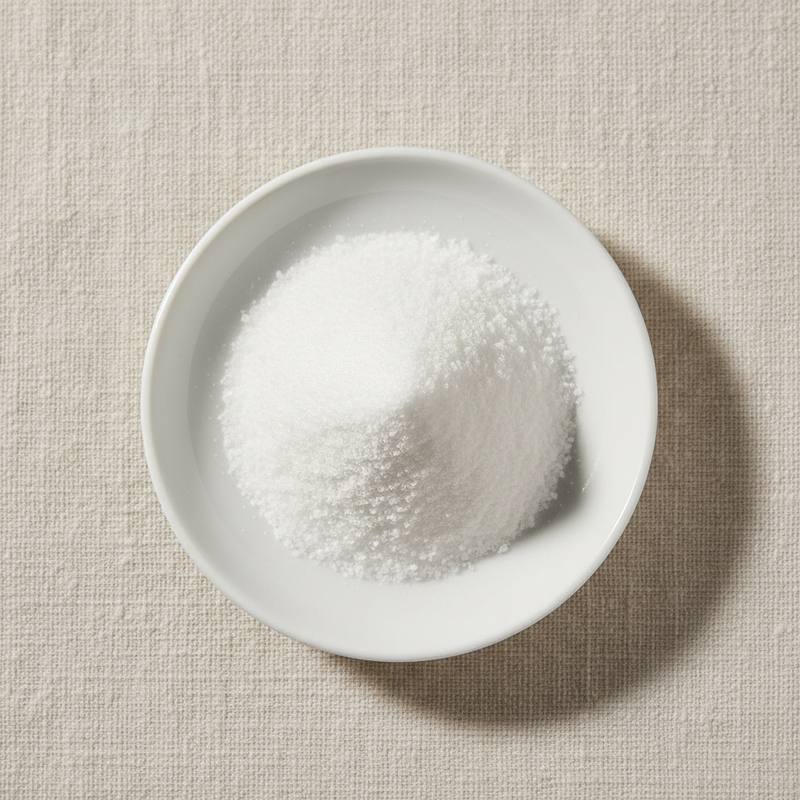
White crystalline powder or granular crystals. Highly water-soluble. Functions by sequestering calcium ions bound to casein, allowing the casein network to rearrange around fat globules and water for a smooth, stable melt.
We supply food-grade Sodium Phosphate Emulsifying Salts from manufacturers in China holding ISO, Halal, Kosher and other certifications relevant to the product and production.
Common market grades include Monosodium Phosphate (MSP, E339i), Disodium Phosphate (DSP, E339ii), and Trisodium Phosphate (TSP, E339iii), each available as anhydrous or hydrated forms. Blended emulsifying salts combining sodium phosphates with sodium citrate and polyphosphates are widely used by processed-cheese manufacturers.
Bulk and reduced-MOQ shipments. Batch-level COA covering assay, pH, heavy metals, fluoride, and microbiology.
Introduction
The use of sodium phosphates as emulsifying salts in processed cheese was pioneered by Swiss inventor Walter Gerber in 1911 and developed at industrial scale by James Kraft in the United States during the 1910s and 1920s. The technology made shelf-stable processed cheese possible and remains the foundation of the modern processed-cheese industry.
Production of sodium phosphate salts proceeds by neutralization of phosphoric acid with sodium hydroxide or sodium carbonate, with the ratio of sodium to phosphate determining the final salt. Crystallization yields the anhydrous, monohydrate, dodecahydrate, or other defined hydrate forms.
Regulated as E339 in the EU with sub-codes for each salt, classified as Generally Recognized as Safe by the U.S. FDA, and approved by JECFA with combined-phosphate Acceptable Daily Intake of 70 mg per kg body weight expressed as phosphorus.
The mechanism in processed cheese is sequestration: emulsifying salts strip calcium from casein, freeing the protein to reorganize during melting around fat globules and water in a smooth, sliceable matrix that does not separate on reheating.
Where it is used
- Processed cheese, cheese slices, and cheese spreads; the principal emulsifying salt application
- Imitation cheese and analog dairy products
- Protein-based meal-replacement powders and protein drinks; sequesters calcium for clean dispersion
- Evaporated milk and condensed milk; stabilizes protein during heat processing
- Sausages and processed meats; pH and water-binding control in cooked emulsions
- Bakery leavening systems; MSP and DSP function as acid leavening components
- Pet food processed cheese analogs
- Buffering agent in beverages and sports drinks
Technical data
| Item | Specification |
|---|---|
| Appearance | White crystalline powder or granular crystals |
| Assay (as Na phosphate, dry basis) | ≥ 98.0% |
| pH (1% solution) | 4.1 to 12.0 depending on grade |
| Loss on drying or ignition | Per grade specification |
| Water-insoluble matter | ≤ 0.2% |
| Fluoride | ≤ 10 mg/kg |
| Heavy metals (as Pb) | ≤ 4 mg/kg |
| Arsenic | ≤ 3 mg/kg |
| Particle size | Per customer specification |
Related ingredients



Ready to discuss business?
Send us your spec and requirement. We will respond with availability and pricing within 24 hours.