Description
Diacetyl Tartaric Acid Esters of Mono- and Diglycerides, the dominant dough strengthener in industrial bread, buns, and viennoiserie production. Produced by esterification of mono- and diglycerides with diacetyl tartaric anhydride.
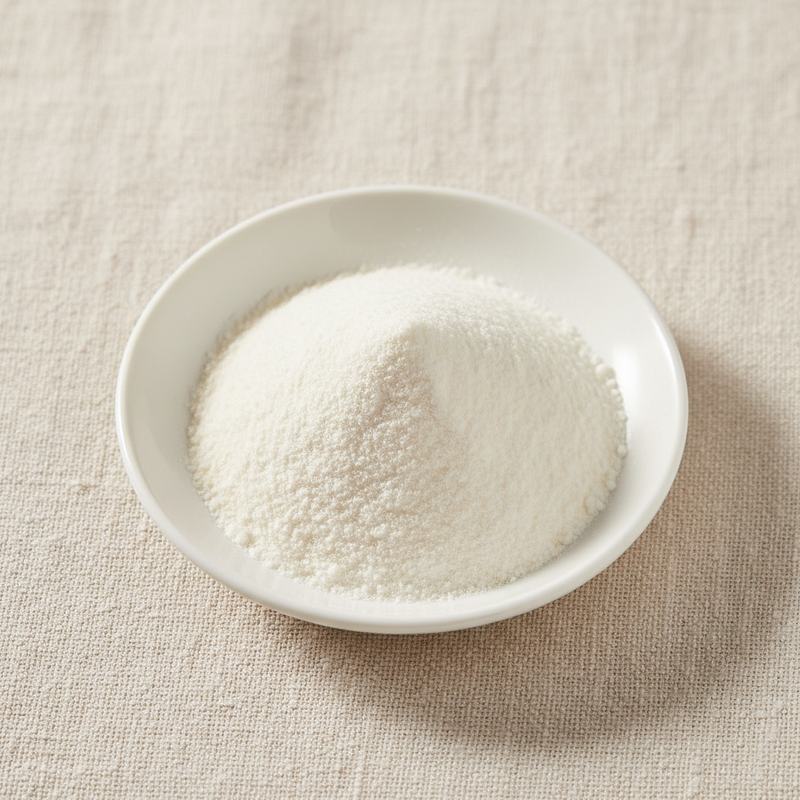
Off-white to pale yellow waxy solid supplied as powder, granules, or flakes. Hygroscopic; requires sealed storage and dry handling.
We supply food-grade DATEM from manufacturers in China holding ISO, Halal, Kosher and other certifications relevant to the product and production.
Common market grades include standard powder for direct dough addition, granulated forms for premix blending, and shortening-carried DATEM for plastic dough-conditioner systems.
Bulk and reduced-MOQ shipments. Batch-level COA covering acid value, saponification value, total tartaric acid, free fatty acids, and microbiology.
Introduction
DATEM was developed in Europe during the 1960s as part of the second generation of synthetic emulsifiers engineered from mono- and diglyceride backbones to deliver specific performance characteristics not achievable with the parent compound.
Production esterifies mono- and diglycerides with diacetyl tartaric anhydride at controlled temperature, yielding a complex mixture of mono-, di-, and triesters carrying acetylated tartaric acid groups. The acidic and ester functionalities together produce the dough-strengthening response.
Regulated as E472e in the EU, classified as Generally Recognized as Safe by the U.S. FDA, and approved by JECFA with an Acceptable Daily Intake of 50 mg per kg body weight.
The functional mechanism in dough involves interaction with gluten proteins, reinforcing the gas-retention network during fermentation and oven spring. The result is higher loaf volume, more uniform crumb structure, and longer slicing shelf life. No other emulsifier replaces DATEM at equivalent dosage in industrial bread manufacturing.
Strategic positioning is industrial: DATEM is rarely seen in clean-label or short-ingredient formulations, but it remains the workhorse of large-scale wholesale bread, foodservice buns, and frozen bakery, where its volume and slicing performance support the economics of high-throughput production.
Where it is used
- Industrial bread, buns, and rolls; primary dough strengthener that improves gluten network, gas retention, volume, and crumb structure
- Hamburger buns, hot dog buns, and pan breads where volume and slicing performance are critical
- Pizza dough, tortillas, flatbreads, and laminated viennoiserie
- Frozen dough and par-baked products; protects gluten structure through freeze-thaw and proofing cycles
- Whole-grain and high-fiber bread; compensates for gluten dilution by bran and seed inclusions
- Steamed breads and Asian bun applications
- Powdered bakery premixes and dough-conditioner blends
- Whipped toppings and aerosol cream as a secondary emulsifier in combination systems
Technical data
| Item | Specification |
|---|---|
| Appearance | Off-white to pale yellow powder, granules, or flakes |
| Acid value | 62 to 76 mg KOH/g |
| Saponification value | 380 to 425 mg KOH/g |
| Total tartaric acid | 10.0% to 40.0% |
| Free fatty acids | Report |
| Melting point | 43 °C to 55 °C |
| Heavy metals (as Pb) | ≤ 5 mg/kg |
| Arsenic | ≤ 2 mg/kg |
| Total plate count | ≤ 1,000 CFU/g |
| Form | Powder, granules, or flakes per customer specification |
Related ingredients




Ready to discuss business?
Send us your spec and requirement. We will respond with availability and pricing within 24 hours.