Description
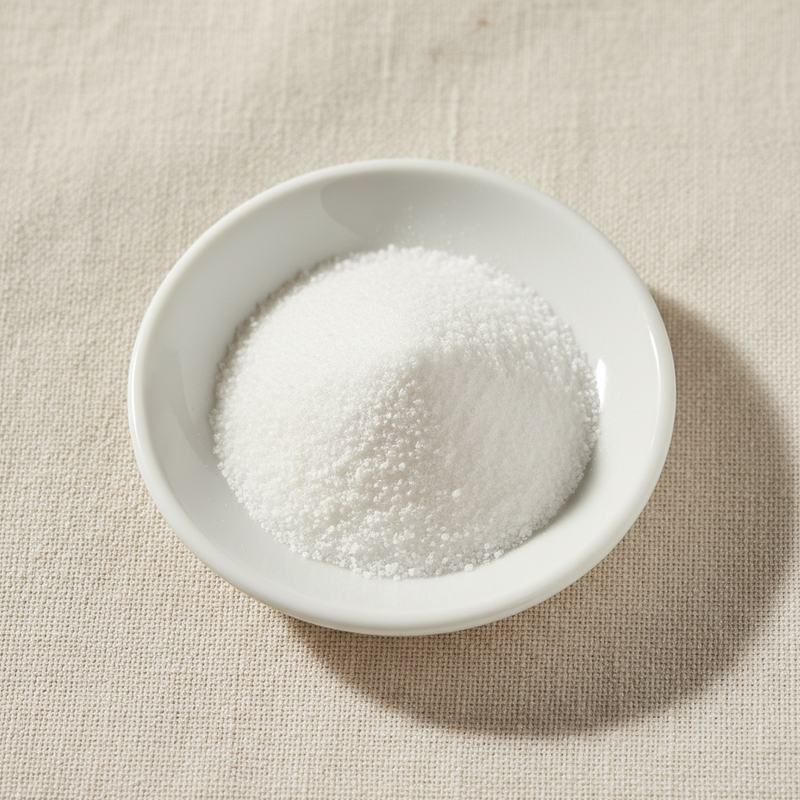
A disaccharide sugar alcohol derived from sucrose, with approximately 50 percent the sweetness of sucrose and roughly half the caloric value at 2 kcal per gram.
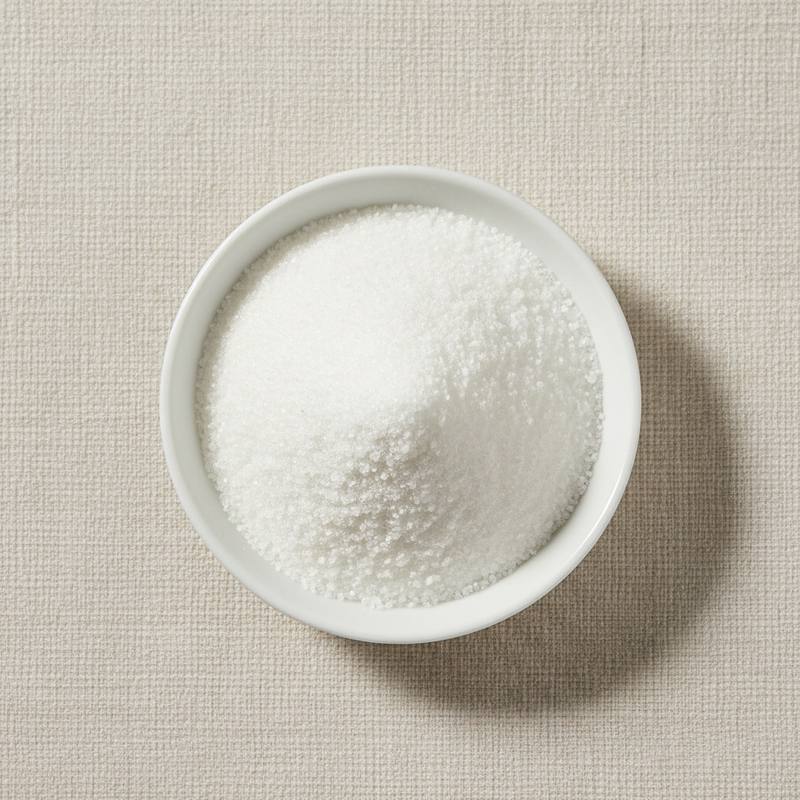
White to slightly yellowish crystalline granules. Low hygroscopicity makes Isomalt the preferred sugar alcohol for hard-boiled candy, sugar pulling, and decorative sugar work where moisture pickup would compromise the finished product.
We supply food-grade and pharmaceutical-grade Isomalt from manufacturers in China holding ISO, Halal, Kosher and other certifications relevant to the product and production.
Common market grades include Granular GS for hard-boiled candy and pulled-sugar work, Powder ST for tableting and pharmaceutical use, and Type M specialty granulation for chocolate panning and dragee coating.
Bulk and reduced-MOQ shipments. Batch-level COA covering purity, reducing sugars, D-mannitol content, heavy metals, and microbiology.
Introduction
Isomalt was developed by the German company Südzucker in the 1960s as a non-cariogenic alternative to sucrose, derived from the same raw material through enzymatic and chemical conversion.
Production starts from sucrose: the disaccharide is enzymatically rearranged to isomaltulose using Protaminobacter rubrum, then catalytically hydrogenated to yield Isomalt, an equimolar mixture of two disaccharide alcohols, gluco-mannitol and gluco-sorbitol.
Regulated as E953 in the EU, classified as Generally Recognized as Safe by the U.S. FDA, and approved by JECFA without a numerical Acceptable Daily Intake limit.
Isomalt is metabolized only partially in the small intestine, with the remainder fermented in the colon. This produces lower glycemic and insulin responses than sucrose and contributes approximately half the calories.
The compound's defining technical property is its very low hygroscopicity, which makes it the only practical option for shelf-stable sugar-free hard candies in humid markets. It is also the preferred medium for professional pulled-sugar work in pastry arts.
Where it is used
- Sugar-free hard-boiled candies, lollipops, and pulled-sugar decorative work; the industry standard for non-cariogenic clear candy
- Sugar-free chocolate and chocolate-coated confections; clean melt and stable shine in tempering
- Sugar-free chewing gum coatings and panned confectionery
- Sugar-free baked goods, cookies, and breakfast cereals; provides bulk, browning, and texture similar to sucrose
- Diabetic-friendly chocolates and confectionery; glycemic index of approximately 9 versus 65 for sucrose
- Pharmaceutical chewable tablets and lozenges; non-cariogenic and tolerated long-term
- Decorative sugar work, isomalt sculptures, and pastry showpieces in fine dining
- Sugar-free dairy applications including ice cream and frozen desserts
Technical data
| Item | Specification |
|---|---|
| Appearance | White to slightly yellowish crystalline granules |
| Assay (dry basis) | ≥ 98.0% |
| Moisture | ≤ 7.0% |
| pH (10% solution) | 3.5 to 6.0 |
| Melting range | 145 °C to 150 °C |
| Heavy metals (as Pb) | ≤ 5 mg/kg |
| Arsenic | ≤ 2 mg/kg |
| Reducing sugars | ≤ 0.3% |
| D-Mannitol content | ≤ 3.0% |
| Particle size | Per customer specification |
Related ingredients
Ready to discuss business?
Send us your spec and requirement. We will respond with availability and pricing within 24 hours.