Description
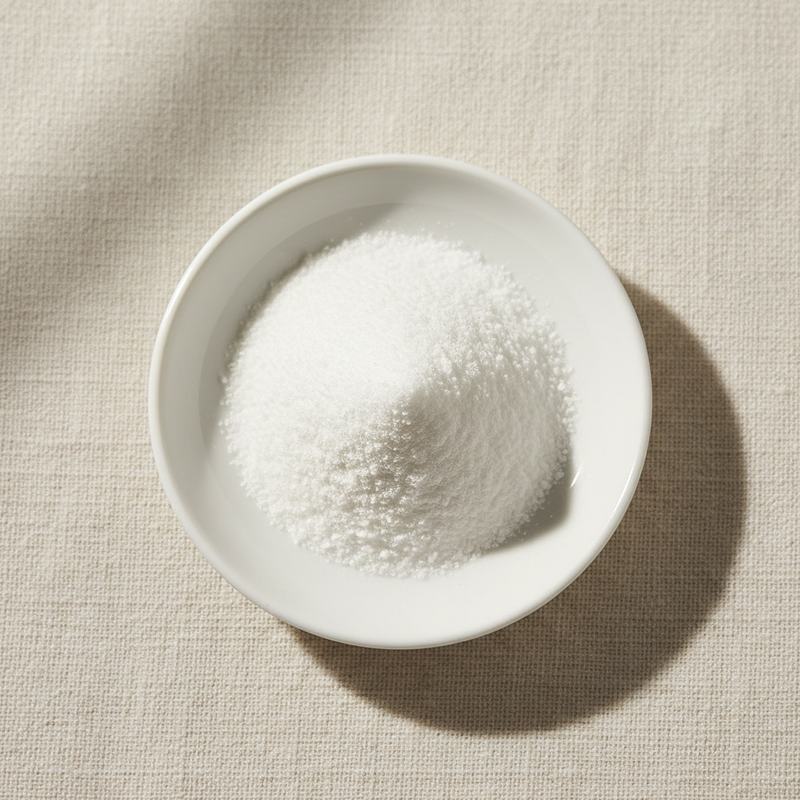
A six-carbon sugar alcohol with approximately 50 percent the sweetness of sucrose and a clean, slightly cooling taste. Used primarily as a pharmaceutical excipient and for specialty food applications.
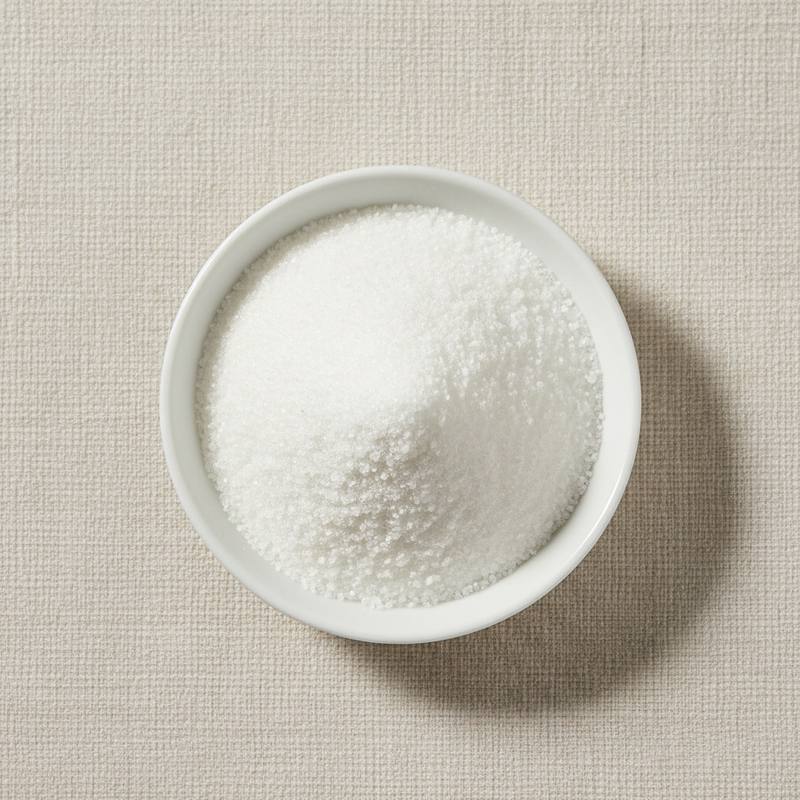
White crystalline powder or granules. Notable for the highest melting point among common polyols at 164 to 169 °C, low hygroscopicity, and excellent flow properties for direct compression tableting.
We supply food-grade and pharmaceutical-grade Mannitol from manufacturers in China holding ISO, Halal, Kosher and other certifications relevant to the product and production.
Common market grades include Standard Granular for food use, Direct-Compression (DC) grade for tableting, USP/EP/JP/BP Pharmaceutical Grade, and fine-powder spray-dried grades for inhalation and specialty pharmaceutical applications.
Bulk and reduced-MOQ shipments. Batch-level COA covering purity, reducing sugars, sorbitol content, heavy metals, and microbiology.
Introduction
Mannitol was first isolated by Joseph Louis Proust from manna ash exudate in 1806, the source of its name. It occurs naturally in mushrooms, seaweeds, and many plants.
Modern industrial production proceeds by catalytic hydrogenation of fructose syrups, producing mannitol and sorbitol as co-products in a defined ratio. Selective crystallization separates the two, yielding food-grade and pharmaceutical-grade material.
Regulated as E421 in the EU, classified as Generally Recognized as Safe by the U.S. FDA, listed in pharmacopoeias including USP, EP, JP, and BP, and approved by JECFA without a numerical Acceptable Daily Intake limit.
Mannitol's caloric value is 1.6 kcal per gram and its glycemic index is essentially zero. Unlike most polyols, the compound is poorly absorbed in the intestine and largely excreted unchanged, which underpins its clinical use as an osmotic diuretic.
In food and pharmaceutical applications the dominant value proposition is functional rather than caloric: low hygroscopicity, high melting point, neutral taste, and exceptional direct-compression behavior make Mannitol an ingredient chosen as much for what it does as for what it adds.
Where it is used
- Pharmaceutical chewable tablets and direct-compression tablets; one of the most widely used excipients due to flow, taste, and stability profile
- Pharmaceutical injectable osmotic agents; clinical use as an osmotic diuretic and intracranial pressure reducer
- Sugar-free chewing gum, hard candies, and lozenges; provides cool, dry taste profile
- Sugar dusting on chewing gum and confectionery to prevent sticking; non-hygroscopic
- Diabetic and low-calorie confectionery; glycemic index of zero
- Powdered drink mixes and instant beverage powders; controls flow and prevents caking
- Sugar-free baked goods including cookies and biscuits
- Carrier and bulking agent for high-intensity sweeteners and flavor systems
- Coating for medical and pharmaceutical capsules
Technical data
| Item | Specification |
|---|---|
| Appearance | White crystalline powder or granules |
| Assay (dry basis) | ≥ 98.0% |
| Loss on drying | ≤ 0.5% |
| pH (10% solution) | 5.0 to 8.0 |
| Melting point | 164 °C to 169 °C |
| Heavy metals (as Pb) | ≤ 5 mg/kg |
| Arsenic | ≤ 2 mg/kg |
| Reducing sugars | ≤ 0.3% |
| Sorbitol | ≤ 2.0% |
| Particle size | Per customer specification |
Related ingredients
Ready to discuss business?
Send us your spec and requirement. We will respond with availability and pricing within 24 hours.