Description
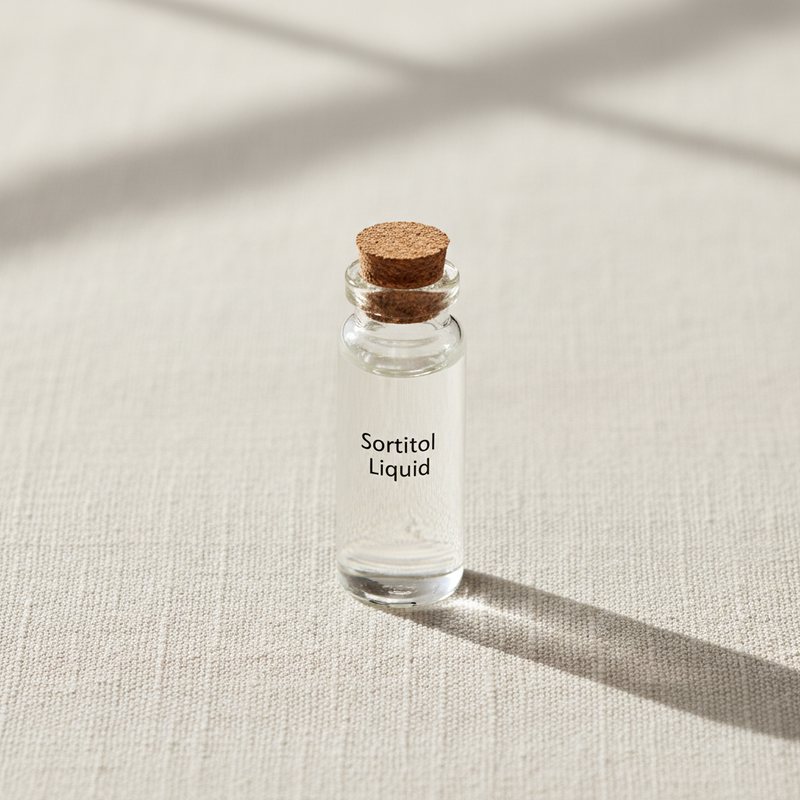
The 70 percent aqueous solution of Sorbitol, the dominant commercial format for industrial use. Sweetness is approximately 60 percent of sucrose with a soft, cooling taste and strong humectant properties.
Clear, colorless, viscous liquid. The default Sorbitol form for toothpaste, oral care, and industrial humectant applications because it ships, stores, and meters cleanly without re-dissolution.
We supply food-grade and pharmaceutical-grade Sorbitol Liquid from manufacturers in China holding ISO, Halal, Kosher and other certifications relevant to the product and production.
Common market grades include Standard 70 percent Solution (the toothpaste industry workhorse), Non-Crystallizing 70 percent Solution (modified glucose-syrup blend that resists crystallization in cool storage), USP/EP Pharmaceutical Grade, and Sorbitol-Glycerol Solutions for cosmetic applications.
Bulk shipments in tankers, IBC totes, and drums. Batch-level COA covering Sorbitol content, total solids, refractive index, reducing sugars, nickel, and microbiology.
Introduction
Sorbitol Liquid is produced by catalytic hydrogenation of glucose syrup followed by adjustment to a defined 70 percent total-solids concentration. Most commercial Sorbitol moves between manufacturers and finished-product makers in liquid form rather than as crystalline solid.
Regulated as E420 in the EU, classified as Generally Recognized as Safe by the U.S. FDA, listed in USP, EP, JP, and BP pharmacopoeias, and approved by JECFA without a numerical Acceptable Daily Intake limit.
The 70 percent solution is preferred over crystalline Sorbitol because it can be metered directly into batch reactors and toothpaste mixers, avoids dust handling, eliminates dissolution time, and stays liquid down to approximately minus 5 °C without crystallizing. Specialty non-crystallizing grades extend stability to colder storage temperatures.
Caloric value is approximately 2.6 kcal per gram on a dry-weight basis. The compound is metabolized through an insulin-independent pathway with a glycemic index near 9, supporting use in diabetic and reduced-sugar formulations.
In toothpaste specifically, Sorbitol Liquid serves three functions simultaneously: it sweetens the formulation, it acts as a humectant that prevents the paste from drying out, and it provides the polyol bulk that gives modern toothpaste its characteristic body. No other ingredient matches all three roles at the same cost point.
Where it is used
- Toothpaste, mouthwash, and oral care products; the dominant humectant and sweetener in modern toothpaste manufacturing globally
- Pharmaceutical syrups and oral solutions; non-cariogenic vehicle for active ingredients
- Cosmetics and personal care: skin creams, lotions, hand soaps, shaving foams; humectant and texturizer
- Sugar-free chewing gum and confectionery; provides bulk and shelf-life softness
- Sugar-free baked goods and bakery glazes; humectant action prevents drying
- Sugar-free jams, jellies, fruit preserves, and dessert toppings
- Diabetic confectionery and dietary syrups
- Industrial humectant in tobacco, leather, and adhesive applications
- Vitamin C industrial synthesis as a fermentation feedstock
- Surfactant and polyol-ester precursor in chemical manufacturing
Technical data
| Item | Specification |
|---|---|
| Appearance | Clear, colorless, viscous liquid |
| Sorbitol content (dry basis) | ≥ 69.0% |
| Total solids | 68.0% to 72.0% |
| pH | 4.5 to 7.0 |
| Refractive index (20 °C) | 1.455 to 1.465 |
| Heavy metals (as Pb) | ≤ 5 mg/kg |
| Arsenic | ≤ 2 mg/kg |
| Reducing sugars | ≤ 0.2% |
| Nickel | ≤ 2 mg/kg |
Related ingredients
Ready to discuss business?
Send us your spec and requirement. We will respond with availability and pricing within 24 hours.