Description
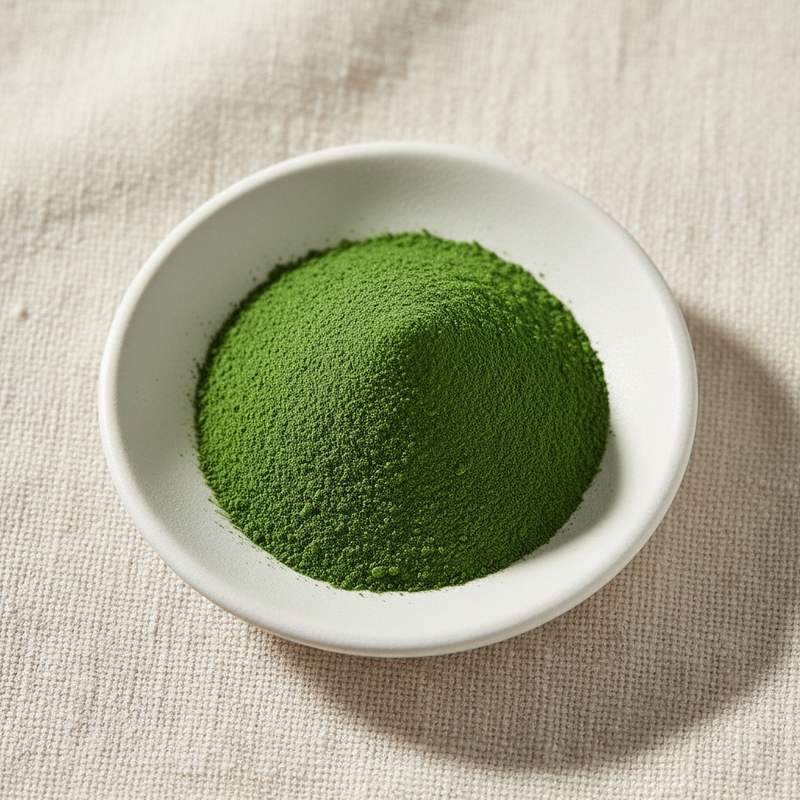
A natural water-soluble green colorant produced by replacing the central magnesium atom of plant chlorophyll with copper, then saponifying with sodium hydroxide. Produces a bright stable green that holds through demanding processing.
Dark green to blackish-green free-flowing powder, or aqueous solution at 1 to 5 percent active. Highly water-soluble, with much better heat, light, and pH stability than the native chlorophyll molecule.
We supply food-grade Sodium Copper Chlorophyllin from manufacturers in China holding ISO, Halal, Kosher and other certifications relevant to the product and production.
Common market grades are sold by total color content: standard 95 percent and 99 percent active powders, plus liquid solutions for direct dosing into beverages and dairy. Iron-complex variants (Sodium Iron Chlorophyllin) are available for applications avoiding copper.
Bulk and reduced-MOQ shipments. Batch-level COA covering copper content, total chlorophyllin, free copper limit, heavy metals, and microbiology.
Introduction
Sodium Copper Chlorophyllin was developed in the early twentieth century to solve the principal limitation of native chlorophyll: its instability under processing. Replacing the labile magnesium atom with copper produced a molecule with comparable green color but far greater stability.
Production begins with chlorophyll extracted from alfalfa, mulberry leaf, or grass. The magnesium is removed by acid treatment, copper is inserted to yield copper pheophytin, and saponification with sodium hydroxide converts the molecule to the water-soluble sodium salt.
Regulated as E141 in the EU, listed by the U.S. FDA as a permitted color additive exempt from certification in specific applications including citrus-based dry beverage mixes (with separate listing for dental products), and approved by JECFA with an Acceptable Daily Intake of 15 mg per kg body weight.
The technical profile is excellent: stable through baking, retort, UHT, and pasteurization, broad pH compatibility from 4 to 9, and good light stability in opaque or low-light packaging. Free copper is the principal specification parameter and is controlled to below 200 mg per kg in food-grade material.
Strategically, Sodium Copper Chlorophyllin is the natural green of choice for processed beverages, dairy, and confectionery, and replaces synthetic Brilliant Blue (E133) plus Tartrazine (E102) blends in clean-label reformulation programs.
Where it is used
- Mint-flavored confectionery, chewing gum, and breath mints; the dominant green colorant in this segment
- Beverages including soft drinks, sports drinks, and flavored waters where heat stability is required
- Dairy products including flavored yogurts, ice cream, and processed cheese
- Bakery fillings, frostings, and dessert decorations
- Soaps, toothpaste, and oral hygiene products
- Pharmaceutical syrups, tablets, and capsules
- Pet food and treats positioned for natural color and chlorophyll claims
- Liqueurs and herbal spirits
- Cosmetics and personal-care preparations
Technical data
| Item | Specification |
|---|---|
| Appearance | Dark green to blackish-green powder |
| Source | Plant chlorophyll (alfalfa, mulberry leaf, grass) |
| Total chlorophyllin content | ≥ 95.0% (food grade) |
| Copper content | 4.0% to 6.0% |
| Free copper | ≤ 200 mg/kg |
| Color value (E1%, 1cm, 405 nm) | ≥ 600 |
| Solubility | Freely soluble in water |
| Light stability | Good |
| Heat stability | Excellent; stable through baking and retort |
| pH stability range | 4.0 to 9.0 |
| Lead | ≤ 2 mg/kg |
| Arsenic | ≤ 1 mg/kg |
Related ingredients
Ready to discuss business?
Send us your spec and requirement. We will respond with availability and pricing within 24 hours.