Description
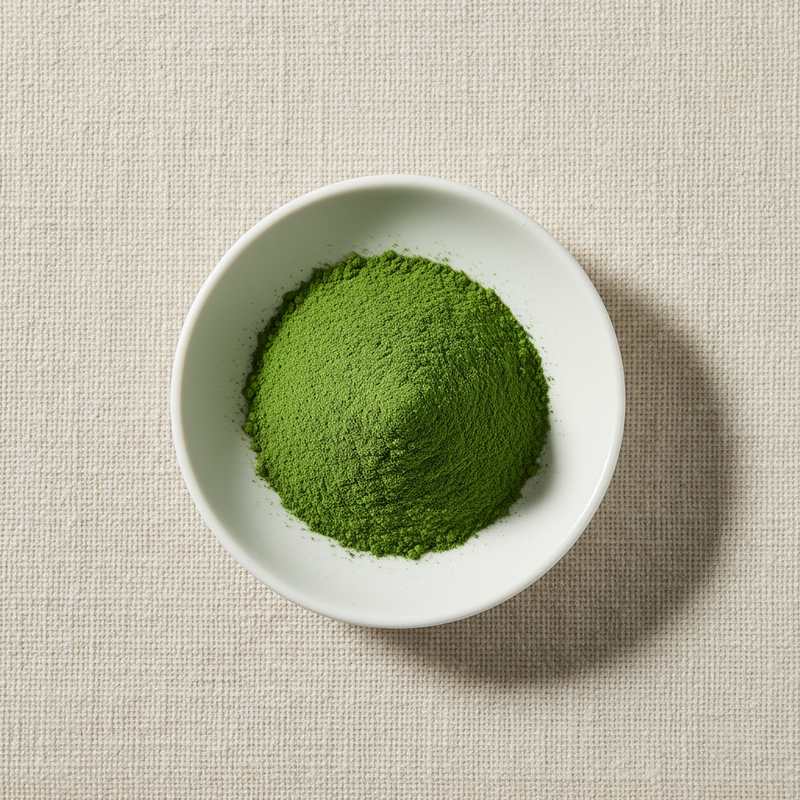
A natural green colorant extracted from edible green plant material, typically alfalfa, spinach, mulberry leaf, or silkworm excrement. The active pigments are chlorophyll a and chlorophyll b, the photosynthetic pigments responsible for the green color of higher plants.
Dark green to olive-green oily paste, viscous liquid, or fine free-flowing powder. Oil-soluble in the native magnesium-complexed form, with water-soluble copper chlorophyllin sold separately as E141.
We supply food-grade Chlorophyll from manufacturers in China holding ISO, Halal, Kosher and other certifications relevant to the product and production.
Common market grades are sold by total chlorophyll content: 4 percent, 5 percent, 10 percent, 25 percent, and oil-paste grades at 1 to 4 percent active. Powdered preparations on a maltodextrin or silica carrier are produced for dry-blend and confectionery applications.
Bulk and reduced-MOQ shipments. Batch-level COA covering total chlorophyll content, color value, heavy metals, residual solvent, and microbiology.
Introduction
Chlorophyll was first isolated by French pharmacists Pierre Joseph Pelletier and Joseph Bienaime Caventou in 1817. Industrial production for use as a food colorant developed in the twentieth century alongside expansion of clean-label food formulation.
Production proceeds by solvent extraction of green plant material with acetone, ethanol, or hexane, followed by solvent removal and standardization. The native chlorophyll molecule contains a central magnesium atom, which can be replaced by copper to yield the more stable water-soluble Sodium Copper Chlorophyllin (E141).
Regulated as E140 in the EU, listed by the U.S. FDA as a permitted color additive exempt from certification when derived from plant material, and approved by JECFA without a numerical Acceptable Daily Intake limit.
The principal technical limitation of unmodified Chlorophyll is stability: the central magnesium is easily lost under acid conditions, yielding the brown pheophytin form, and heat and light accelerate this degradation. Most processed food applications therefore prefer the copper-complex E141 form, which retains green color through demanding processing.
Strategically, Chlorophyll is positioned as the natural green workhorse of the confectionery, pasta, and oil-based product segments, and as a clean-label replacement for synthetic Brilliant Blue (E133) plus Tartrazine (E102) blends used to create green shades.
Where it is used
- Pasta and noodle products including spinach-style green pastas
- Confectionery, gummies, and hard candies requiring natural green coloration
- Chewing gum and breath mints
- Ice cream, sorbet, and frozen dairy desserts
- Liqueurs and herbal spirits including pastis and absinthe-style products
- Bakery decorations, frosting, and fondant for cake decoration
- Oil-based dressings, pesto, and herbal sauces
- Cosmetics including soaps and personal-care products positioned for natural and herbal markets
- Pharmaceutical preparations and dental hygiene products
Technical data
| Item | Specification |
|---|---|
| Appearance | Dark green to olive-green paste, liquid, or powder |
| Source | Alfalfa, mulberry leaf, spinach, or other edible green plants |
| Total chlorophyll content | 4% to 25% (per grade) |
| Color value (E1%, 1cm, 405 nm) | Per declared content |
| Solubility | Oil-soluble in native form |
| Light stability | Limited; best in opaque packaging |
| Heat stability | Moderate; pheophytinization occurs above 80 °C |
| pH stability range | Best at pH 6 to 8; degrades under acid |
| Residual solvent | ≤ 50 mg/kg |
| Lead | ≤ 2 mg/kg |
| Arsenic | ≤ 1 mg/kg |
| Total plate count | ≤ 1000 CFU/g |
Related ingredients
Ready to discuss business?
Send us your spec and requirement. We will respond with availability and pricing within 24 hours.