Description
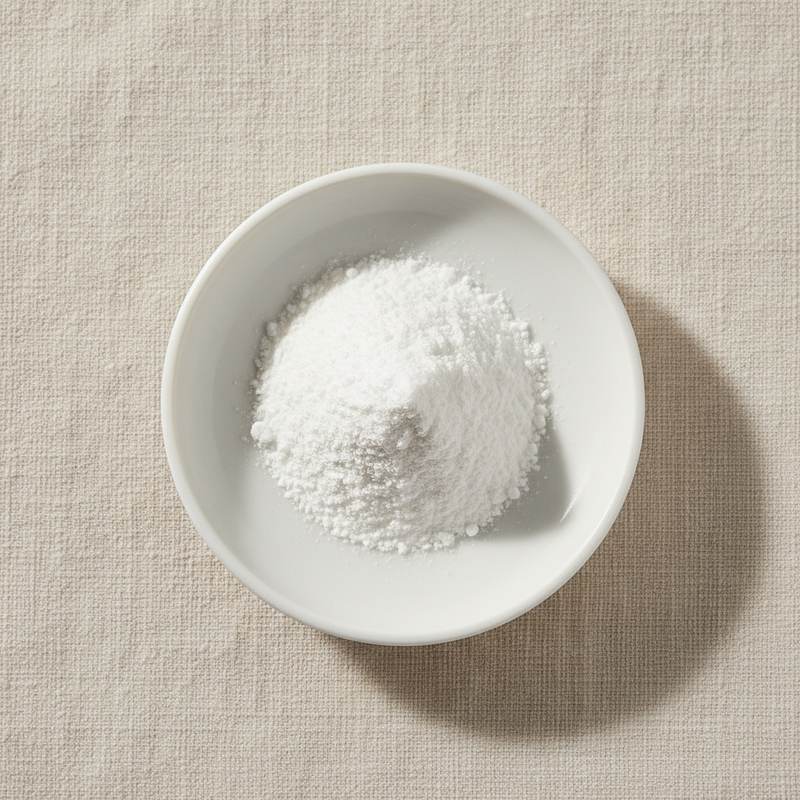
A bright opaque white inorganic colorant and opacifier used historically to deliver a clean white shade and high opacity in confectionery, bakery, dairy, and pharmaceutical applications. Anatase and rutile crystal forms each carry distinct optical and processing properties.
Bright white free-flowing fine powder. Insoluble in water, oil, and most solvents. Used as a dispersion rather than a solution, typically pre-blended with a carrier or wet-milled into a slurry for direct application.
We supply food-grade and pharmaceutical-grade Titanium Dioxide from manufacturers in China holding ISO, Halal, Kosher and other certifications relevant to the product and production. Buyers should verify regulatory status in the destination market: the EU prohibited E171 in food in 2022 following an EFSA reassessment, while many global markets including the United States, China, and most of Asia continue to permit its use under food and pharmaceutical specifications.
Common market grades are sold by particle size and crystal form. Anatase food grade with mean particle size around 200 to 300 nm dominates confectionery use. Rutile grades are used in pharmaceutical and personal-care applications. Particle-size-controlled (non-nano) grades are produced for markets with nanomaterial labeling requirements.
Bulk and reduced-MOQ shipments. Batch-level COA covering TiO2 content, particle size distribution, heavy metals, antimony, and microbiology.
Introduction
Titanium dioxide has been used as a white pigment in coatings, plastics, and paper since the early twentieth century, and entered food and pharmaceutical applications in the 1960s as the dominant white opacifier for tablet coatings, sugar shells, and dairy whiteners.
Industrial production uses either the sulfate process (from ilmenite ore) or the chloride process (from rutile ore). Food-grade and pharmaceutical-grade material is purified to remove residual heavy metals, antimony, and trace organics, then milled to the target particle size distribution for the intended application.
Regulatory status varies materially by market. The EU classified E171 as no longer safe for food use following the 2021 EFSA opinion on genotoxicity concerns related to nanoparticle content, and prohibited its use as a food additive in 2022. The U.S. FDA continues to permit Titanium Dioxide in food at up to 1 percent, the United Kingdom (post-Brexit) retains the EU prohibition for now, and most Asian, Middle Eastern, and Latin American markets continue to permit its use. Pharmaceutical use remains permitted in nearly all global markets pending alternative-excipient development.
The technical profile is exceptional and not fully matched by any current alternative: bright white opacifying power, excellent stability through every food and pharmaceutical processing condition, broad pH compatibility, and insolubility that prevents migration in finished products. Calcium carbonate, rice starch, modified starches, and certain mineral whites are commercial alternatives, but none yet matches Titanium Dioxide on the combined dimensions of opacity, processing stability, and dose efficiency.
Strategically, Titanium Dioxide remains the standard white opacifier for pharmaceutical and confectionery applications outside the EU, with ongoing global reformulation effort focused on the development and qualification of alternative white opacifiers as additional markets reassess the regulatory status.
Where it is used
- Confectionery including hard-panned candies, gum, and chewable tablets; the traditional white opacifier for sugar-shell coatings
- Pharmaceutical tablet coatings, capsules, and shells; remains the dominant white opacifier in pharmaceutical applications globally
- Cosmetics including toothpaste, sunscreens, and personal-care products
- Bakery decorations and white fondant work in markets where E171 remains permitted
- Dairy applications including coffee whitener and white-coated confectionery
- Nutraceutical and supplement coatings
- Industrial white coatings (non-food applications)
- Personal-care and cosmetic preparations including powders and creams
Technical data
| Item | Specification |
|---|---|
| Appearance | Bright white fine powder |
| Source | Sulfate or chloride process from ilmenite or rutile ore |
| TiO2 content | ≥ 99.0% |
| Crystal form | Anatase or rutile (per grade) |
| Mean particle size | 200 to 300 nm (typical food grade) |
| Solubility | Insoluble in water, oil, and common solvents |
| Light stability | Excellent |
| Heat stability | Excellent through all food and pharmaceutical processing |
| pH stability range | Stable across full food and pharmaceutical pH range |
| Loss on drying | ≤ 0.5% |
| Antimony | ≤ 2 mg/kg |
| Lead | ≤ 10 mg/kg |
| Arsenic | ≤ 1 mg/kg |
Related ingredients
Ready to discuss business?
Send us your spec and requirement. We will respond with availability and pricing within 24 hours.