Description
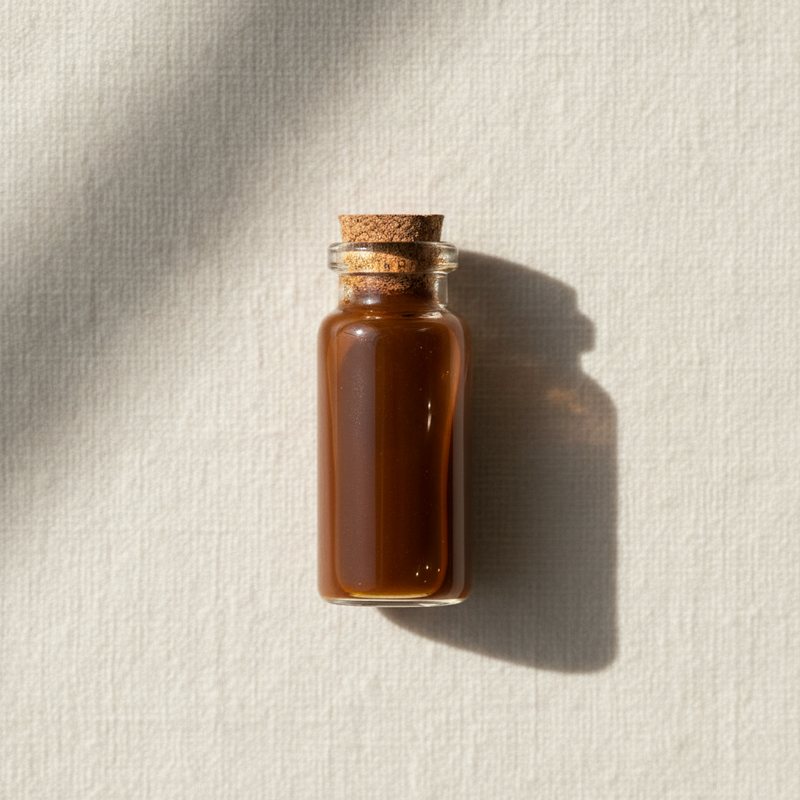
The most widely used food colorant in the world by volume. Produced by controlled heat treatment of food-grade carbohydrates, with or without specified reaction promoters, to yield a deep brown color across the full spectrum of food applications.
Dark brown to nearly black liquid concentrate, or free-flowing brown powder. Highly water-soluble. Available in four regulatory classes (E150a, E150b, E150c, E150d), each tailored to specific application chemistry by ionic charge and pH stability.
We supply food-grade Caramel Color from manufacturers in China holding ISO, Halal, Kosher and other certifications relevant to the product and production. Sulfite-free and ammonia-free grades are available on request.
Common market grades are organized by class. E150a (plain caramel) is produced without reaction promoters. E150b (caustic-sulfite) is produced with sulfite under alkaline conditions. E150c (ammonia caramel) is produced with ammonium compounds. E150d (sulfite-ammonia caramel) is produced with both, and is the dominant beverage-grade product including the standard cola color.
Bulk and reduced-MOQ shipments. Batch-level COA covering color intensity, ionic charge, 4-MEI content (regulated in some markets), sulfite, ammonium, heavy metals, and microbiology.
Introduction
Caramel as a brown color and flavor agent has been produced since the early nineteenth century in Europe, when controlled caramelization of sugar emerged as a method to color spirits and confectionery. Standardized industrial production in defined classes developed in the twentieth century.
Production starts with food-grade carbohydrate feedstocks, typically glucose, sucrose, or invert sugar derived from corn or beet, plus the class-specific reaction promoter (sulfite, ammonia, or both). The mixture is heated under controlled temperature, time, and pressure to develop color, purified to remove undesired reaction products, and standardized to defined color intensity.
Regulated as E150a, E150b, E150c, and E150d in the EU, listed by the U.S. FDA as a permitted color additive exempt from certification, and approved by JECFA with Acceptable Daily Intakes that differ by class. The 4-methylimidazole (4-MEI) byproduct of ammonia caramels is regulated in California under Proposition 65, which has driven reformulation toward lower-4-MEI grades.
The four classes serve different applications. E150a (plain) is used in spirits, sauces, and baked goods. E150b (caustic-sulfite) is used in spirits and beer. E150c (ammonia) is used in beer, soy sauce, and baked goods. E150d (sulfite-ammonia) is used in beverages, particularly cola, where its acid-stable negative charge prevents flocculation in low-pH carbonated systems.
Strategically, Caramel Color is the highest-volume single food colorant globally, with the cola category alone accounting for a substantial fraction of total industrial output. Selection by class is determined by application pH, ionic environment, and regulatory considerations rather than by color hue, which is similar across all four classes at equivalent intensity.
Where it is used
- Cola, root beer, and dark soft drinks; E150d is the standard color across the global cola industry
- Beer, dark beer, and stout; provides color and contributes mouthfeel
- Soy sauce, oyster sauce, and dark Asian sauces; long-established application in East Asian condiments
- Gravy, brown sauces, and meat preparations
- Bakery applications including rye bread, dark breads, and biscuits
- Confectionery including toffee, fudge, and caramel-flavored candies
- Coffee whitener and instant-coffee products
- Pet food, dark-color treats, and meat analogs
- Pharmaceutical syrups, tablets, and capsules requiring brown coloration
- Spirits including whisky, brandy, and rum where small additions standardize bottle-to-bottle color
Technical data
| Item | Specification |
|---|---|
| Appearance | Dark brown to nearly black liquid or powder |
| Source | Controlled heat treatment of food-grade carbohydrate |
| Class | E150a, E150b, E150c, or E150d |
| Color intensity (EBC) | 20,000 to 50,000 (per grade) |
| pH (liquid) | 2.5 to 5.0 (acid-proof); 3.5 to 6.0 (other classes) |
| Solubility | Freely soluble in water |
| Light stability | Excellent |
| Heat stability | Excellent through baking, retort, and UHT |
| 4-MEI (E150c, E150d) | Per market specification (typically ≤ 250 mg/kg, low grades ≤ 50 mg/kg) |
| Sulfite (E150b, E150d) | Per class specification |
| Lead | ≤ 2 mg/kg |
| Arsenic | ≤ 1 mg/kg |
Related ingredients
Ready to discuss business?
Send us your spec and requirement. We will respond with availability and pricing within 24 hours.