Description
The unesterified alcohol form of vitamin A, the most clinically validated topical anti-aging active outside of prescription tretinoin. Improves the appearance of fine lines, photoaging, and uneven tone through documented effects on epidermal turnover and dermal matrix.
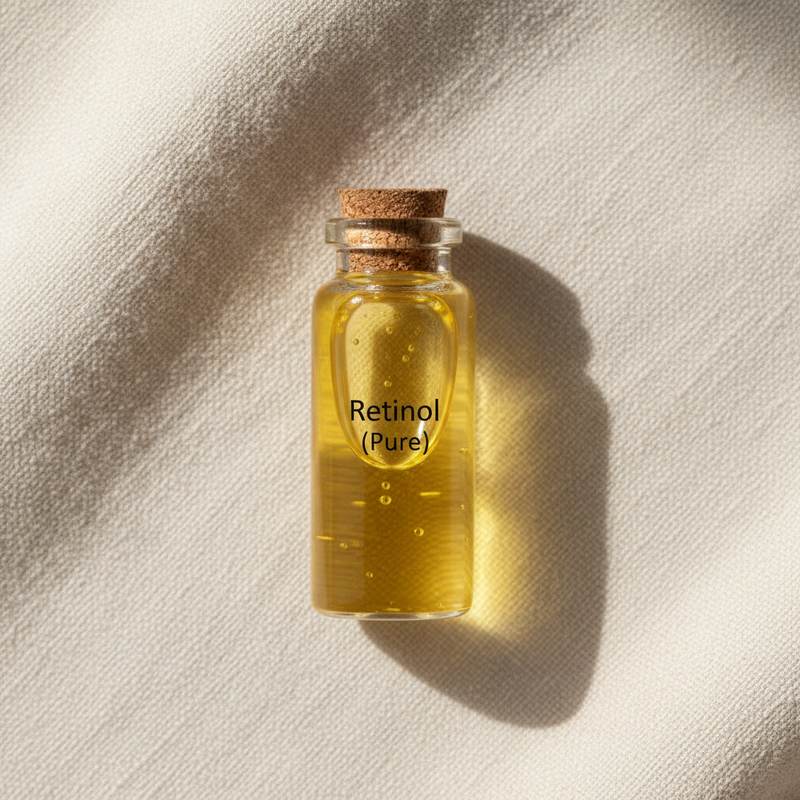
Yellow to amber viscous oil with high oxidative sensitivity. Supplied as concentrated oil (typically 10 percent or 50 percent in solubilizer or vegetable oil carrier) for direct formulation, or as encapsulated and stabilized derivatives for finished-product compatibility.
We supply cosmetic-grade Retinol from manufacturers in China holding ISO 22716, ISO 9001, Halal, Kosher and pharmaceutical-GMP certifications relevant to the product and production.
Common market grades include Retinol 50% in polysorbate (the dominant trade form), Retinol 10% in caprylic capric triglyceride, microencapsulated retinol beadlets for higher stability, and HPMC-coated cold-compression grades. Stabilized analogues such as retinaldehyde and hydroxypinacolone retinoate are sold separately.
Bulk and reduced-MOQ shipments. Batch-level COA covering HPLC purity, isomer profile (all-trans content), peroxide value, color, and microbiology. Cold-chain shipping under inert atmosphere recommended.
Introduction
Retinol was isolated in pure form in 1937 and rapidly characterized as vitamin A1. Cosmetic application emerged in the 1980s following the dermatological success of prescription tretinoin (all-trans retinoic acid), with retinol positioned as a milder topical pathway through in vivo enzymatic conversion to retinoic acid in the skin.
Industrial production is by total chemical synthesis from beta-ionone via the C5 plus C15 strategy developed by Hoffmann-La Roche and BASF, yielding all-trans retinol at 95 percent or higher isomeric purity. The pure compound is then diluted into a stabilizer matrix for handling and formulation.
Regulatory status is that of a cosmetic ingredient with concentration limits in the EU SCCS opinion (currently 0.3 percent in face products, 0.05 percent in body products under the latest framework), no formal limit in the U.S. (though retinoic acid itself is prescription only), and a positive list status in China. The EU framework has been the dominant driver of reformulation in 2024 and 2025.
Clinical evidence for topical retinol is extensive, with multiple double-blind trials showing significant improvement in photoaged skin at 0.1 to 1.0 percent over 12 to 24 weeks. Tolerance is the principal formulation challenge; introduction at low concentration, alternate-night use, and inclusion of soothing co-actives such as niacinamide or panthenol are standard.
Strategically, retinol remains the gold-standard anti-aging actives ingredient outside of prescription, and the new EU concentration framework has redrawn the competitive landscape around stabilized derivatives, encapsulation systems, and bakuchiol as a non-retinoid alternative.
Where it is used
- Anti-aging night serums and creams; typical finished-product use 0.1 to 1.0 percent retinol
- Eye contour treatments for fine-line appearance
- Hand creams and neck treatments
- Acne-adjunct formulations (over-the-counter in EU and Asia, OTC limit applies in U.S.)
- Stretch-mark creams
- Encapsulated retinol formats in serums and ampoules for sensitive skin
- Multi-active premium serums combining retinol with peptides or niacinamide
- Professional and dermocosmetic-channel anti-aging product lines
Technical data
| Item | Specification |
|---|---|
| Appearance | Yellow to amber viscous oil |
| INCI Name | Retinol (with polysorbate 20 or caprylic capric triglyceride) |
| Assay (HPLC, retinol content) | 50.0% min or per grade |
| All-trans isomer | ≥ 95.0% of total retinol |
| Peroxide value | ≤ 10 meq/kg |
| Color | Yellow to amber |
| Heavy metals (as Pb) | ≤ 10 mg/kg |
| Arsenic | ≤ 2 mg/kg |
| Total plate count | ≤ 100 CFU/g |
| E. coli, Salmonella, S. aureus, P. aeruginosa | Negative |
| Storage | 2 °C to 8 °C, protected from light and air |
| Source | Total chemical synthesis |
Related ingredients
Ready to discuss business?
Send us your spec and requirement. We will respond with availability and pricing within 24 hours.