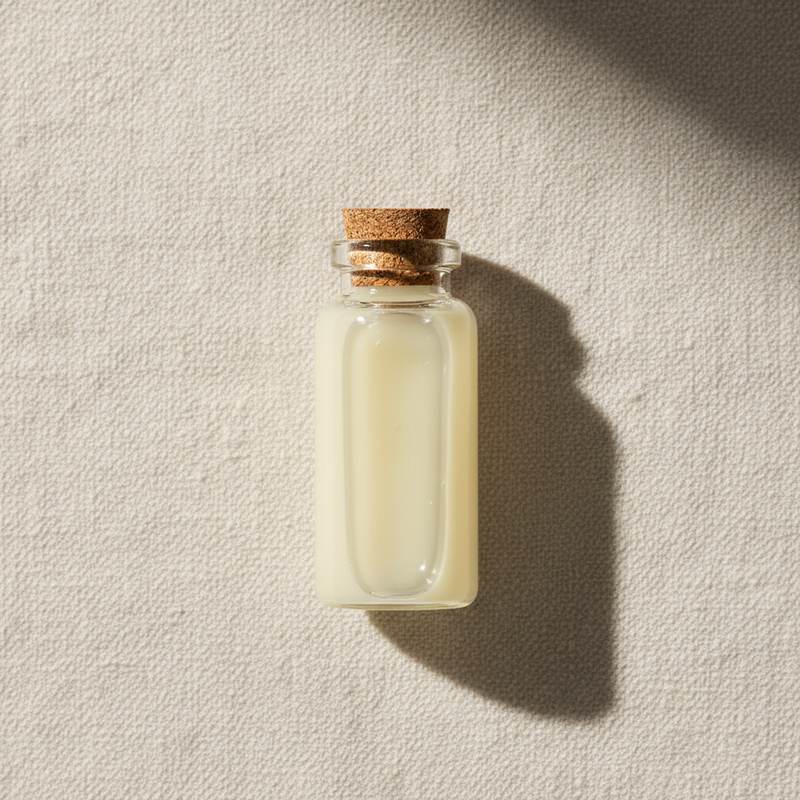
Description
An oil-soluble, highly stable tetra-ester of L-ascorbic acid with isopalmitic acid, frequently abbreviated VC-IP or ATIP. Bioconverts in skin to free ascorbic acid, delivering vitamin C activity without the formulation instability and irritation of L-ascorbic acid systems.
Pale yellow viscous oil at room temperature. Fully oil-soluble and emulsion-compatible, with substantially better stability against oxidation, heat, and pH variation than L-ascorbic acid, magnesium ascorbyl phosphate, or sodium ascorbyl phosphate.
We supply cosmetic-grade Ascorbyl Tetraisopalmitate from manufacturers in China holding ISO 22716, ISO 9001, Halal and Kosher certifications relevant to the product and production.
Common market grades include Standard 97% min and High-Purity 99% min (HPLC), both supplied as neat oil. Diluted ready-to-use solutions at 30 percent in oil carrier are also available for low-MOQ users.
Bulk and reduced-MOQ shipments. Batch-level COA covering HPLC purity, free ascorbic acid content, acid value, peroxide value, and color.
Introduction
Ascorbyl Tetraisopalmitate was developed by Nikko Chemicals in Japan in the late 1990s as a solution to the central problem of vitamin C cosmetic formulation: L-ascorbic acid is unstable, browns rapidly above pH 3.5, and irritates a meaningful fraction of users at active concentrations.
Production is by Steglich esterification or acid-chloride coupling of L-ascorbic acid with four equivalents of isopalmitic acid, followed by deprotection, neutralization, and column or distillation purification to remove free ascorbic acid and partial esters.
Regulatory status is that of a listed cosmetic ingredient in CosIng, the PCPC INCI dictionary, China IECIC, and Japan's voluntary cosmetic ingredient list. No concentration limit in any major jurisdiction; typical use is 0.5 to 5 percent.
Clinical evidence: in vivo studies and human-skin penetration data show that VC-IP penetrates the stratum corneum efficiently and is hydrolyzed by skin esterases to free ascorbic acid, achieving measurable intradermal vitamin C concentrations. Brightening efficacy at 3 percent has been demonstrated against placebo over 12-week studies. The advantage over L-ascorbic acid is reformulation flexibility and improved tolerance, not necessarily higher peak activity.
Strategically, VC-IP is the premium anhydrous vitamin C derivative, used in oil-phase serums and balms where conventional ascorbic acid is impossible to formulate. It complements rather than replaces water-soluble derivatives like MAP and ascorbyl glucoside.
Where it is used
- Anti-aging serums and oils with stable vitamin C positioning
- Brightening creams and lotions targeting hyperpigmentation
- Eye contour serums and ampoules
- Anhydrous balms, facial oils, and pre-essence formulations
- Multi-vitamin antioxidant blends with tocopherol and ferulic acid
- Sun care formulations as a stable antioxidant co-active
- Premium night creams and sleeping masks
- Encapsulated brightening systems combining VC-IP with niacinamide
Technical data
| Item | Specification |
|---|---|
| Appearance | Pale yellow viscous oil |
| INCI Name | Ascorbyl Tetraisopalmitate |
| Assay (HPLC) | ≥ 97.0% |
| Free ascorbic acid | ≤ 0.5% |
| Acid value | ≤ 2.0 mg KOH/g |
| Peroxide value | ≤ 10 meq/kg |
| Color (Gardner) | ≤ 4 |
| Refractive index (20 °C) | 1.460 to 1.475 |
| Heavy metals (as Pb) | ≤ 10 mg/kg |
| Arsenic | ≤ 2 mg/kg |
| Total plate count | ≤ 100 CFU/g |
| E. coli, Salmonella, S. aureus, P. aeruginosa | Negative |
| Source | Synthetic, esterification of L-ascorbic acid with isopalmitic acid |
Related ingredients
Ready to discuss business?
Send us your spec and requirement. We will respond with availability and pricing within 24 hours.