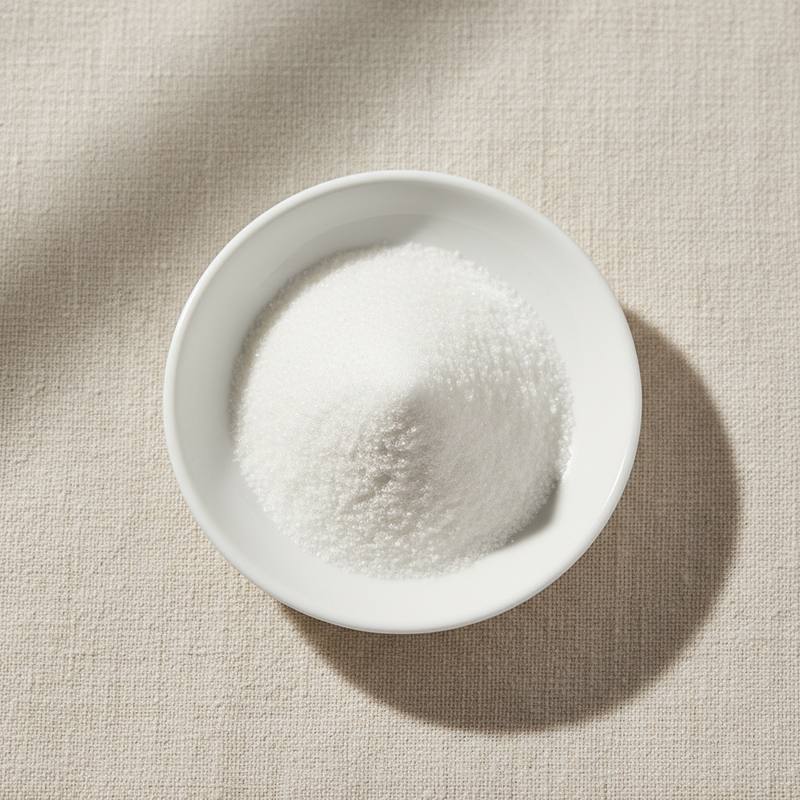
Description
A glycosylated derivative of L-ascorbic acid (also abbreviated AA2G), highly water-soluble and exceptionally stable, in which the 2-OH of ascorbic acid is masked by a glucose unit. Bioconverted to free ascorbic acid in skin by alpha-glucosidase enzymes.
White to off-white crystalline powder. Excellent stability across pH 5 to 7, neutral pH suitable for sensitive-skin formulations, and full compatibility with niacinamide and most cosmetic actives.
We supply cosmetic-grade Ascorbyl Glucoside from manufacturers in China holding ISO 22716, ISO 9001, Halal and Kosher certifications relevant to the product and production.
Common market grades include AA2G 98% min (standard) and 99% min (high-purity, low color). Most material is supplied as fine crystalline powder for direct use.
Bulk and reduced-MOQ shipments. Batch-level COA covering HPLC purity, free ascorbic acid content, color, heavy metals, and microbiology.
Introduction
Ascorbyl Glucoside was developed by Hayashibara in Japan in the 1990s through enzymatic glycosylation of L-ascorbic acid using cyclodextrin glucanotransferase, then commercialized as 2-O-alpha-D-glucopyranosyl-L-ascorbic acid.
Production starts from L-ascorbic acid and a glucose donor (typically dextrin or starch hydrolysate), reacted with cyclodextrin glucanotransferase to install the 2-O-glucosyl protecting group, then purified by chromatography and crystallization.
Regulatory status is that of a listed cosmetic ingredient in CosIng, the PCPC INCI dictionary, China IECIC, and Japan's PMDA quasi-drug active list at 2 percent for whitening claims. The quasi-drug status is the strongest single regulatory endorsement in cosmetic vitamin C derivatives.
Clinical evidence: 2 percent AA2G is the approved Japanese quasi-drug dose for whitening, supported by Hayashibara's in-house clinical work showing reduction in melanin index over 8 to 12 weeks. The molecule's stability profile is among the best in cosmetic vitamin C derivatives, allowing transparent serums to remain water-clear over the full shelf life.
Strategically, AA2G occupies the premium neutral-pH water-soluble vitamin C derivative slot, complementary to oil-soluble VC-IP and Japan-quasi-drug MAP. Demand is driven by transparent serum and ampoule formats where color stability is non-negotiable.
Where it is used
- Brightening serums and toners at neutral pH
- Sensitive-skin vitamin C products
- Multi-active serums combining AA2G with niacinamide and peptides
- Anti-aging emulsions targeting tone and antioxidant claims
- Eye contour treatments
- Sheet mask essences and ampoules
- Premium dermocosmetic brightening lines
- Sun care and after-sun lotions
Technical data
| Item | Specification |
|---|---|
| Appearance | White to off-white crystalline powder |
| INCI Name | Ascorbyl Glucoside |
| Assay (HPLC) | ≥ 98.0% |
| Free ascorbic acid | ≤ 0.5% |
| Loss on drying | ≤ 2.0% |
| pH (10% solution) | 5.0 to 7.0 |
| Specific rotation | +135° to +160° |
| Heavy metals (as Pb) | ≤ 10 mg/kg |
| Arsenic | ≤ 2 mg/kg |
| Total plate count | ≤ 100 CFU/g |
| E. coli, Salmonella, S. aureus, P. aeruginosa | Negative |
| Source | Enzymatic glycosylation of L-ascorbic acid |
Related ingredients
Ready to discuss business?
Send us your spec and requirement. We will respond with availability and pricing within 24 hours.