Description
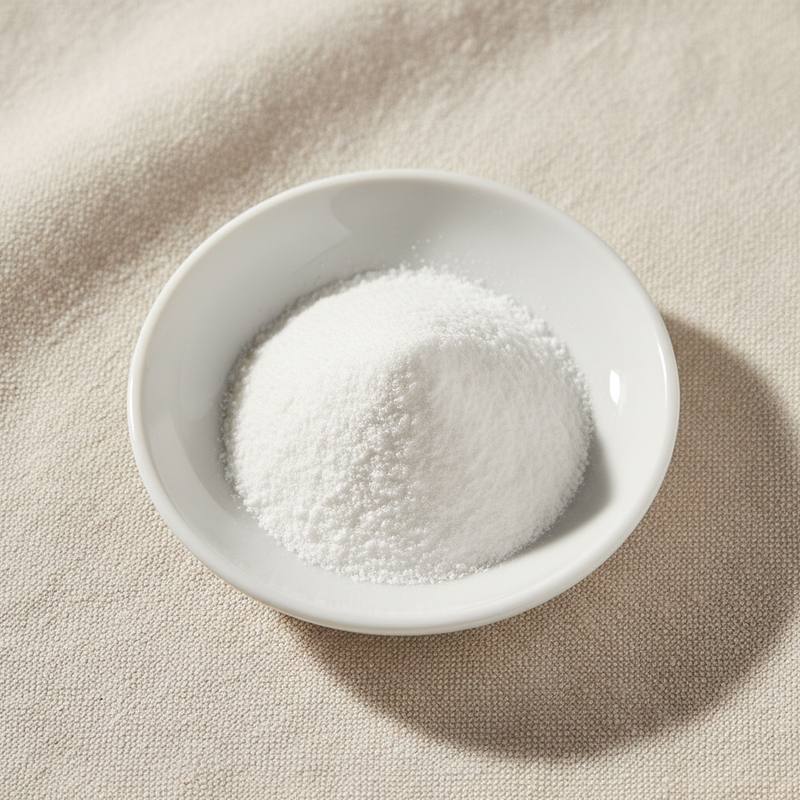
The fermentation-derived sodium salt of hyaluronic acid in the high molecular weight range, typically 1.0 to 2.4 million Daltons. Binds up to 1,000 times its weight in water and forms a smooth occlusive film on the skin surface, delivering immediate surface hydration and a soft after-feel.
White to off-white fibrous or granular powder. Fully water-soluble, producing viscous, clear, slightly stringy aqueous solutions at 0.1 to 1.0 percent. Stable across the cosmetic pH range and compatible with most surfactants, polymers, and active ingredients.
We supply cosmetic-grade Sodium Hyaluronate from manufacturers in China holding ISO 22716 (cosmetic GMP), ISO 9001, Halal, Kosher, ECOCERT and COSMOS certifications relevant to the product and production. Non-animal, biofermentation origin from Streptococcus zooepidemicus on plant-derived substrates.
Common market grades are differentiated by molecular weight: Super High MW (1.8 to 2.4 million Da) for premium serums and sheet masks, Standard High MW (1.0 to 1.8 million Da) for general moisturizers, and cross-linked HA variants for dermal filler raw material. Particle size grades include 40 to 80 mesh standard and 80 to 100 mesh fine for rapid hydration.
Bulk and reduced-MOQ shipments. Batch-level COA covering molecular weight by GPC, glucuronic acid assay, protein content, heavy metals, and microbiology.
Introduction
Hyaluronic acid was first isolated in 1934 by Karl Meyer and John Palmer from bovine vitreous humor. Commercial cosmetic use began in the 1980s with rooster-comb extraction, displaced through the 2000s by microbial fermentation, which now accounts for nearly all global cosmetic supply.
Industrial production uses Streptococcus zooepidemicus grown on glucose-based media. The polymer is precipitated with ethanol, repeatedly purified, and dried under controlled conditions to preserve molecular weight. Final HA content is typically above 90 percent with glucuronic acid assay between 44 and 52 percent on dry basis.
Regulatory status is that of a cosmetic ingredient in all major jurisdictions, listed in the EU CosIng database and in the U.S. Personal Care Products Council INCI dictionary. China NMPA registration is straightforward and the ingredient is on the IECIC inventory. Cross-linked grades sold for injectable dermal filler manufacturing are regulated as medical device raw material and require ISO 13485 documentation.
Clinical literature on topical HA is substantial: peer-reviewed studies consistently demonstrate measurable improvement in stratum corneum hydration, transepidermal water loss, and fine-line appearance after 4 to 8 weeks of twice-daily use at 0.1 percent or above. High-MW HA acts primarily at the surface, while low-MW fractions penetrate the upper epidermis.
Strategically, high-MW sodium hyaluronate remains the workhorse hydrator of the global cosmetic industry. Demand is driven by K-beauty and J-beauty serum formats, the global expansion of sheet masks, and continued growth of the dermocosmetic channel.
Where it is used
- Anti-aging serums and concentrates positioned around surface hydration and plumping effect
- Sheet masks and hydrogel patches; high-MW HA delivers the characteristic immediate-tightening sensation
- Moisturizing creams, lotions, and emulsions for face and body
- Eye creams and lip treatments where surface film and gentle viscosity are required
- Hair conditioners and leave-in treatments; HA reduces friction and adds shine
- Sun care and after-sun lotions to support barrier recovery
- Premium baby care and sensitive-skin formulations
- Multi-MW HA blends combining 2 to 5 molecular-weight fractions for layered hydration claims
- Dermal filler raw material (cross-linked grades) and post-procedure topical care
Technical data
| Item | Specification |
|---|---|
| Appearance | White to off-white fibrous or granular powder |
| INCI Name | Sodium Hyaluronate |
| Assay (Glucuronic acid, dry basis, HPLC) | 44.0% to 52.0% |
| Hyaluronic Acid Content (dry basis) | ≥ 93.0% |
| Molecular Weight (GPC) | 1.0 × 10⁶ to 2.4 × 10⁶ Da |
| Loss on drying | ≤ 10.0% |
| pH (0.1% solution) | 6.0 to 7.5 |
| Protein content | ≤ 0.1% |
| Heavy metals (as Pb) | ≤ 10 mg/kg |
| Arsenic | ≤ 1 mg/kg |
| Total plate count | ≤ 100 CFU/g |
| Yeast and mold | ≤ 50 CFU/g |
| E. coli, Salmonella, S. aureus, P. aeruginosa | Negative |
| Source | Microbial fermentation (Streptococcus zooepidemicus), non-animal |
Related ingredients
Ready to discuss business?
Send us your spec and requirement. We will respond with availability and pricing within 24 hours.