Description
The natural D-alpha-tocopherol form of Vitamin E (versus the synthetic DL-tocopherol form), extracted from soybean and sunflower oil distillates. Premium-positioned for clean-label supplements and natural-positioning food fortification.
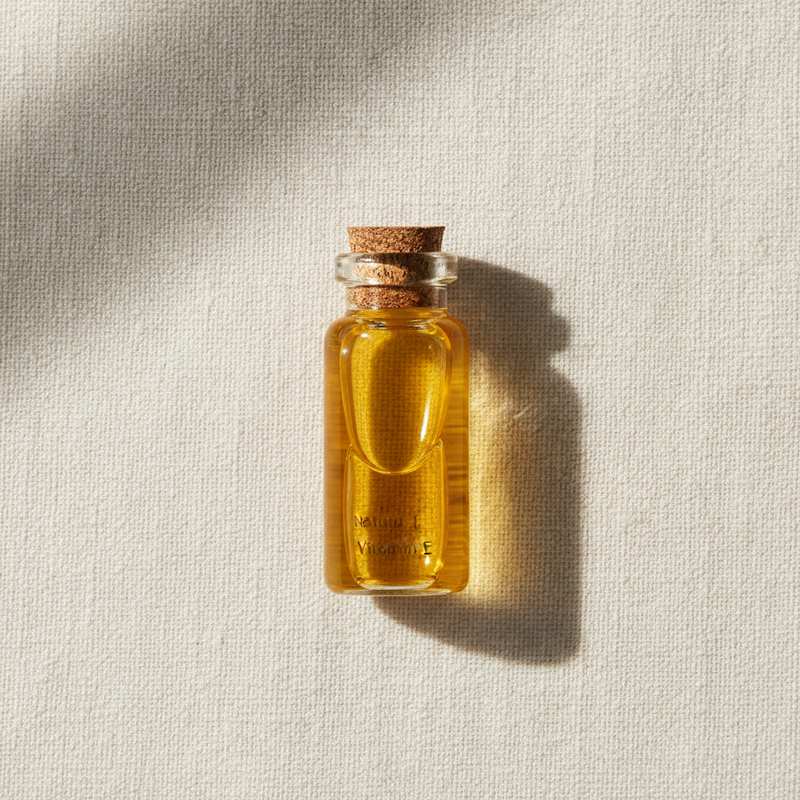
Pale yellow to amber oily liquid (oil form) or free-flowing powder (spray-dried beadlets). The natural D-alpha enantiomer provides higher biological activity per IU than the synthetic DL-form (1.49 IU per mg D-alpha-tocopheryl acetate versus 1.0 IU per mg for DL).
We supply food-grade and pharmaceutical-grade Natural Vitamin E from manufacturers in China holding ISO, Halal, Kosher and other certifications relevant to the product and production. Non-GMO sunflower-derived variants are available.
Common market grades include D-alpha-Tocopheryl Acetate Oil (the premium supplement-grade workhorse), D-alpha-Tocopherol Oil (free tocopherol, the food antioxidant grade), Mixed Tocopherols (the broadest-spectrum natural antioxidant), D-alpha-Tocopheryl Acetate 50 percent CWS Powder, and Pharmaceutical Grade meeting USP specifications.
Bulk and reduced-MOQ shipments. Batch-level COA covering assay, specific rotation (distinguishing D from DL), peroxide value, heavy metals, and microbiology.
Introduction
Natural Vitamin E is the D-alpha-tocopherol form of Vitamin E, distinct from the synthetic DL-alpha-tocopherol form by stereochemistry. Natural Vitamin E contains only the biologically active 2R-stereoisomer, while synthetic DL-tocopherol is a mixture of all eight possible stereoisomers (only one of which has the natural 2R configuration).
Industrial production proceeds by extraction from soybean and sunflower oil distillates (byproducts of vegetable oil refining), followed by chromatographic purification and (for the acetate ester) esterification with acetic anhydride. The starting feedstock determines whether the finished product is soybean-derived or sunflower-derived (the latter is non-GMO).
Recognized as a permitted food ingredient by the U.S. FDA, the European Food Safety Authority, and equivalent regulators worldwide. Listed in BP, USP, EP, and JP pharmacopoeias.
The natural D-alpha form delivers approximately 50 percent higher biological activity per mg than synthetic DL-alpha, which is the basis for the dosing-equivalence ratios in U.S. labeling regulations (1.49 IU per mg D-alpha-tocopheryl acetate versus 1.0 IU per mg DL-alpha-tocopheryl acetate). This biological-activity advantage is the principal selling point for natural Vitamin E over synthetic.
Strategic positioning targets the premium and clean-label segments specifically. Cost is meaningfully higher than synthetic Vitamin E (typically 2 to 4 times higher), limiting use to applications where the natural-source claim and biological-activity advantage justify the price premium.
Where it is used
- Premium dietary supplements: vitamin E, multivitamin, and cardiovascular-support formulations
- Natural-positioning fortified foods and beverages
- Premium infant formula manufacturing
- Pharmaceutical Vitamin E applications
- Cosmetic and skincare: premium anti-aging serums and oil-based skincare
- Premium pet food and pet supplements
- Natural food antioxidant in clean-label oil and fat applications
- Sports nutrition premium formulations
Technical data
| Item | Specification |
|---|---|
| Appearance | Pale yellow to amber oily liquid or free-flowing powder |
| Assay (D-alpha-tocopheryl acetate) | 96.0% to 102.0% |
| Specific rotation | +24° to +27° |
| Refractive index (20 °C) | 1.494 to 1.499 |
| Acid value | ≤ 2.0 |
| Heavy metals (as Pb) | ≤ 10 mg/kg |
| Peroxide value | ≤ 10 meq/kg |
| Source | Soybean or sunflower oil distillate |
Related ingredients
Ready to discuss business?
Send us your spec and requirement. We will respond with availability and pricing within 24 hours.