Description
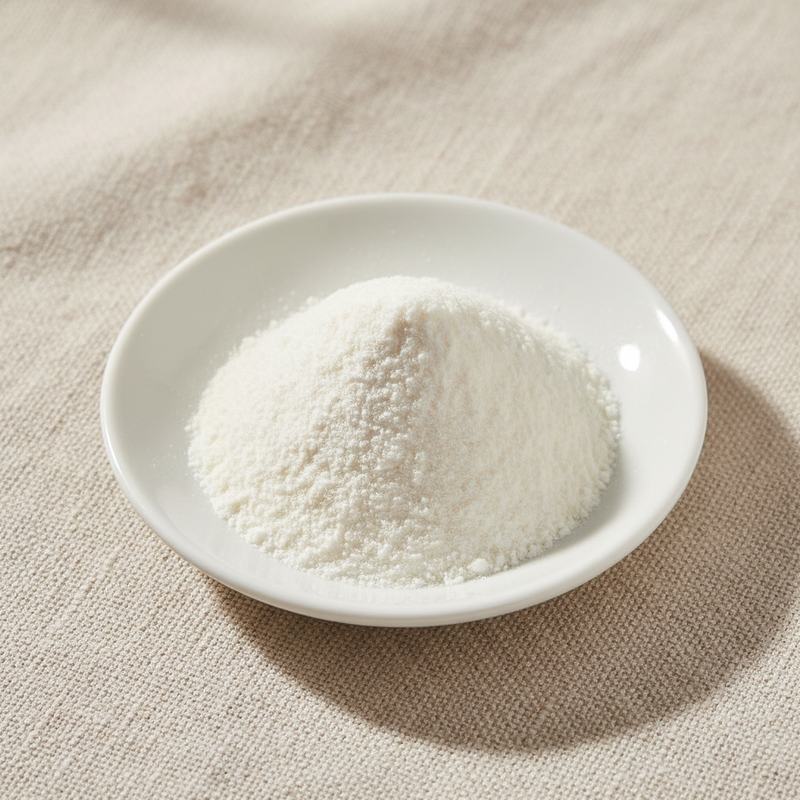
An engineered compound system combining Konjac glucomannan with carrageenan, xanthan, or other complementary hydrocolloids in defined ratios optimized for specific finished-product applications. Eliminates the formulation work of building hydrocolloid blends from individual gum components.
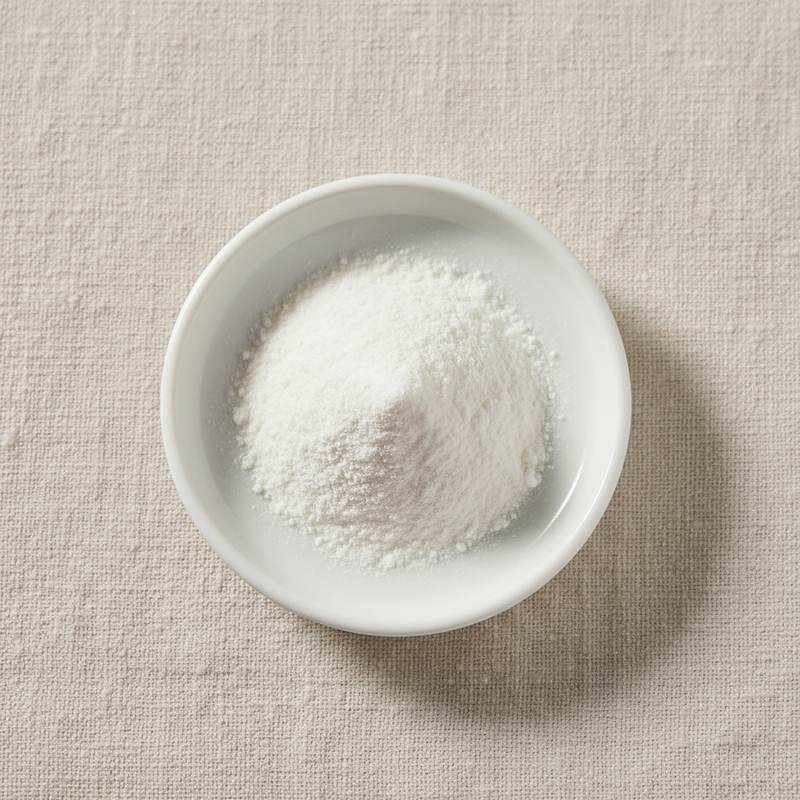
Off-white to cream-colored free-flowing fine powder. Compounds typically combine 40 to 70 percent Konjac with the balance of carrageenan, xanthan, or other gums tuned to the target application.
We supply food-grade Konjac Compound Flour from manufacturers in China holding ISO, Halal, Kosher and other certifications relevant to the product and production.
Common market compounds include Konjac-Carrageenan Compound (for gel applications), Konjac-Xanthan Compound (for thickening), Konjac-Gellan Compound (for high-strength gels), and Custom Compound Blends produced to customer specification for specific finished-product requirements.
Bulk and reduced-MOQ shipments. Batch-level COA covering component composition, viscosity, gel strength, particle size, sulphur dioxide, heavy metals, and microbiology.
Introduction
Konjac Compound Flour represents the formulator-friendly approach to Konjac-based hydrocolloid systems, where Konjac is pre-blended with synergistic gums in ratios optimized for specific finished-product applications.
Production starts with standard Konjac glucomannan powder (catalog id 7528), then blends in carrageenan, xanthan gum, gellan gum, or other hydrocolloids in defined proportions. The blend is dry-mixed under controlled conditions to ensure homogeneous distribution, then milled to defined particle size for handling consistency.
Regulatory status follows the Konjac component (E425 in the EU, with restrictions on jelly mini-cup applications), supplemented by the regulatory status of each co-blended hydrocolloid (E407 for carrageenan, E415 for xanthan, etc.).
The compound approach addresses a fundamental limitation of using Konjac alone: pure Konjac is a thickener but not a strong gel-former, while the gel-forming hydrocolloids (carrageenan, gellan) lack Konjac's water-binding capacity. The compound systems combine both strengths in a single ingredient, eliminating the formulation work of balancing two separate ingredients in a finished-product recipe.
Strategic positioning serves manufacturers who want Konjac-based texture without committing to in-house formulation expertise. Cost is meaningfully higher than buying components separately and blending in-house, but the convenience advantage drives substantial use in mid-tier and small-scale food manufacturers.
Where it is used
- Konjac noodles (shirataki) and konjac jelly products: pre-balanced for finished-product texture
- Vegan meat alternatives: pre-blended for plant-based burger and sausage texture
- Asian dessert applications: traditional jellies and steamed cakes
- Functional beverages with engineered viscosity profiles
- Sugar-free confectionery: pre-balanced gel systems for low-calorie gummies
- Pet food: pre-blended texture systems for premium wet pet food
- Bakery applications: gluten-free baking systems
- Specialty foodservice and culinary applications
Technical data
| Item | Specification |
|---|---|
| Appearance | Off-white to cream-colored free-flowing fine powder |
| Konjac component | 40% to 70% |
| Co-blended hydrocolloid | Carrageenan, xanthan, gellan, or per customer specification |
| Viscosity (1% solution) | Application-dependent |
| Particle size | ≥ 95% through 100 mesh |
| Sulphur dioxide | ≤ 500 mg/kg |
| Loss on drying | ≤ 12.0% |
| Heavy metals (as Pb) | ≤ 5 mg/kg |
Related ingredients
Ready to discuss business?
Send us your spec and requirement. We will respond with availability and pricing within 24 hours.