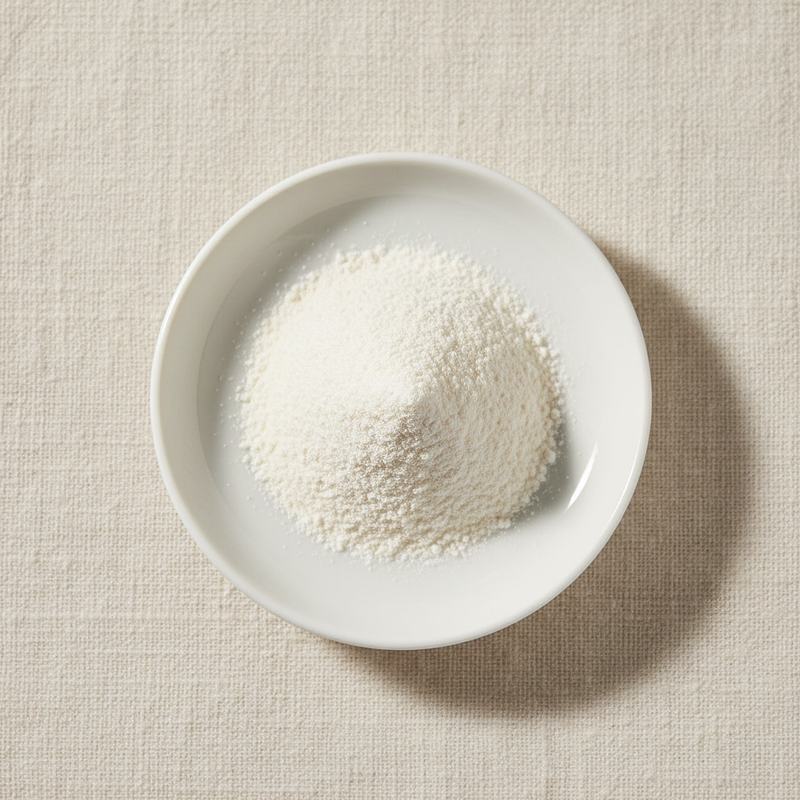
Description
The most widely used hydrocolloid thickener globally, produced by aerobic fermentation of glucose with Xanthomonas campestris. Provides high viscosity at low use levels (typically 0.1 to 0.5 percent), exceptional pseudoplastic flow, and stability across pH 1 to 13 and temperatures up to 90 °C.
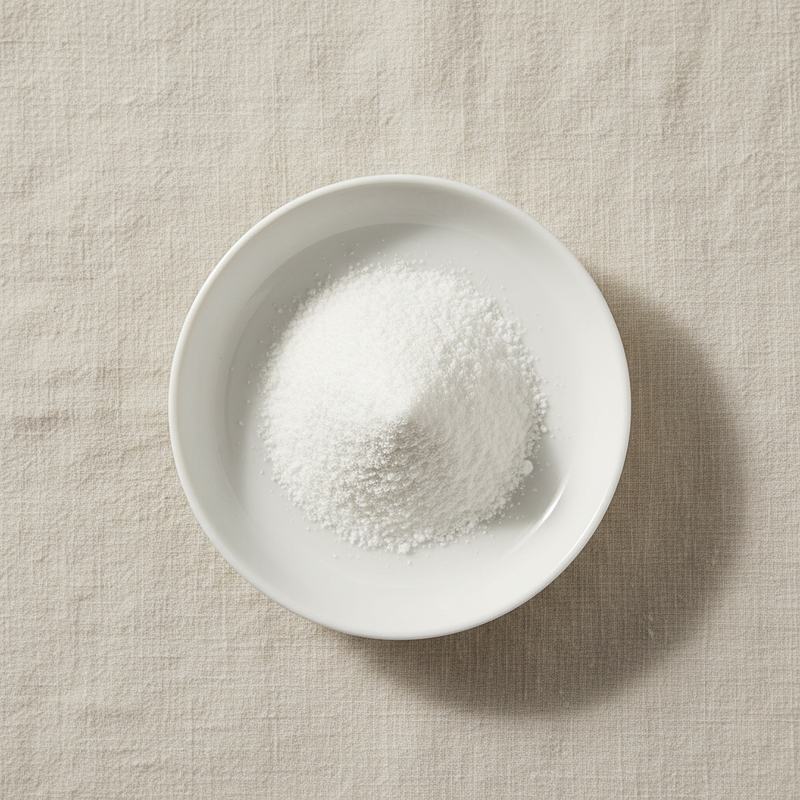
Cream-colored to white free-flowing powder. Hydrates in cold water without prior dispersion in oil or alcohol, the property that distinguishes it from many competing hydrocolloids and drives its dominance in convenience-food formulation.
We supply food-grade and pharmaceutical-grade Xanthan Gum from manufacturers in China holding ISO, Halal, Kosher and other certifications relevant to the product and production. Non-GMO and certified-organic grades are available on request.
Common market grades include Standard 80-mesh Food Grade (the workhorse for general food applications), 200-mesh Fine Mesh (for instant beverages and rapid hydration), Pharmaceutical Grade meeting BP/USP/EP specifications, Oilfield Grade for industrial drilling fluids, and Transparent Grade for clear-beverage applications.
Bulk and reduced-MOQ shipments. Batch-level COA covering viscosity (1% in KCl solution), pH, loss on drying, residue on ignition, heavy metals, and microbiology.
Introduction
Xanthan Gum was discovered in the 1950s at the U.S. Department of Agriculture's Northern Regional Research Laboratory and brought to commercial scale by Kelco (now CP Kelco) in 1968 under the Keltrol brand.
Industrial production proceeds by submerged aerobic fermentation of corn-derived or sugar-derived glucose using Xanthomonas campestris. The fermentation broth is precipitated with isopropanol, milled, and standardized to defined viscosity and particle size specifications.
Regulated as E415 in the EU, classified as Generally Recognized as Safe by the U.S. FDA, listed in BP, USP, EP, and JP pharmacopoeias, and approved by JECFA without a numerical Acceptable Daily Intake limit.
The molecule is a high-molecular-weight branched polysaccharide with exceptional rheological properties: low concentration produces high viscosity, the resulting solution shows strong pseudoplastic flow (thinning under shear, recovering at rest), and synergy with locust bean gum and other galactomannans produces strong gel networks.
Strategic dominance comes from a unique property combination: cold-water hydration eliminates the heating step that competing hydrocolloids require; pseudoplastic flow gives finished products the texture characteristics consumers expect; pH and temperature stability allows use across virtually all food matrices; and synergy with other gums multiplies effective viscosity at lower total cost.
Where it is used
- Salad dressings, sauces, and condiments; the dominant thickener in this category globally
- Gluten-free baked goods and gluten-free pasta; structure replacement for gluten
- Beverages: chocolate milk, soy milk, smoothies; suspension of insoluble particles
- Ice cream and frozen desserts; freeze-thaw stability and texture control
- Sauces and gravies including instant-mix dry blends
- Pharmaceutical syrups, suspensions, and topical formulations
- Cosmetic creams, lotions, and toothpaste; rheology modifier
- Pet food and pet treats; texture and binding
- Industrial applications: oilfield drilling fluids, paints, and ceramics
- Keto and low-carb baking; structural replacement for traditional flour-based binders
Technical data
| Item | Specification |
|---|---|
| Appearance | Cream-colored to white free-flowing powder |
| Viscosity (1% in 1% KCl) | 1200 to 1600 cP |
| pH (1% solution) | 6.0 to 8.0 |
| Loss on drying | ≤ 13.0% |
| Ash | ≤ 16.0% |
| Heavy metals (as Pb) | ≤ 5 mg/kg |
| Arsenic | ≤ 3 mg/kg |
| Particle size | ≥ 92% through 80 mesh |
| Total plate count | ≤ 5000 cfu/g |
Related ingredients
Ready to discuss business?
Send us your spec and requirement. We will respond with availability and pricing within 24 hours.