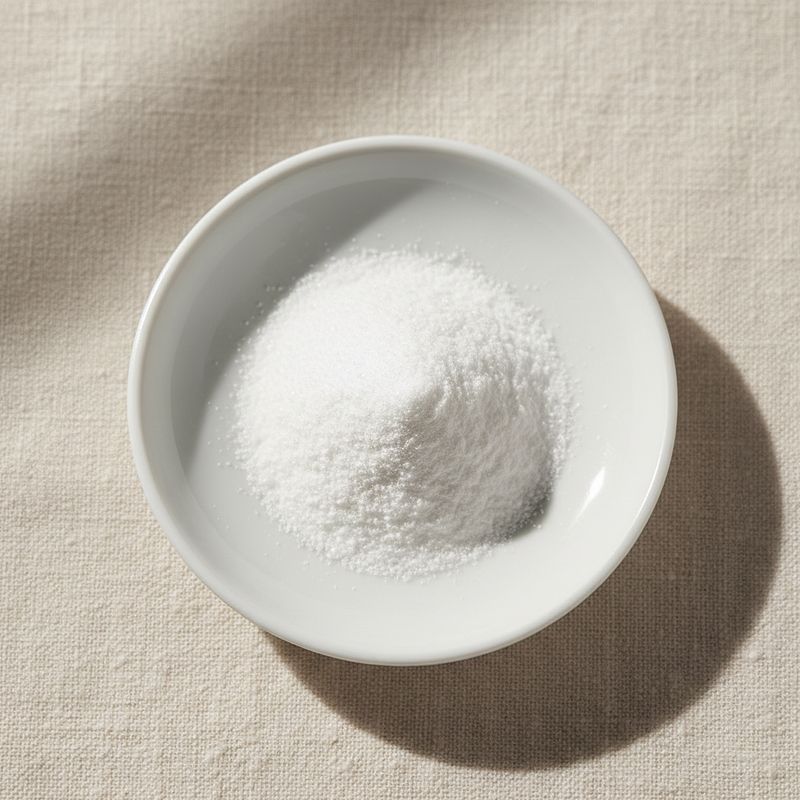
Description
The natural metabolic precursor of creatine, synthesized in the body from arginine and glycine and converted to creatine in the liver by guanidinoacetate methyltransferase. Used in monogastric and aquaculture feed as a more cost-effective and feed-stable source of muscle creatine than creatine monohydrate itself.
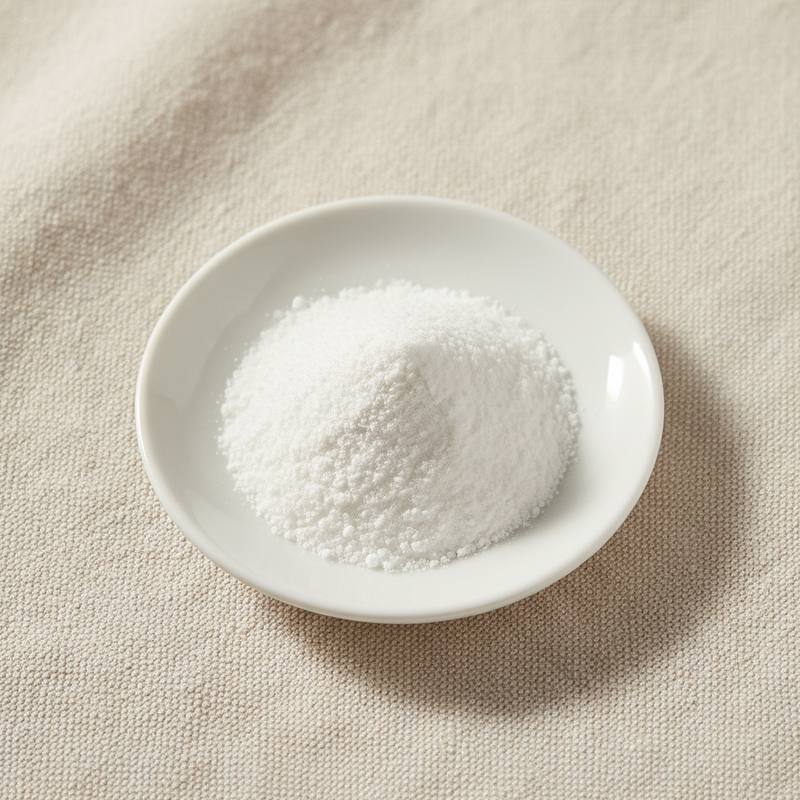
White to off-white free-flowing crystalline powder. Significantly more stable through pelleting, extrusion, and long-term feed storage than creatine monohydrate, which degrades to creatinine under acidic and moist conditions. Approximately 110 grams of GAA delivers the same in-vivo creatine charge as 130 grams of creatine monohydrate at lower cost per active unit.
We supply feed-grade GAA from manufacturers in China holding ISO, FAMI-QS, Halal, Kosher and other certifications relevant to the product and production.
Common market grades include Feed Grade 98 percent (the standard for monogastric and aquaculture feed) and Pharma Grade 99 percent for veterinary and specialty applications. Granular and micronized forms are available for premix and pelleting line requirements.
Bulk and reduced-MOQ shipments. Batch-level COA covering assay, cyanamide residue, heavy metals, and microbiology.
Introduction
Guanidinoacetic acid was first identified in animal tissues in the late 19th century as the immediate metabolic precursor of creatine. The two-step biosynthesis from arginine and glycine to GAA to creatine is conserved across vertebrate species, with the rate-limiting step being arginine-to-GAA conversion in the kidney. Dietary supplementation of GAA bypasses this kidney-limited step and increases creatine availability in muscle tissue without requiring direct creatine in the diet.
The molecule was approved as a feed additive in the EU in 2009 for chickens for fattening, and subsequent authorizations have expanded coverage to laying hens, pigs, salmonids, and other species. The U.S. FDA accepts GAA in animal feed under the food additive petition framework, and the ingredient is widely approved in Brazil, China, Thailand, Vietnam, and other major animal-protein producing markets.
The cost case for GAA over direct creatine monohydrate has three components: lower per-tonne ingredient cost on an active basis, far superior stability through extrusion and pelleting (creatine monohydrate loses 20 to 60 percent in commercial processing), and compatibility with plant-protein diets that lack endogenous creatine and arginine. This last point is particularly relevant in aquaculture feed where fish meal replacement strategies leave the diet creatine-deficient.
Typical inclusion is 600 to 1,200 grams per tonne in broiler feed, 800 to 1,500 grams per tonne in pig grower-finisher diets, and 500 to 1,000 grams per tonne in salmonid and shrimp feed. The molecule must be paired with adequate dietary methionine, since each mole of GAA converted to creatine consumes one mole of S-adenosylmethionine.
Where it is used
- Broiler feed for breast meat yield and feed conversion; the principal commercial application worldwide
- Layer hen feed to support sustained egg production and shell quality
- Grower-finisher pig feed for lean carcass gain and feed efficiency
- Atlantic salmon, rainbow trout, and shrimp grower feed; muscle creatine charge supports growth and stress resilience
- Turkey and duck commercial feed
- Vegetarian and plant-protein-based aquaculture feed where dietary creatine is naturally absent
- Sports horse and racehorse muscle-energy supplements
- Companion-animal performance and working-dog supplements
- Replacement strategy for creatine monohydrate in extruded pet food where heat stability is required
Technical data
| Item | Specification |
|---|---|
| Appearance | White to off-white free-flowing powder |
| Assay (dry basis) | ≥ 98.0% |
| Loss on drying | ≤ 0.5% |
| pH (saturated solution) | 4.0 to 6.0 |
| Cyanamide residue | ≤ 30 mg/kg |
| Heavy metals (as Pb) | ≤ 10 mg/kg |
| Arsenic | ≤ 2 mg/kg |
| Residue on ignition | ≤ 0.2% |
| Total plate count | ≤ 1,000 cfu/g |
| E. coli and Salmonella | Negative |
| Particle size | Per customer specification |
Related ingredients
Ready to discuss business?
Send us your spec and requirement. We will respond with availability and pricing within 24 hours.