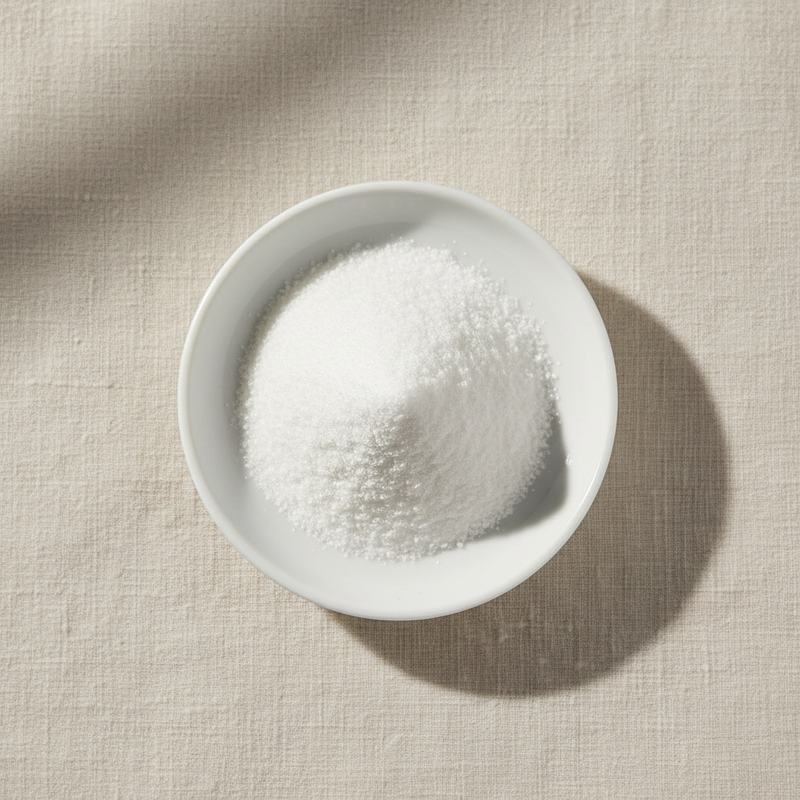
Description
The water-free crystalline form of trimethylglycine, a naturally occurring methyl donor and organic osmolyte derived from sugar beet vinasse. The highest active-content form on the market, at approximately 99 percent trimethylglycine versus 73 percent for the monohydrate, making it the standard input where premix space and per-tonne potency matter.
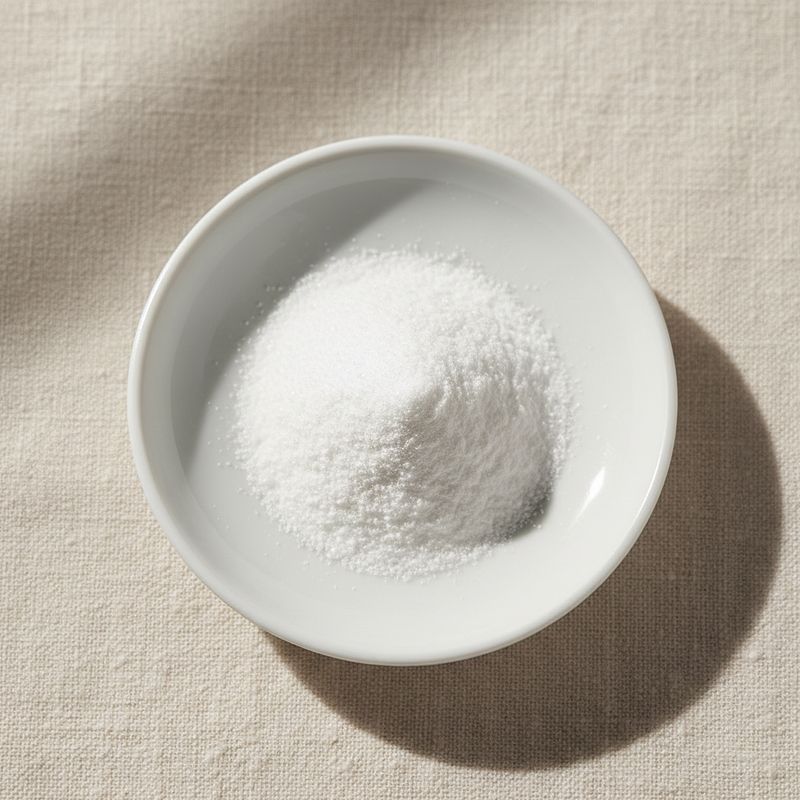
White, free-flowing crystalline powder. Non-hygroscopic in pure form, stable through extrusion and pelleting, and compatible with vitamin and trace-mineral premixes. Functions both as a methyl-group donor in the methionine-homocysteine cycle and as a cytoplasmic osmoprotectant that allows fish and shrimp to maintain cell volume under salinity, temperature, and ammonia stress.
We supply feed-grade Betaine Anhydrous from manufacturers in China holding ISO, FAMI-QS, Halal, Kosher and other certifications relevant to the product and production.
Common market grades include Feed Grade 96 percent and 98 percent for ruminant, swine, and poultry premixes; Aquaculture Grade 99 percent for shrimp, salmon, and sea bass diets where osmoregulation is critical; and Pharma/USP grade for veterinary medicinal products. Granular forms with reduced dust generation are available for pelleting lines.
Bulk and reduced-MOQ shipments. Batch-level COA covering assay, loss on drying, chloride, heavy metals, and microbiology.
Introduction
Betaine was first isolated from sugar beet juice by the German chemist Carl Scheibler in 1866, and the molecule still takes its common name from Beta vulgaris, the species. Commercial extraction begins from sugar-beet molasses or vinasse, where betaine accumulates as a fermentation by-product, and proceeds through chromatographic separation and crystallization to yield the anhydrous form.
In animal biochemistry, betaine has two non-overlapping roles. As a methyl donor it transfers a methyl group to homocysteine via the betaine-homocysteine methyltransferase pathway, regenerating methionine and freeing dietary methionine for protein synthesis. As an organic osmolyte it accumulates in the cytoplasm under hyperosmotic or thermal stress, stabilizing proteins and membranes without disturbing enzyme function. The osmoprotectant role is what makes betaine a workhorse ingredient in shrimp and salmonid nutrition: marine and brackish species expend significant ATP on ion pumping, and dietary betaine reduces that energetic cost.
Regulatory status as a feed additive is well-established in the EU (Commission Regulation), the U.S. FDA (GRAS for feed use under 21 CFR 582), and equivalent frameworks in Brazil, Vietnam, India, and China.
Typical inclusion rates are 500 to 1,500 grams per tonne in shrimp diets, 1,000 to 2,000 grams per tonne in salmon smolt feed, 500 to 1,000 grams per tonne in broiler feed for heat-stress periods, and 1,000 grams per tonne in sow lactation diets. The anhydrous form is preferred over the monohydrate where premix nutrient density is constrained.
Where it is used
- Shrimp and prawn (Penaeus vannamei, Penaeus monodon) feed as an osmoregulator and palatant; supports survival through salinity transitions in pond and recirculating systems
- Salmonid (Atlantic salmon, rainbow trout) smolt diets through seawater transfer, where osmotic stress is the principal mortality driver
- Marine finfish (sea bass, sea bream, grouper, yellowtail) grower feed; supports growth in high-density culture
- Broiler and layer poultry feed as a methionine sparer; partial replacement of synthetic methionine under heat stress
- Sow and weaner pig diets to support liver function and reduce post-weaning intestinal stress
- Dairy cow rumen-protected formulations; supports liver methylation cycles and milk yield in transition cows
- Companion-animal kibble palatants where mild sweetness improves intake
- Pet aquarium and ornamental fish feed; attractant for carnivorous species
- Ruminant feed to support choline sparing in early lactation
Technical data
| Item | Specification |
|---|---|
| Appearance | White crystalline powder |
| Assay (dry basis) | ≥ 98.0% |
| Loss on drying | ≤ 1.0% |
| pH (10% solution) | 5.0 to 7.0 |
| Chloride | ≤ 0.5% |
| Sulfate | ≤ 0.4% |
| Heavy metals (as Pb) | ≤ 10 mg/kg |
| Arsenic | ≤ 1 mg/kg |
| Residue on ignition | ≤ 0.1% |
| Total plate count | ≤ 1,000 cfu/g |
| E. coli and Salmonella | Negative |
| Particle size | 100% through 20 mesh, or per customer specification |
Related ingredients
Ready to discuss business?
Send us your spec and requirement. We will respond with availability and pricing within 24 hours.