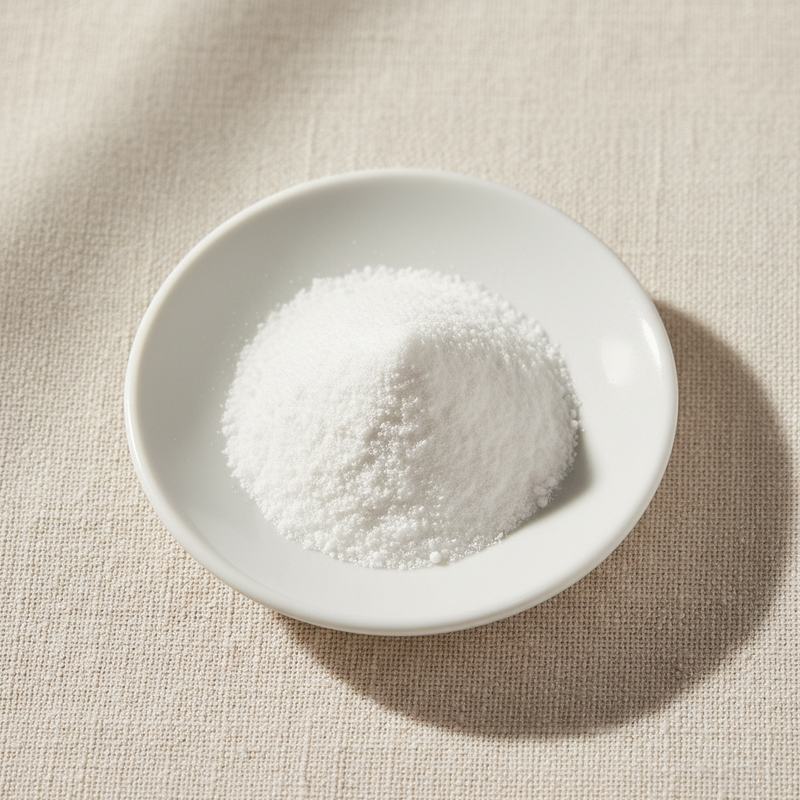
Description
The hydrated crystalline form of trimethylglycine, containing approximately 73 percent active betaine and 27 percent bound water. The cost-leading commercial form for high-volume monogastric and aquaculture feed, where the price differential to anhydrous outweighs the loss in nutrient density.
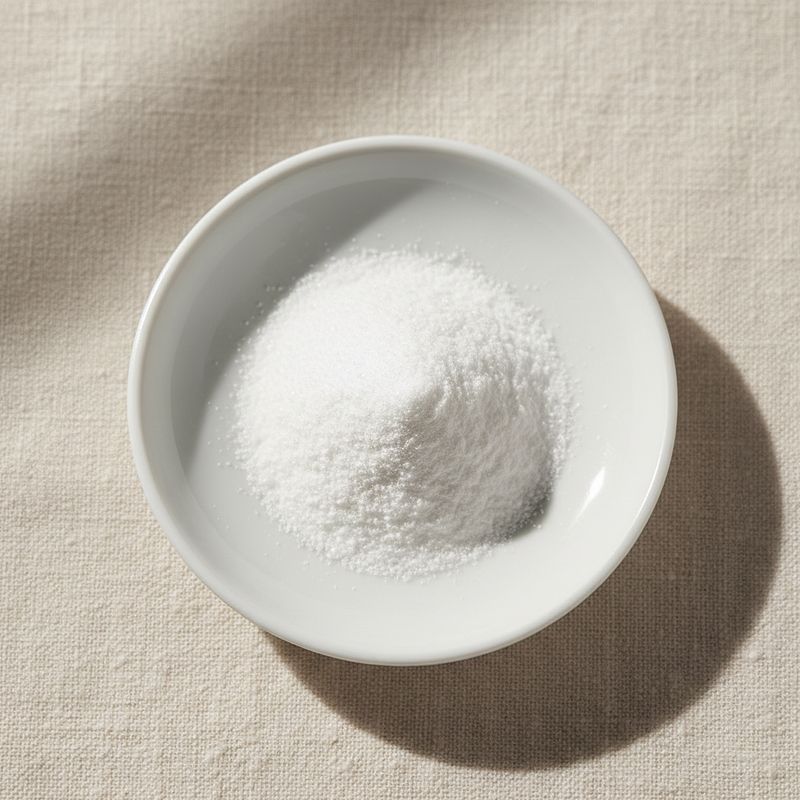
White or off-white free-flowing crystals. Stable in dry premix conditions and through standard pelleting temperatures up to roughly 90 degrees C. Slight hygroscopicity above 75 percent relative humidity is the principal handling consideration; storage in sealed bulk silos with desiccation is standard practice.
We supply feed-grade Betaine Monohydrate from manufacturers in China holding ISO, FAMI-QS, Halal, Kosher and other certifications relevant to the product and production.
Common market grades include Feed Grade 96 percent (the most widely traded form globally), Aquaculture Grade 98 percent for marine species, and granulated dust-suppressed forms for automated bulk-handling and pellet lines. Coated and rumen-protected versions are available for dairy and beef cattle applications.
Bulk and reduced-MOQ shipments. Batch-level COA covering assay, water content, chloride, heavy metals, and microbiology.
Introduction
Betaine monohydrate is the crystalline hydrate form of trimethylglycine, recovered from sugar-beet vinasse chromatography under controlled crystallization conditions that retain a single molecule of water per molecule of betaine. The hydrate is thermodynamically more stable at typical warehouse humidity than the anhydrous form, which is why most globally traded feed-grade betaine moves as the monohydrate.
Functional behavior in animals is identical to the anhydrous form, scaled by the difference in active content. Inclusion-rate calculations should always reference active betaine on a dry basis: a 1,000 grams per tonne dose of monohydrate delivers approximately 730 grams per tonne of active versus 980 grams per tonne for an equivalent mass of anhydrous material.
Authorized as a feed additive in the EU under nutritional-additive categorization, listed as GRAS for feed use by the U.S. FDA, and approved in major aquaculture markets including Vietnam, Thailand, Indonesia, Ecuador, India, and China.
In commercial aquaculture, typical inclusion rates are 1,500 to 2,500 grams of monohydrate per tonne of shrimp feed and 1,500 to 3,000 grams per tonne of salmonid feed. Cost-in-use analyses generally favor the monohydrate at scale despite the lower active content, with premium positioning reserved for anhydrous in space-constrained premixes.
Where it is used
- Whiteleg shrimp (Penaeus vannamei) grow-out feed; the dominant betaine form in Southeast Asian and Latin American shrimp diets
- Tilapia and carp feed; supports growth and protein deposition at sub-clinical methionine inclusion
- Atlantic salmon, rainbow trout, and Arctic char grower diets; osmotic support through brackish-water transitions
- Marine finfish hatchery and nursery feed where stress resilience determines survival
- Broiler feed for hot-climate production; reduces panting losses and supports breast meat yield
- Layer hen diets to support persistence and egg-mass output during heat stress
- Weaner and grower pig feed as a methionine sparer and gut-stress mitigant
- Calf milk replacers and weaning diets
- Eel and sturgeon specialty aquaculture feeds
Technical data
| Item | Specification |
|---|---|
| Appearance | White or off-white crystalline powder |
| Assay (active betaine, dry basis) | ≥ 96.0% |
| Water content | 11.0% to 14.0% |
| pH (10% solution) | 5.5 to 7.5 |
| Chloride | ≤ 0.5% |
| Heavy metals (as Pb) | ≤ 10 mg/kg |
| Arsenic | ≤ 2 mg/kg |
| Residue on ignition | ≤ 0.5% |
| Total plate count | ≤ 1,000 cfu/g |
| E. coli and Salmonella | Negative |
| Particle size | 100% through 20 mesh, or per customer specification |
Related ingredients
Ready to discuss business?
Send us your spec and requirement. We will respond with availability and pricing within 24 hours.