Description
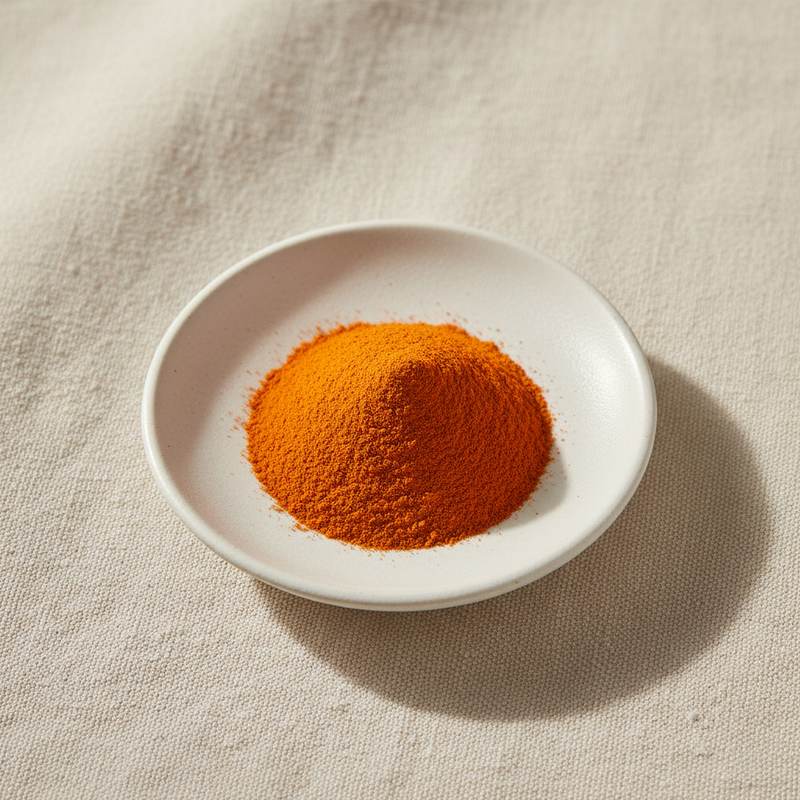
A natural yellow to deep orange carotenoid colorant produced by fermentation using Blakeslea trispora, by extraction from algae (Dunaliella salina), or by chemical synthesis. Provides both color and provitamin A activity in food applications.
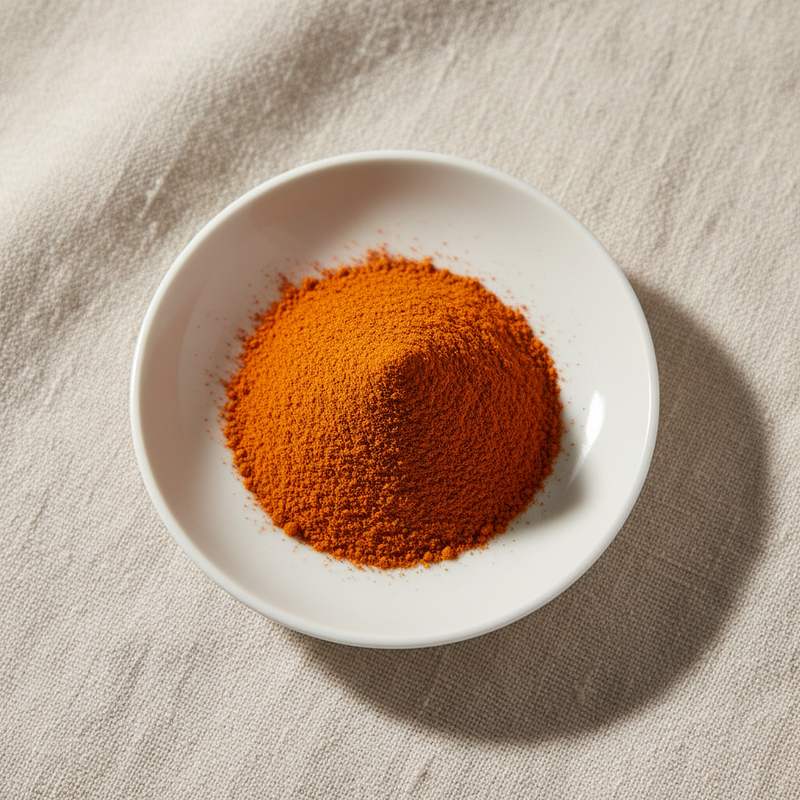
Yellow to deep orange free-flowing microencapsulated beadlet powder, or red-orange oil suspension. The beadlet form contains the pigment dispersed in a matrix of starch, gelatin, or modified-starch carrier with antioxidants, yielding a cold-water-dispersible powder for direct dosing.
We supply food-grade Beta-Carotene from manufacturers in China holding ISO, Halal, Kosher and other certifications relevant to the product and production. Natural-source (Blakeslea trispora and Dunaliella) and synthetic grades are available.
Common market grades are sold by beta-carotene content: 1 percent, 5 percent, 10 percent, and 20 percent CWS beadlets; 30 percent oil suspension; and crystalline material at 96 percent or higher purity. Beadlet grades dominate trade for color use in beverages, dairy, and bakery.
Bulk and reduced-MOQ shipments. Batch-level COA covering beta-carotene content, color value, isomer profile, peroxide value, heavy metals, and microbiology.
Introduction
Beta-Carotene was first isolated from carrots by German chemist Heinrich Wackenroder in 1831, the source of its name. The compound was characterized as the principal provitamin A precursor in the 1930s and entered industrial production as a food colorant and nutrient shortly thereafter.
Three production routes serve the modern market. Fermentation using Blakeslea trispora yields material classified as natural in the EU. Extraction from the halophilic alga Dunaliella salina, cultivated in high-salinity ponds, yields natural mixed-carotenoid concentrates. Chemical synthesis, originally developed by Hoffmann-La Roche in the 1950s, produces pure synthetic beta-carotene identical in molecular structure to the natural form and is regulated as the same E number.
Regulated as E160a in the EU (subdivided into E160a(i) synthetic, E160a(ii) plant carotenes, E160a(iii) Dunaliella, and E160a(iv) algae and palm), listed by the U.S. FDA as a permitted color additive exempt from certification, and approved by JECFA with an Acceptable Daily Intake of 0 to 5 mg per kg body weight.
The technical profile is strong: good heat stability through baking, pasteurization, and UHT; broad pH compatibility from 2 to 8; and good light stability in opaque or oil-protected matrices. The microencapsulated beadlet form is the dominant trade product because it converts an oil-soluble pigment into a cold-water-dispersible powder suitable for direct dosing.
Strategically, Beta-Carotene is the natural orange workhorse of dairy, beverage, and bakery applications, and competes directly with synthetic Sunset Yellow (E110) and Tartrazine (E102) in clean-label reformulation. Its dual function as a provitamin A nutrient adds positioning value in fortification and nutrition-claim categories.
Where it is used
- Beverages including orange-juice drinks, fortified milks, and yellow soft drinks using CWS beadlets
- Butter, margarine, and dairy spreads requiring natural yellow to deep yellow tone
- Cheese applications including processed cheese and cheese analogs
- Ice cream, sorbet, and frozen dairy desserts
- Bakery applications including biscuits, cake mixes, and bread
- Sauces, soups, and ready meals requiring yellow to orange lift
- Confectionery and gummies
- Aquaculture feed for salmonid flesh pigmentation
- Vitamin A fortification programs in nutrition-sensitive markets
- Pharmaceutical tablet coatings and capsules
Technical data
| Item | Specification |
|---|---|
| Appearance | Yellow to deep orange beadlet powder or oil suspension |
| Source | Blakeslea trispora, Dunaliella salina, or synthetic |
| Beta-carotene content | 1%, 5%, 10%, 20%, or 30% (per grade) |
| Color value (E1%, 1cm, 455 nm) | Per declared content |
| All-trans isomer | ≥ 90% (typical) |
| Solubility | CWS beadlets: water-dispersible; oil suspension: oil-soluble |
| Light stability | Good in opaque or oil-protected matrices |
| Heat stability | Good through baking, pasteurization, and UHT |
| pH stability range | 2.0 to 8.0 |
| Peroxide value | ≤ 10 meq/kg |
| Lead | ≤ 2 mg/kg |
| Arsenic | ≤ 1 mg/kg |
Related ingredients
Ready to discuss business?
Send us your spec and requirement. We will respond with availability and pricing within 24 hours.