Description
A galactomannan polysaccharide extracted from the seeds of Caesalpinia spinosa (tara tree), native to South America. Sits chemically between Guar Gum and Locust Bean Gum in mannose:galactose ratio (3:1) and combines moderate cost with strong synergy with xanthan and carrageenan.
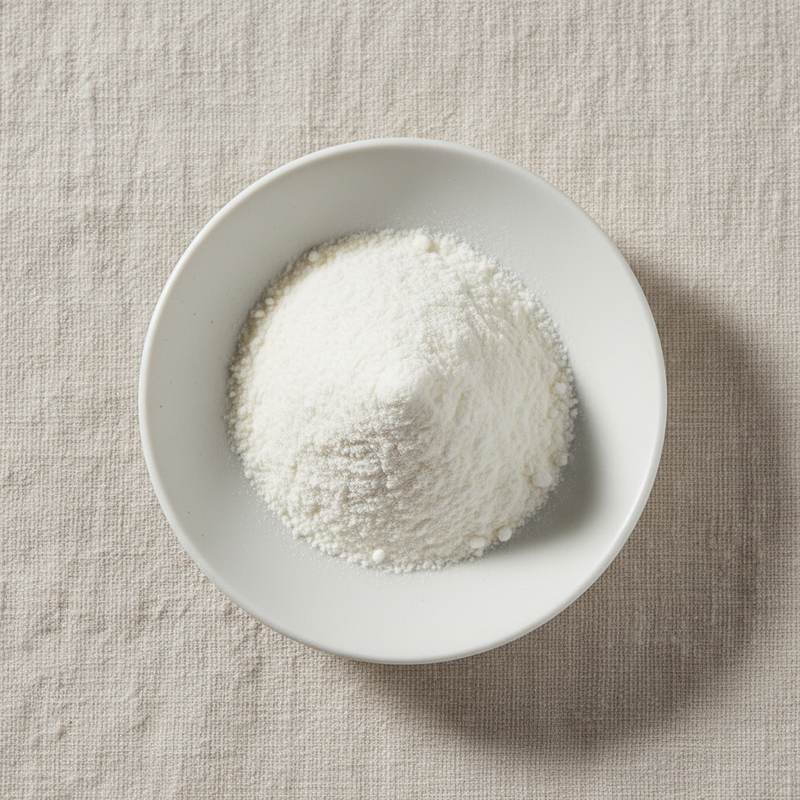
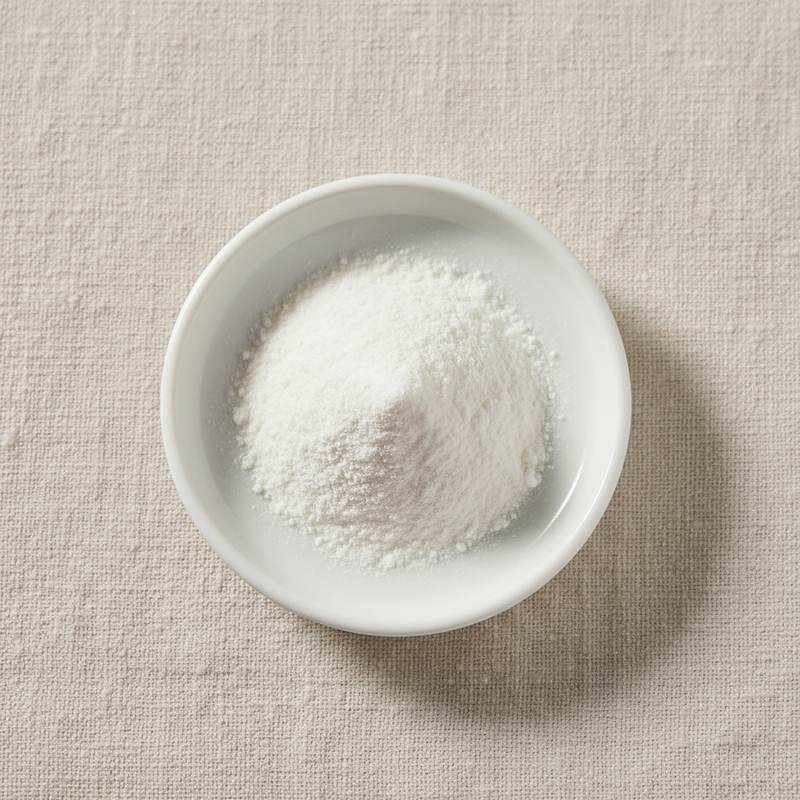
White to off-white free-flowing powder. Hydrates in cold water (unlike Locust Bean Gum which requires hot water) but at slower rate than Guar Gum.
We supply food-grade Tara Gum from manufacturers in China holding ISO, Halal, Kosher and other certifications relevant to the product and production. Non-GMO is inherent to the source.
Common market grades include Standard Food Grade (the workhorse for ice cream and dairy applications), High-Viscosity Tara for premium thickening applications, and pre-blended Tara-with-Xanthan systems for synergistic thickening.
Bulk and reduced-MOQ shipments. Batch-level COA covering viscosity, particle size, protein content, ash, heavy metals, and microbiology.
Introduction
The tara tree has been cultivated in Peru, Bolivia, and Ecuador for at least a thousand years, with the seeds traditionally used for tannin extraction and as a food thickener. Industrial extraction for international food applications was developed in the 20th century and gained European regulatory approval in the 1980s.
Industrial production proceeds by mechanical splitting of tara seeds, separation of the endosperm from the husk and germ, and milling of the endosperm to defined particle-size specifications.
Regulated as E417 in the EU, classified as Generally Recognized as Safe by the U.S. FDA, and approved by JECFA without a numerical Acceptable Daily Intake limit.
The molecule is a galactomannan with mannose:galactose ratio of approximately 3:1, intermediate between Guar (2:1) and Locust Bean Gum (4:1). This intermediate composition produces a hydrocolloid with intermediate properties: cold-water hydration like Guar, synergy with xanthan and carrageenan resembling Locust Bean Gum, and cost between the two.
Strategic positioning targets ice cream and dairy applications where the synergy advantage of Locust Bean Gum is needed but its cost is prohibitive. Tara Gum delivers approximately 80 percent of Locust Bean's synergy effect at approximately 60 percent of the cost, making it a popular cost-optimized substitute in premium-but-not-luxury ice cream formulations.
Where it is used
- Ice cream and frozen desserts; alternative to Locust Bean Gum in synergy systems with carrageenan
- Cream cheese, processed cheese, and yogurt
- Bakery applications: dough conditioners and gluten-free baking
- Salad dressings and sauces
- Pet food: structural binding in wet pet food
- Synergy with Xanthan Gum at 1:1 ratios for strong gel formation
- Cosmetic and personal-care formulations including shampoos and creams
- Plant-based meat alternatives
- Pharmaceutical applications: oral suspensions
Technical data
| Item | Specification |
|---|---|
| Appearance | White to off-white free-flowing powder |
| Viscosity (1% solution) | 2500 to 5500 cP |
| Loss on drying | ≤ 15.0% |
| Ash | ≤ 1.5% |
| Protein content | ≤ 3.5% |
| Heavy metals (as Pb) | ≤ 5 mg/kg |
| Arsenic | ≤ 3 mg/kg |
| Particle size | ≥ 95% through 100 mesh |
| Total plate count | ≤ 5000 cfu/g |
Related ingredients
Ready to discuss business?
Send us your spec and requirement. We will respond with availability and pricing within 24 hours.