Description
A natural-source galactomannan polysaccharide extracted from the seeds of Cyamopsis tetragonoloba, the guar bean cultivated principally in India and Pakistan. The most cost-effective hydrocolloid thickener in the food industry, used at 0.1 to 1.0 percent across a wide range of applications.
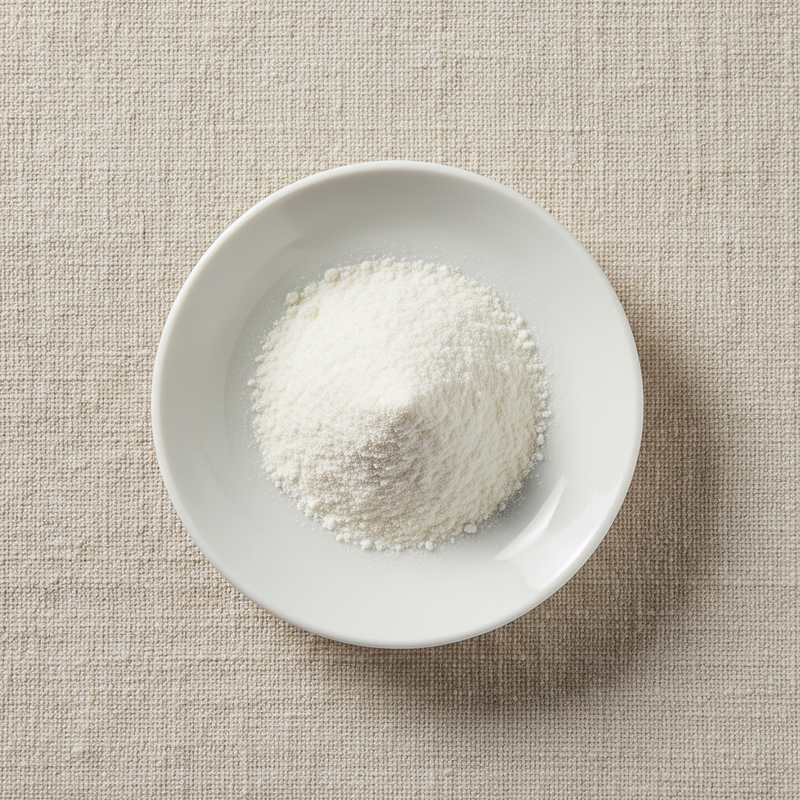
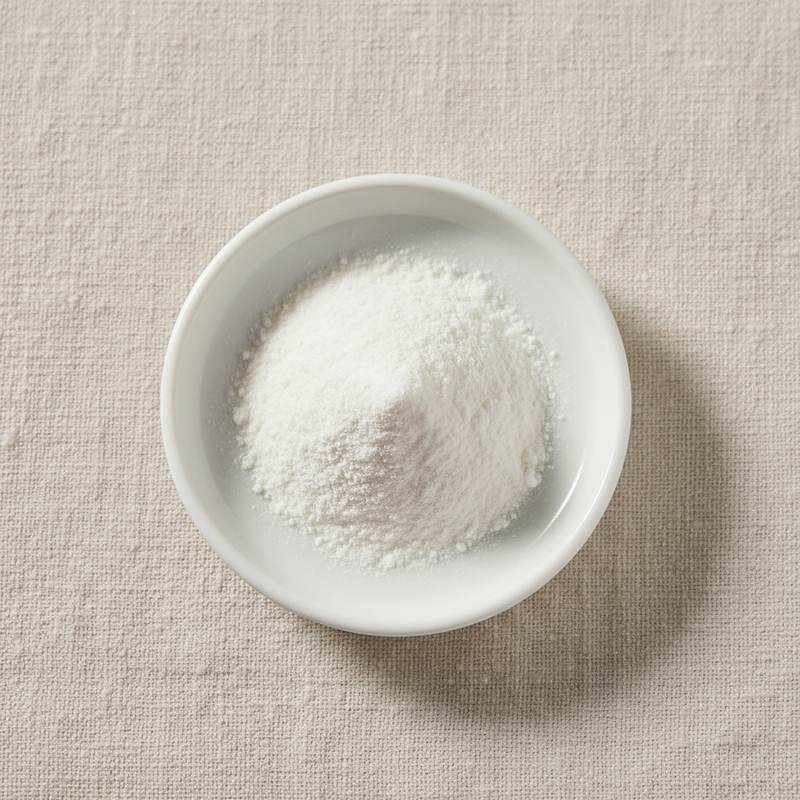
Cream-colored to off-white free-flowing powder. Hydrates in cold water to produce thick, lump-free solutions; the principal differentiator from competing gums is rapid cold-water hydration combined with low cost.
We supply food-grade and pharmaceutical-grade Guar Gum from manufacturers in China holding ISO, Halal, Kosher and other certifications relevant to the product and production. Non-GMO is inherent to the source.
Common market grades include Standard Food Grade (the cost-effective workhorse), Fast-Hydrating Grade for instant applications, Pharmaceutical Grade meeting BP/USP specifications, Oilfield Grade for industrial drilling fluids, and Hydroxypropyl Guar (modified for additional functionality).
Bulk and reduced-MOQ shipments. Batch-level COA covering viscosity, particle size, protein content, fat content, heavy metals, and microbiology.
Introduction
Guar Gum has been used as food and animal feed for centuries in India and Pakistan, where the guar bean is a staple drought-tolerant crop. Industrial extraction for international food applications was developed in the 1950s as a cost-effective alternative to locust bean gum.
Industrial production proceeds by mechanical splitting of guar seeds to separate the endosperm from the husk and germ, followed by milling of the endosperm to defined particle-size specifications. The endosperm contains 78 to 85 percent galactomannan polysaccharide; the husk and germ go to animal feed.
Regulated as E412 in the EU, classified as Generally Recognized as Safe by the U.S. FDA, listed in BP, USP, and EP pharmacopoeias, and approved by JECFA without a numerical Acceptable Daily Intake limit.
The molecule is a galactomannan polysaccharide consisting of a beta-1,4-mannose backbone with random alpha-1,6-galactose side chains, with mannose:galactose ratio approximately 2:1. This structure produces high water-binding capacity and strong viscosity development without gel formation.
Strategic role in formulation is the combination of low cost, broad regulatory acceptance, cold-water hydration, and synergy with xanthan gum. A 1:1 blend of Guar and Xanthan delivers gel strength meaningfully greater than either gum alone, making Guar a fundamental component of modern hydrocolloid thickener systems despite its straightforward chemistry.
Where it is used
- Salad dressings, sauces, and condiments; the dominant low-cost thickener in this category
- Bakery products: dough conditioners, gluten-free baked goods, and instant-bake mixes
- Dairy: ice cream, frozen desserts, and yogurt; texture and freeze-thaw stability
- Beverages: chocolate milk, suspended-particle drinks, fruit juices
- Pet food: structure and texture control in wet and dry pet food
- Personal care and cosmetics: shampoos, conditioners, and lotions
- Pharmaceutical applications: bulk laxatives, weight-management products, and fiber supplements
- Industrial applications: oilfield drilling fluids, paper sizing, textile printing
- Synergy with xanthan gum: 1:1 blends produce gels stronger than either gum alone
Technical data
| Item | Specification |
|---|---|
| Appearance | Cream-colored to off-white free-flowing powder |
| Viscosity (1% solution) | 3000 to 6000 cP (grade dependent) |
| Loss on drying | ≤ 15.0% |
| Ash | ≤ 1.5% |
| Protein content | ≤ 5.0% |
| Fat content | ≤ 1.0% |
| Heavy metals (as Pb) | ≤ 5 mg/kg |
| Arsenic | ≤ 3 mg/kg |
| Particle size | Per customer specification |
Related ingredients
Ready to discuss business?
Send us your spec and requirement. We will respond with availability and pricing within 24 hours.