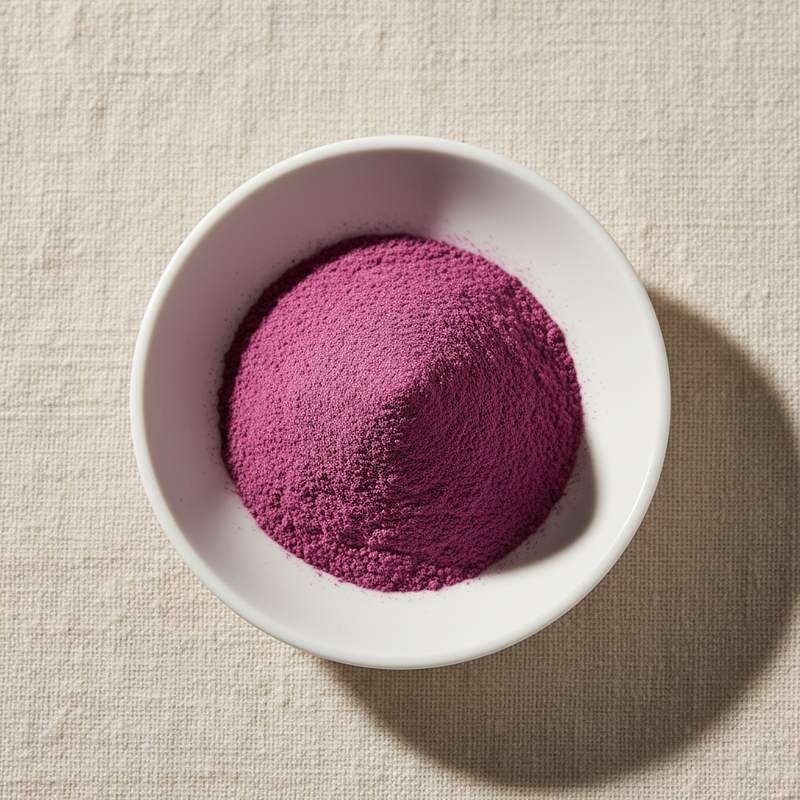
Description
A natural red-to-purple colorant produced by concentration of the juice of purple carrots (Daucus carota ssp. sativus var. atrorubens). The product is among the most acid-stable, heat-stable natural anthocyanin colorants and is positioned as a clean-label alternative to synthetic red dyes including Allura Red AC (Red 40) and Carmine.
Reddish-purple to dark purple liquid concentrate or free-flowing powder. Highly water-soluble.
We supply food-grade Purple Carrot Extract from manufacturers in China holding ISO, Halal, Kosher and other certifications relevant to the product and production. Organic-certified and non-GMO grades are available.
Common market formats include Liquid Concentrate (60 to 70 Brix juice concentrate), Liquid Color Standard (standardized colour value), Spray-Dried Powder on maltodextrin carrier (common 1 to 2 percent anthocyanins), and Concentrated Anthocyanin Powder (premium 10 percent or higher anthocyanin grade).
Bulk and reduced-MOQ shipments. Batch-level COA covering anthocyanin content, colour value (E1cm), Brix (liquid grades), residual solvents, heavy metals, pesticides, and microbiology.
Introduction
Purple Carrot has been cultivated since antiquity in Afghanistan and the eastern Mediterranean, predating the now-dominant orange carrot which emerged in the Netherlands in the 17th century. The acylated anthocyanin profile of purple carrot, dominated by cyanidin derivatives acylated with hydroxycinnamic acids, provides exceptional acid and heat stability compared with non-acylated anthocyanin colorants from sources such as blueberry or elderberry.
Industrial production proceeds by cold pressing and concentration of fresh purple carrot juice, or by aqueous extraction of dried purple carrot followed by purification and concentration. Spray-drying onto maltodextrin produces shelf-stable powder grades; liquid concentrates serve liquid-application food and beverage formulators.
Recognized as a permitted natural colorant by the U.S. FDA (exempt from certification as a fruit/vegetable juice colorant), the European Food Safety Authority (as anthocyanin colorant E163), and equivalent regulators worldwide.
Strategic positioning targets clean-label natural-color reformulation across food, beverage, and confectionery, riding the broader market shift away from synthetic colors (notably Red 40 / Allura Red AC) and animal-derived colors (Carmine / cochineal) toward plant-based natural alternatives.
Where it is used
- Clean-label natural red and purple food colorant: confectionery, beverages, dairy, ice cream, frozen desserts, and baked goods
- Premium positioning for vegan and vegetarian products requiring carmine alternatives
- Sports nutrition and protein products requiring natural red coloring
- Functional beverages: superfood-positioned drinks and vegetable-juice products
- Confectionery: gummies, hard candies, and chewing gum requiring acid-stable red coloring
- Sauce and condiment applications requiring heat-stable natural red
- Cosmetic applications: natural red lipstick and lip product colorant
Technical data
| Item | Specification |
|---|---|
| Appearance | Reddish-purple to dark purple liquid or free-flowing powder |
| Anthocyanin content | 1% to 10% (powder grades) / colour value defined for liquids |
| Colour value (E1cm 525 nm) | typically 100 to 500 (grade dependent) |
| Brix (liquid concentrate) | 60 to 70 |
| Loss on drying (powder) | ≤ 6.0% |
| Heavy metals (as Pb) | ≤ 2 mg/kg |
| Total plate count | ≤ 1000 cfu/g |
| Source | Daucus carota ssp. sativus var. atrorubens |
Related ingredients
Ready to discuss business?
Send us your spec and requirement. We will respond with availability and pricing within 24 hours.