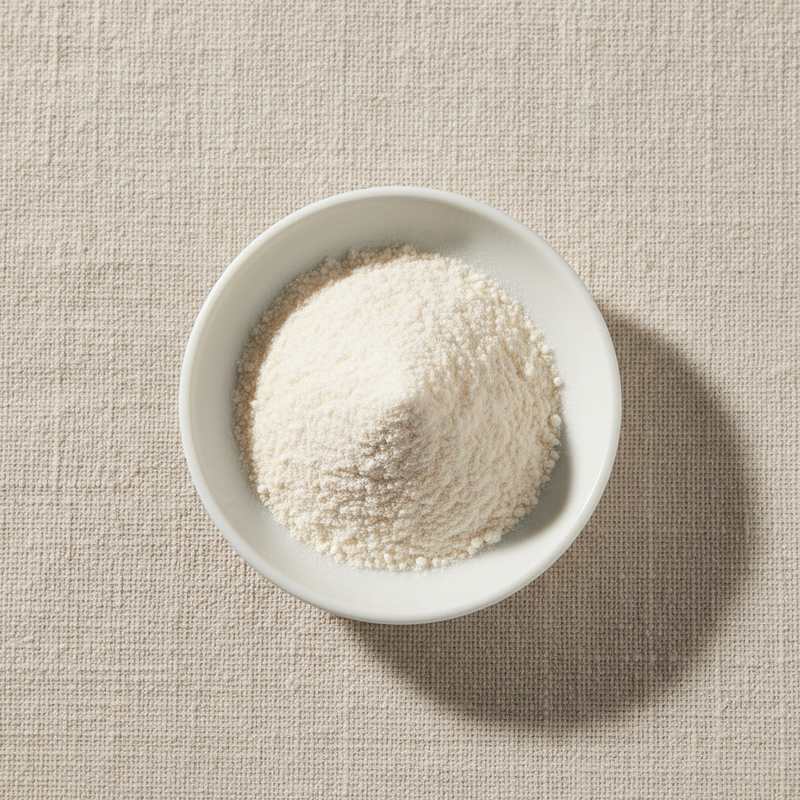
Description
Phospholipase A1 (PLA1) hydrolyses the sn-1 ester bond of phospholipids, releasing a free fatty acid and a lysophospholipid. In edible oil refining it is the principal enzyme of modern enzymatic degumming, converting hydratable and non-hydratable phospholipids into lysoforms that partition into the aqueous phase for removal.
Amber liquid for direct dosing into oil-degumming lines. Activity is standardised in Phospholipase Units (PLU) per supplier convention.
We supply food-grade Phospholipase A1 from manufacturers in China holding ISO 22000, Halal, Kosher and other certifications relevant to the product and production. Engineered Aspergillus oryzae and Thermomyces lanuginosus production strains are available.
Common market grades include 5,000 PLU/g standard degumming liquid, 10,000 to 25,000 PLU/g concentrated for low-volume dosing on continuous degumming lines, 50,000 PLU/g high-activity grade, and bakery-grade formulations for dough conditioning and emulsion stabilisation.
Bulk and reduced-MOQ shipments. Batch-level COA covering activity, pH optimum, temperature optimum, side activities, heavy metals and microbiology.
Introduction
Phospholipase A1 reached commercial scale in edible oil refining during the 2000s as enzymatic degumming displaced caustic refining in selected vegetable oil mills. The enzymatic route delivers lower neutral-oil losses, reduced wastewater load and improved energy economics, and has now achieved meaningful global penetration in soybean, rapeseed and sunflower oil refining.
Industrial production is by submerged fermentation of engineered Aspergillus oryzae and Thermomyces lanuginosus strains. The enzyme is supplied as a stabilised liquid concentrate dosed at parts-per-million levels into oil-degumming reactors, with reaction times measured in minutes to a few hours at controlled temperature.
The enzyme is Generally Recognized as Safe by the U.S. FDA from approved source organisms, listed in the JECFA enzyme compendium, and approved as a processing aid in the EU under Regulation 1332/2008.
Mechanistically, PLA1 cleaves the sn-1 fatty acid ester bond of phosphatidylcholine, phosphatidylethanolamine and other phospholipids. The resulting lyso-phospholipids are water-dispersible and partition cleanly into the aqueous phase during centrifugal separation, where the unreacted phospholipids would otherwise remain emulsified in the oil.
Strategic positioning in industrial food processing is high-growth: enzymatic degumming continues to displace caustic refining in vegetable oil mills, and PLA1 plus its sister enzymes PLA2 and PLC are the technology platform driving that transition globally.
Where it is used
- Enzymatic degumming of crude soybean, rapeseed, sunflower and palm oils; reduces phosphorus content below 10 ppm
- Conversion of non-hydratable phospholipids in oil refining; reduces neutral-oil losses versus chemical refining
- Bread, bun and pastry dough conditioning; improves dough stability and finished crumb structure
- Lysolecithin production from crude soy and sunflower lecithin
- Egg-yolk processing; produces lysolecithin emulsifiers with improved heat tolerance
- Mayonnaise and dressing emulsifier manufacture from enzymatically modified yolk
- Industrial lecithin modification for improved emulsification and water dispersibility
- Vegetable oil pretreatment for biodiesel feedstock preparation
Technical data
| Item | Specification |
|---|---|
| Appearance | Amber liquid |
| Activity | 5,000 to 50,000 PLU/g or per customer specification |
| pH optimum | 4.5 to 6.0 |
| Temperature optimum | 40 °C to 55 °C |
| Heavy metals (as Pb) | ≤ 10 mg/kg |
| Arsenic | ≤ 3 mg/kg |
| Total plate count | ≤ 50,000 CFU/g |
| Coliforms | ≤ 30 CFU/g |
| Salmonella | Absent in 25 g |
| E. coli | Absent in 25 g |
| Source organism | Aspergillus oryzae or Thermomyces lanuginosus |
Related ingredients
Ready to discuss business?
Send us your spec and requirement. We will respond with availability and pricing within 24 hours.