Description
Mannanase (endo-1,4-beta-mannanase) is a hemicellulose-degrading enzyme that hydrolyses the beta-1,4-mannosidic backbone of galactomannan, glucomannan and mannan polysaccharides. It is the principal enzyme for processing guar gum, locust bean gum and konjac flour, and for releasing mannan-bound nutrients in feed.
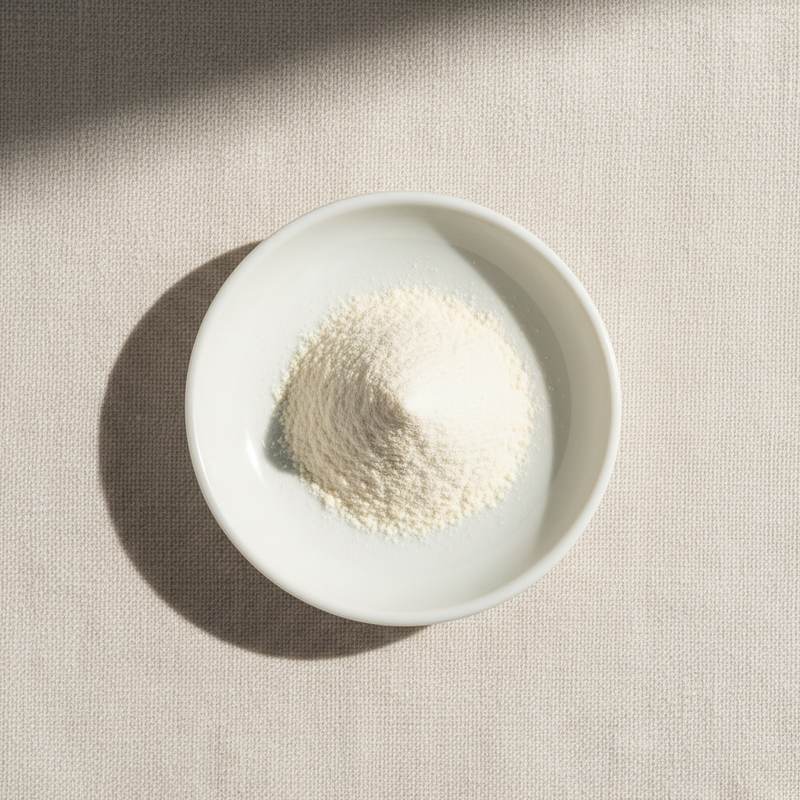
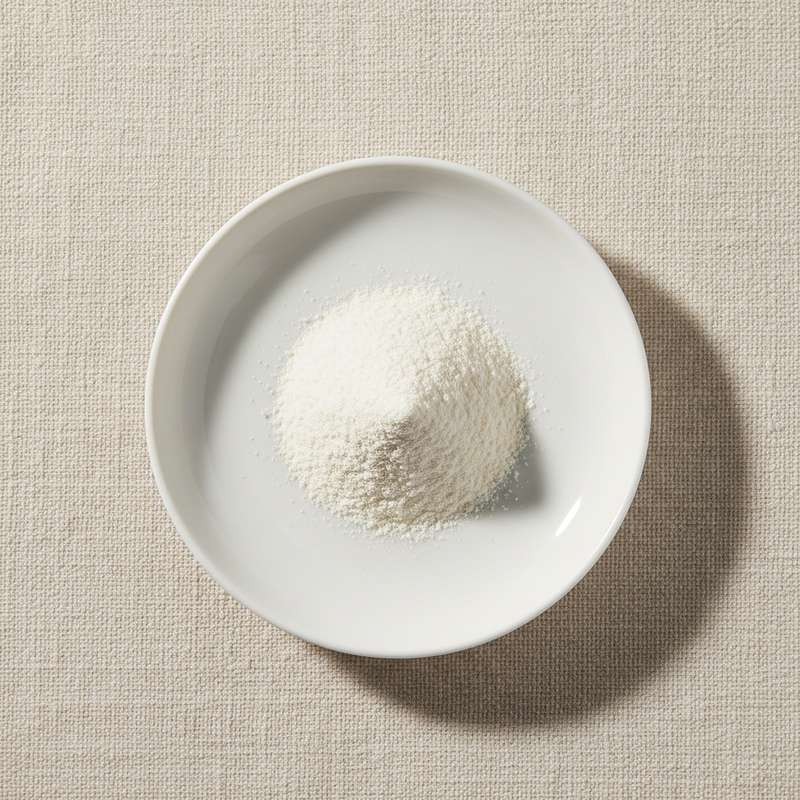
Off-white to light tan free-flowing powder, or amber liquid. Activity is standardised in Mannanase Units (MNU) defined as the amount of enzyme releasing one micromole of reducing sugar per minute from locust bean galactomannan.
We supply food-grade Mannanase from manufacturers in China holding ISO 22000, Halal, Kosher and other certifications relevant to the product and production. Bacillus subtilis, Bacillus lentus, Aspergillus niger and Trichoderma reesei strains are available.
Common market grades include 10,000 MNU/g standard food grade, 50,000 MNU/g for hydrocolloid viscosity reduction, 200,000 MNU/g concentrated, and mannan-oligosaccharide (MOS) production grades tuned for controlled hydrolysis of yeast cell wall mannan.
Bulk and reduced-MOQ shipments. Batch-level COA covering activity, pH optimum, temperature optimum, side activities, heavy metals and microbiology.
Introduction
Mannanase reached commercial scale in the late 1990s as the feed industry sought enzymatic solutions to the antinutrient effects of mannan in soybean meal and palm kernel meal. Food applications followed as hydrocolloid suppliers adopted enzymatic viscosity control of guar and locust bean gum, and as the MOS prebiotic segment matured.
Industrial production is by submerged fermentation of Bacillus and Aspergillus strains. The enzyme is supplied in both food-grade and feed-grade forms, with food-grade preparations subject to more stringent microbiology and heavy-metal specifications and broader allergen-control documentation.
The enzyme is Generally Recognized as Safe by the U.S. FDA from approved source organisms, listed in the JECFA enzyme compendium, and approved as a processing aid and feed additive in the EU.
Mechanistically, endo-1,4-beta-mannanase cleaves internal mannosidic bonds in the mannan backbone. Side activities including beta-mannosidase and alpha-galactosidase complete the hydrolysis to free mannose, galactose and glucose, although for hydrocolloid viscosity control only the endo-acting backbone cleavage is desired.
Strategic positioning in industrial food processing is specialised but high-value: mannanase is the only enzyme that addresses mannan-based viscosity and antinutrient problems, and it is essential to the coffee instant-extract, hydrocolloid-supplier and MOS-prebiotic industries.
Where it is used
- Coffee processing; reduces viscosity of instant coffee extracts and improves spray-drying yields
- Guar gum and locust bean gum hydrolysis; controlled viscosity reduction for hydrocolloid suppliers
- Konjac flour processing; molecular-weight control of glucomannan ingredients
- Mannan-oligosaccharide (MOS) prebiotic ingredient manufacture
- Coconut, palm kernel and copra meal processing; releases mannan-bound nutrients
- Animal feed for poultry, swine and aquaculture; improves digestibility of mannan-rich feedstuffs
- Plant-protein isolate manufacture; supports cell-wall breakdown in legume substrates
- Fruit juice processing where galactomannan-related haze is present
Technical data
| Item | Specification |
|---|---|
| Appearance | Off-white to light tan powder or amber liquid |
| Activity | 10,000 to 200,000 MNU/g or per customer specification |
| pH optimum | 5.0 to 7.0 |
| Temperature optimum | 50 °C to 65 °C |
| Moisture | ≤ 8.0% |
| Heavy metals (as Pb) | ≤ 10 mg/kg |
| Arsenic | ≤ 3 mg/kg |
| Total plate count | ≤ 50,000 CFU/g |
| Coliforms | ≤ 30 CFU/g |
| Salmonella | Absent in 25 g |
| E. coli | Absent in 25 g |
| Source organism | Bacillus subtilis, Bacillus lentus, Aspergillus niger or Trichoderma reesei |
Related ingredients
Ready to discuss business?
Send us your spec and requirement. We will respond with availability and pricing within 24 hours.