Description
Inulinase hydrolyses inulin, the beta-2,1-linked fructose polysaccharide of chicory root, agave and Jerusalem artichoke, into free fructose. The exo-acting form releases successive fructose units from the chain end; the endo-acting form cleaves internal bonds to produce fructo-oligosaccharides.
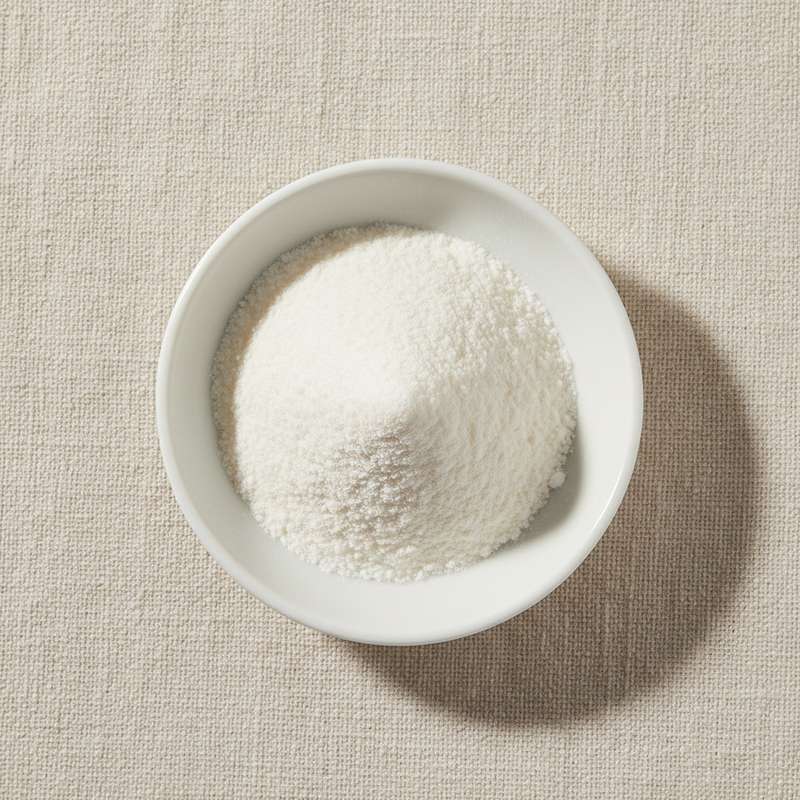
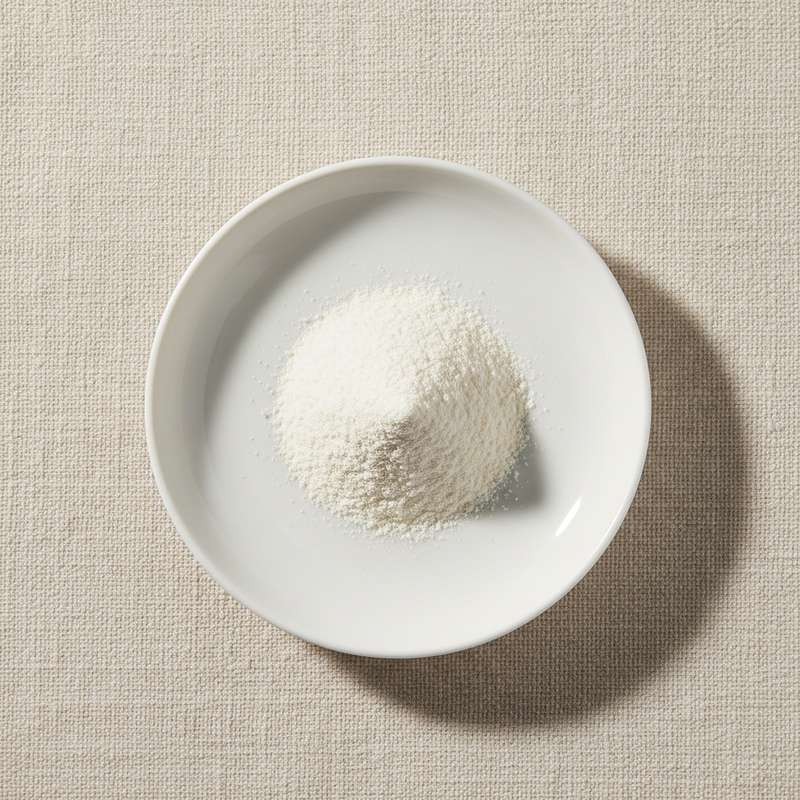
Off-white to light tan free-flowing powder, or amber liquid. Activity is standardised in Inulinase Units (INU) defined as the amount of enzyme releasing one micromole of fructose per minute from chicory inulin.
We supply food-grade Inulinase from manufacturers in China holding ISO 22000, Halal, Kosher and other certifications relevant to the product and production. Aspergillus niger, Kluyveromyces marxianus and Aspergillus ficuum strains are available.
Common market grades include 5,000 INU/g standard food grade, 20,000 INU/g for ultra-high fructose syrup production, 100,000 INU/g concentrated, and endo-inulinase variants tuned for short-chain fructo-oligosaccharide (FOS) prebiotic manufacture.
Bulk and reduced-MOQ shipments. Batch-level COA covering activity, pH optimum, temperature optimum, invertase side activity, heavy metals and microbiology.
Introduction
Inulinase commercial production scaled in the 1990s and 2000s alongside the global growth of the chicory-fibre, FOS-prebiotic and agave-sweetener industries. The enzyme is the only economical industrial route to ultra-high fructose syrups from non-corn feedstocks and the only enzymatic route to defined short-chain FOS prebiotics from inulin.
Industrial production is by submerged fermentation of Aspergillus niger, Aspergillus ficuum and Kluyveromyces marxianus strains. Modern preparations are separated into exo-inulinase products for fructose production and endo-inulinase products for FOS manufacture, with the two activities supplied either separately or as defined-ratio blends.
The enzyme is approved as a processing aid in the U.S. and EU food industries from approved source organisms, listed in the JECFA enzyme compendium, and supported by extensive safety documentation.
Mechanistically, exo-inulinase hydrolyses the beta-2,1-glycosidic bond from the non-reducing end of inulin, releasing free fructose. Endo-inulinase cleaves internal beta-2,1-bonds, producing oligosaccharides of degree of polymerisation 2 to 7 that constitute the commercial FOS prebiotic ingredient.
Strategic positioning is dual: inulinase is the production enzyme behind the global FOS prebiotic ingredient industry and a key enabling technology for non-corn fructose sweetener production, with both segments showing sustained growth driven by consumer demand for gut-health and low-glycemic products.
Where it is used
- Ultra-high fructose syrup production from chicory and agave inulin; greater than 95 percent fructose without isomerisation
- Fructo-oligosaccharide (FOS) prebiotic ingredient manufacture; endo-inulinase produces short-chain prebiotic chains
- Agave syrup processing; controls fructose content and viscosity of finished agave nectars
- Jerusalem artichoke processing; converts tuber inulin to fermentable fructose
- Bioethanol fermentation from inulin-rich feedstocks; serves as a sugar-release enzyme
- Functional dairy product manufacture; FOS as prebiotic and texture modifier
- Chicory coffee and chicory-extract beverage processing
- Inulin-derived sweetener manufacture for low-glycemic applications
Technical data
| Item | Specification |
|---|---|
| Appearance | Off-white to light tan powder or amber liquid |
| Activity | 5,000 to 100,000 INU/g or per customer specification |
| pH optimum | 4.5 to 5.5 |
| Temperature optimum | 50 °C to 60 °C |
| Moisture | ≤ 8.0% |
| Heavy metals (as Pb) | ≤ 10 mg/kg |
| Arsenic | ≤ 3 mg/kg |
| Total plate count | ≤ 50,000 CFU/g |
| Coliforms | ≤ 30 CFU/g |
| Salmonella | Absent in 25 g |
| E. coli | Absent in 25 g |
| Source organism | Aspergillus niger, Aspergillus ficuum or Kluyveromyces marxianus |
Related ingredients
Ready to discuss business?
Send us your spec and requirement. We will respond with availability and pricing within 24 hours.