Description
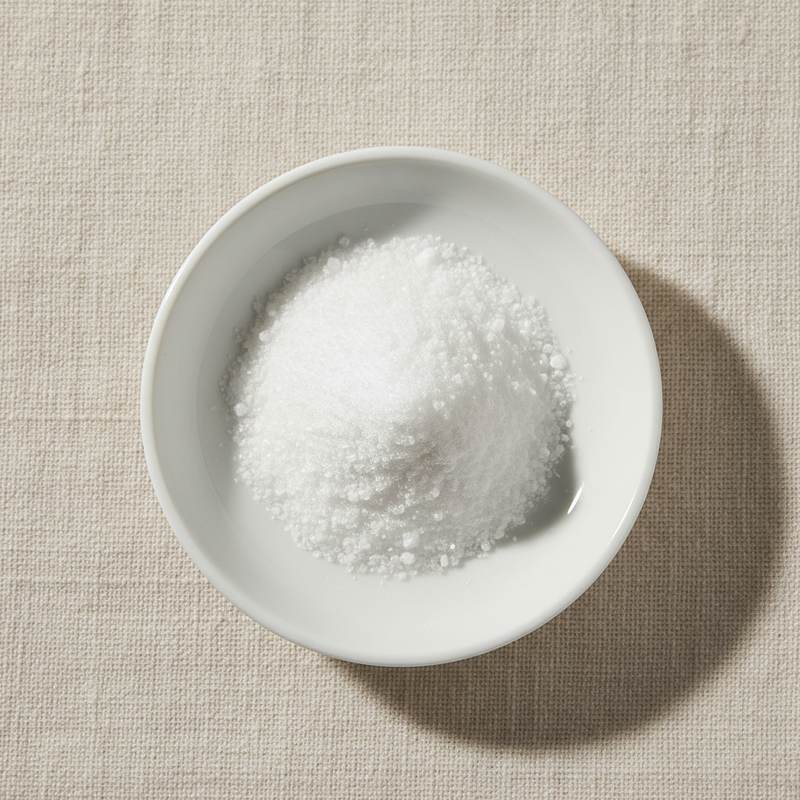
Disodium ethylenediaminetetraacetate dihydrate, the food-additive variant of the EDTA chelate family. Used at low parts-per-million levels to bind trace transition metals that otherwise catalyze oxidation, discoloration, and flavor degradation.
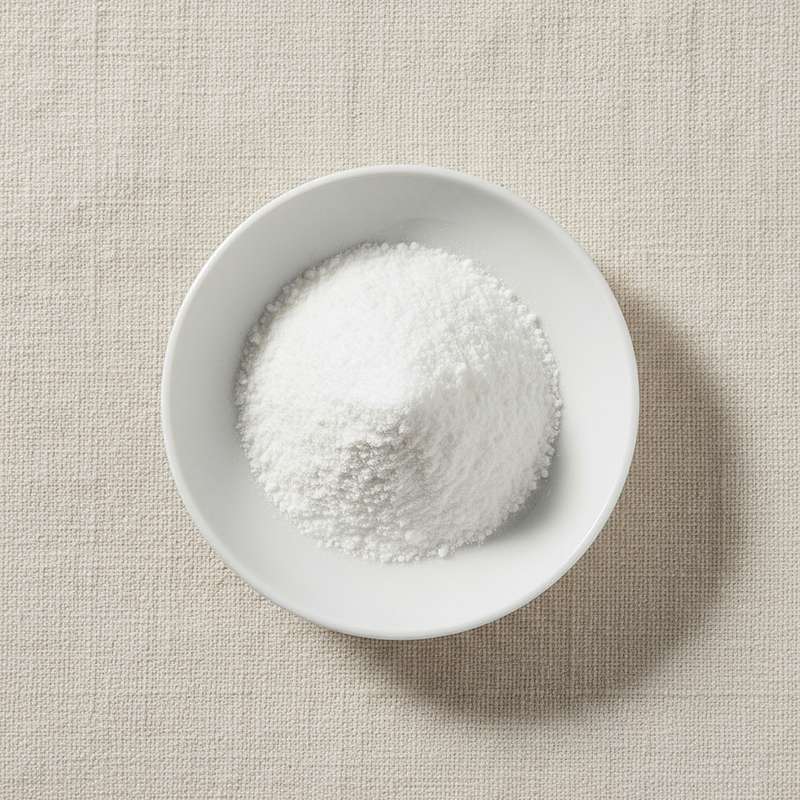
White crystalline powder, odorless, freely soluble in water with a pH near 4.5 in 1 percent solution. Stable in dry storage and across the full pH range of food processing.
We supply food-grade and pharmaceutical-grade Disodium EDTA from manufacturers in China holding ISO, Halal, Kosher and other certifications relevant to the product and production.
Common market grades include food-grade dihydrate (FCC and JECFA compliant), pharmaceutical USP/EP grade for parenteral and topical formulations, cosmetic-grade for personal care and detergents, and high-purity analytical grade for laboratory titration. Particle size and bulk density specifications follow tablet-compression and direct-blend requirements.
Bulk and reduced-MOQ shipments. Batch-level COA covering assay, chelation value, calcium and iron complexing capacity, heavy metals, and microbiology.
Introduction
EDTA (ethylenediaminetetraacetic acid) was first synthesized by Ferdinand Munz at IG Farben in 1935 as a replacement for citric acid in textile dyeing. The disodium salt became the dominant food-additive form because its solubility, pH, and chelation stability constant make it usable across the entire range of food matrices.
Industrial production proceeds through reaction of ethylenediamine with formaldehyde and sodium cyanide to yield the tetra-sodium salt, followed by partial acidification and recrystallization to the dihydrate disodium form. Pharmaceutical and food grades are further purified to control free amine, sodium chloride, and heavy-metal content.
Regulated in the EU as E386, classified by the U.S. FDA under 21 CFR 172.135 with specific permitted uses and maximum levels, listed in USP and EP monographs, and approved by JECFA with an Acceptable Daily Intake of 2.5 mg/kg body weight as Calcium Disodium EDTA equivalent.
Mechanism in finished products is competitive chelation: the four carboxylate and two amine donor atoms of EDTA wrap around polyvalent metal cations (Fe, Cu, Mn, Ca) with stability constants high enough to remove them from active sites on lipid radicals, enzyme cofactors, and color pigments. At 25 to 250 ppm in typical food matrices, EDTA suppresses metal-catalyzed oxidation without affecting flavor or texture.
Strategic positioning: Disodium EDTA is the workhorse sequestrant of canned, bottled, and packaged foods where mineral migration from the can wall or water supply would otherwise compromise quality. Calcium Disodium EDTA is preferred where blood-calcium binding must be avoided in supplement applications; Disodium EDTA dominates conventional food preservation.
Where it is used
- Color and flavor protection in canned legumes, mushrooms, white asparagus, and pickled vegetables; typical inclusion 25 to 75 mg/kg
- Oxidation control in mayonnaise, salad dressings, and sauces containing unsaturated oils
- Trace-metal sequestration in carbonated beverages, ready-to-drink teas, and flavored waters
- Stabilizer in shrimp, crab, and other crustacean processing to prevent struvite crystal formation
- Color retention in canned fish, particularly tuna and sardines
- Pharmaceutical chelation in oral liquid, topical, and parenteral formulations
- Preservative-system booster in personal-care products, working synergistically with parabens and phenoxyethanol
- Cleaning and CIP applications in food plants to control mineral scale and water hardness
- Photographic, textile, and pulp-bleaching industrial applications outside the food sector
Technical data
| Item | Specification |
|---|---|
| Appearance | White crystalline powder |
| Assay (C10H14N2Na2O8·2H2O, dry basis) | 99.0% to 101.0% |
| pH (1% solution) | 4.0 to 5.0 |
| Water content | 8.7% to 11.4% |
| Nitrilotriacetic acid | ≤ 0.1% |
| Iron (as Fe) | ≤ 20 mg/kg |
| Heavy metals (as Pb) | ≤ 10 mg/kg |
| Arsenic | ≤ 3 mg/kg |
| Calcium complexing capacity | ≥ 25.5% (as CaCO3) |
| Particle size | Per customer specification |
Related ingredients
Ready to discuss business?
Send us your spec and requirement. We will respond with availability and pricing within 24 hours.