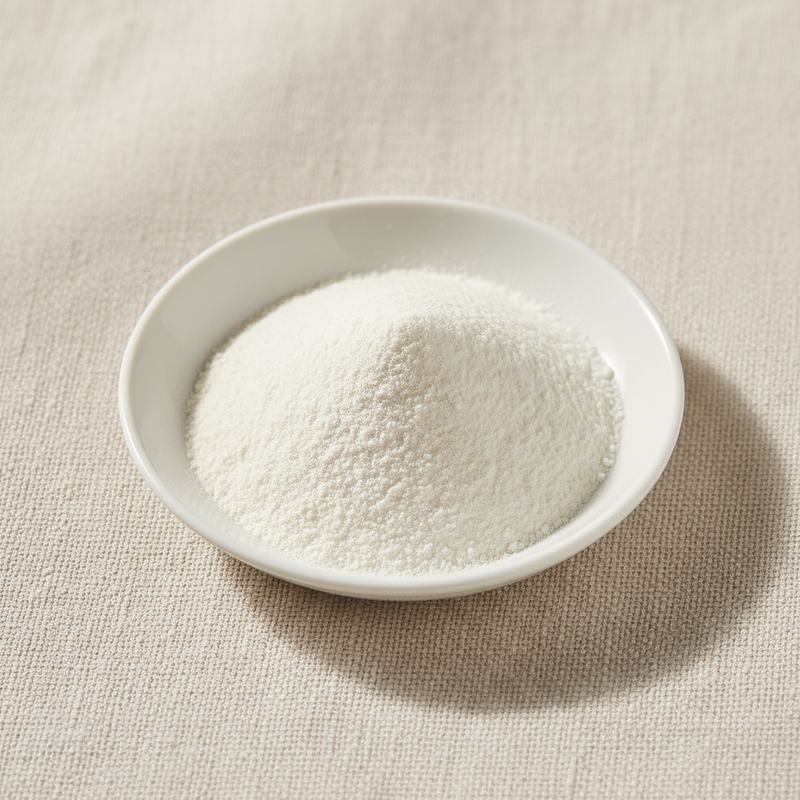
Description
Transglutaminase (protein-glutamine gamma-glutamyltransferase, TGase) catalyses the formation of covalent isopeptide bonds between glutamine and lysine residues in proteins, cross-linking polypeptide chains. It is the foundation of restructured meat, seafood and dairy applications.
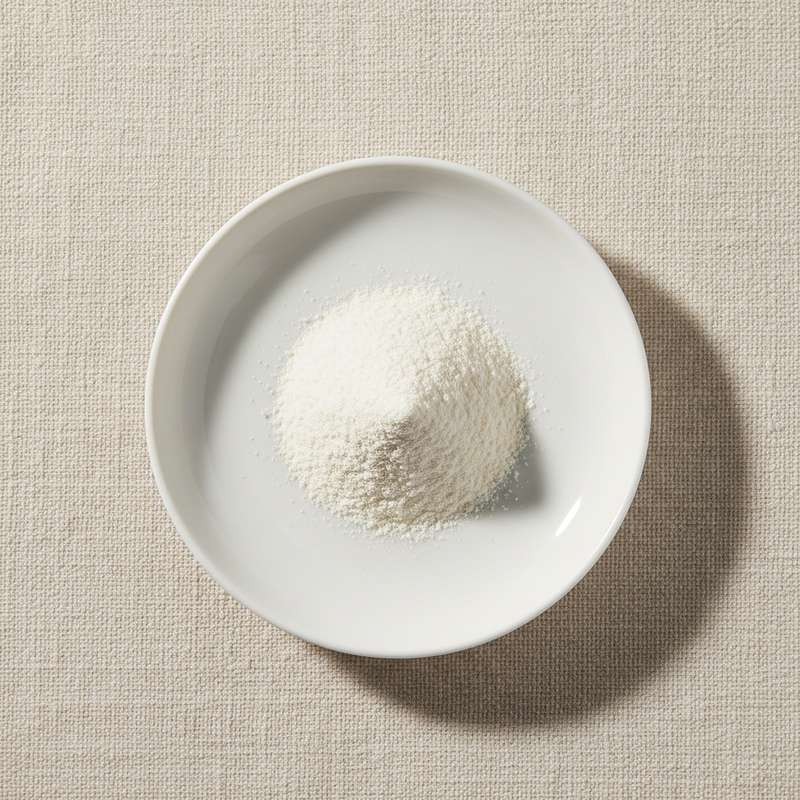
Off-white to light tan free-flowing powder, typically standardised by dilution with maltodextrin or sodium caseinate. Activity is standardised in TGase Units defined against a hydroxylamine-N-CBZ-Gln-Gly substrate at pH 6.0 and 37 degrees Celsius.
We supply food-grade Transglutaminase from manufacturers in China holding ISO 22000, Halal, Kosher and other certifications relevant to the product and production. Streptomyces mobaraensis is the dominant source organism.
Common market grades include 100 U/g standard meat-binding grade (the dominant grade, diluted with maltodextrin), 500 U/g concentrate, 1,000 U/g high-purity grades, and specialty pre-blended systems with sodium caseinate or soy protein isolate that act as TGase substrates for accelerated cross-linking.
Bulk and reduced-MOQ shipments. Batch-level COA covering activity, pH optimum, temperature optimum, moisture, heavy metals and microbiology.
Introduction
Transglutaminase was characterised in mammalian tissues in the 1960s, but commercial-scale microbial production from Streptomyces mobaraensis was achieved by Ajinomoto in Japan in 1989, transforming the enzyme from a research curiosity into a foundational industrial food processing aid.
Industrial production is by submerged fermentation of Streptomyces mobaraensis, with downstream filtration, concentration and dilution with food-grade carriers (typically maltodextrin or sodium caseinate) to deliver the standardised activity grade. Modern global supply is dominated by Japanese, Chinese and European producers.
The enzyme is Generally Recognized as Safe by the U.S. FDA from approved Streptomyces mobaraensis production, listed in the JECFA enzyme compendium, and approved as a processing aid in the EU. No Acceptable Daily Intake is assigned. Labelling requirements for restructured meat products vary by jurisdiction.
Mechanistically, TGase catalyses an acyl-transfer reaction in which the gamma-carboxamide group of a peptide-bound glutamine residue is transferred to the epsilon-amino group of a peptide-bound lysine residue, forming a covalent epsilon-(gamma-glutamyl)lysine isopeptide bond and releasing ammonia. The resulting covalent cross-link is not broken by cooking, which produces the characteristic strong bond in restructured meats.
Strategic positioning is unusual in scope and visibility: TGase is the technological foundation of an entire restructured-meat segment that includes much of the supermarket and food-service meat-piece market worldwide, and is expanding rapidly into the plant-based meat analogue space where the same cross-linking chemistry supports fibrous textures from plant proteins.
Where it is used
- Restructured meat manufacture; binding of beef, pork, poultry and lamb pieces into restructured steaks, roasts and portioned cuts
- Restructured seafood; surimi, crab-stick and fish-piece binding
- Sausage and processed meat texture improvement; reduces phosphate and salt requirements
- Yogurt and dairy texture modification; cross-links milk proteins for improved viscosity and reduced syneresis
- Cheese yield improvement and texture modification
- Plant-based meat analogue manufacture; cross-links soy, pea and wheat proteins for fibrous textures
- Tofu firmness modification
- Bakery dough strengthening in gluten-free and high-protein formulations
- Restructured fruit and vegetable products via protein-binder cross-linking
Technical data
| Item | Specification |
|---|---|
| Appearance | Off-white to light tan free-flowing powder |
| Activity | 100 to 1,000 U/g or per customer specification |
| pH optimum | 6.0 to 7.0 |
| Temperature optimum | 50 °C to 55 °C |
| Moisture | ≤ 7.0% |
| Heavy metals (as Pb) | ≤ 10 mg/kg |
| Arsenic | ≤ 3 mg/kg |
| Total plate count | ≤ 50,000 CFU/g |
| Coliforms | ≤ 30 CFU/g |
| Salmonella | Absent in 25 g |
| E. coli | Absent in 25 g |
| Source organism | Streptomyces mobaraensis |
Related ingredients
Ready to discuss business?
Send us your spec and requirement. We will respond with availability and pricing within 24 hours.