Description
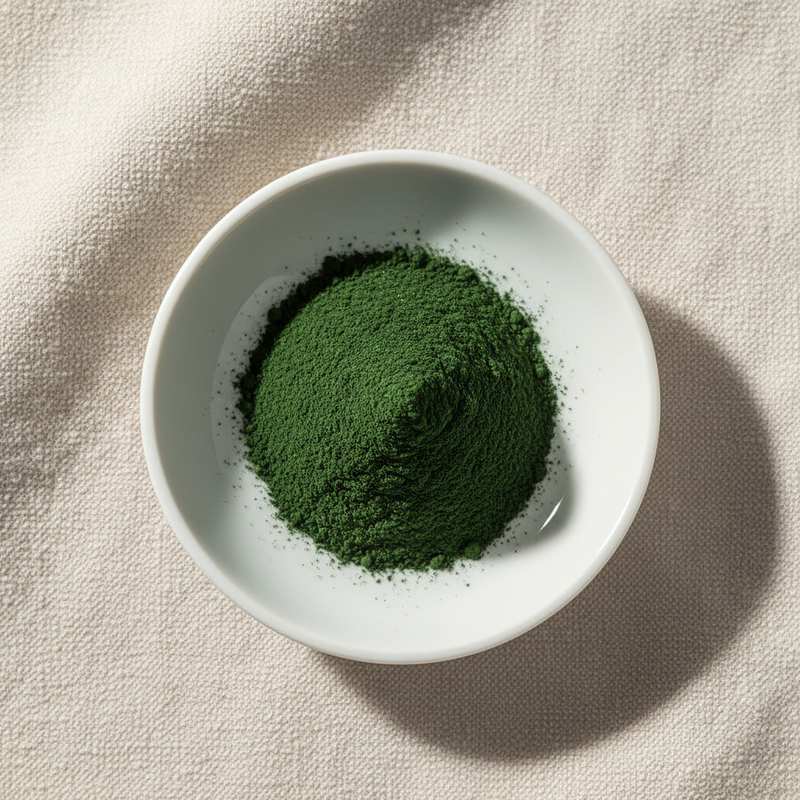
Spirulina is a cyanobacterium (Arthrospira platensis) cultivated in open ponds or photobioreactors and dried to a deep blue-green powder. With 60 to 70 percent protein on a dry basis, it is one of the densest natural sources of protein in commercial supply alongside its companion micronutrient and pigment payload.
Protein content of 60 to 70 percent (Kjeldahl, N x 6.25) defines the commercial grade. Deep blue-green fine powder with characteristic algal flavor. Phycocyanin (the blue pigment) content of 8 to 15 percent is the secondary commercial specification for premium grades destined for natural-blue-colorant extraction.
The amino acid profile is complete, with notable BCAA and arginine content. Spirulina is also naturally rich in iron, B-vitamins (excluding bioavailable B12), beta-carotene, gamma-linolenic acid (GLA), and phycocyanin.
We supply food-grade and supplement-grade Spirulina Powder from manufacturers in China holding ISO, HACCP, Halal, Kosher, organic-certified and other certifications relevant to the product and production.
Common market grades include conventional 60 percent protein supplement-grade powder, premium 65 to 70 percent protein powders from controlled cultivation, organic-certified material, tablet-grade for direct compression, and high-phycocyanin grades for colorant extraction. Spirulina-derived phycocyanin (Spirulina Blue) is a separate product. Bulk and reduced-MOQ shipments. Batch-level COA covering protein, moisture, ash, phycocyanin, microcystin (toxin screen), heavy metals, and microbiology.
Introduction
Spirulina has been consumed as a food for centuries, harvested traditionally from Lake Texcoco in Mexico by Aztec peoples and from Lake Chad by the Kanembu people of West Africa. Modern commercial cultivation began in the 1970s in Mexico and Thailand, and expanded substantially in China, India, and the United States from the 1990s onward.
Industrial production uses controlled cultivation in open raceway ponds or closed photobioreactors with strictly managed alkaline water chemistry (pH 9 to 11, which is hostile to most contaminating organisms and a key food-safety asset). The biomass is harvested by fine-mesh filtration, washed, and spray-dried with care to preserve the heat-sensitive phycocyanin pigment.
Recognized as a permitted food ingredient by the U.S. FDA under GRAS provisions, regulated under EU food law as a conventional food, and approved by health authorities worldwide. Microcystin contamination is the principal food-safety concern, controlled by strain selection (Arthrospira platensis does not produce microcystins) and rigorous batch-level testing.
Amino acid quality positioning: spirulina is a complete protein with PDCAAS of approximately 0.75 standalone and a profile suited to muscle protein synthesis. The combined protein, vitamin, and pigment density supports the superfood positioning that anchors the commercial category.
Strategic positioning: spirulina serves three distinct markets: a high-volume aquaculture and animal-feed segment, a mid-volume natural supplement and functional-food segment, and a premium clean-label colorant segment for the phycocyanin pigment. Each commands distinct specifications and price points.
Where it is used
- Plant-based protein supplements, superfood blends, and green powders
- Plant-based and vegan ready-to-drink beverages and shots
- Functional food fortification: bars, snacks, pasta, and cereals
- Natural-blue colorant precursor (via phycocyanin extraction)
- Sports nutrition for vegan and natural-food consumers
- Aquaculture feed: pigmentation and protein source for salmonids and ornamental fish
- Poultry feed: egg-yolk pigmentation
- Nutraceutical and dietary supplement tablets and capsules
- Premium pet food and pet supplement formulations
Technical data
| Item | Specification |
|---|---|
| Appearance | Deep blue-green fine powder |
| Protein content (Kjeldahl, N x 6.25, dry basis) | ≥ 60.0% |
| Phycocyanin | ≥ 10.0% |
| Moisture | ≤ 7.0% |
| Fat | ≤ 8.0% |
| Ash | ≤ 9.0% |
| Particle size | 95% through 80 mesh, or per customer specification |
| Microcystin-LR | ≤ 0.1 mg/kg |
| Lead (Pb) | ≤ 0.5 mg/kg |
| Arsenic (As) | ≤ 0.5 mg/kg |
| Mercury (Hg) | ≤ 0.1 mg/kg |
| Total plate count | ≤ 30,000 CFU/g |
| Salmonella | Absent in 25 g |
| Allergen statement | Free from the eight major U.S. allergens and the 14 EU declarable allergens. |
| Source | Cultivated Arthrospira platensis (cyanobacterium) |
Related ingredients
Ready to discuss business?
Send us your spec and requirement. We will respond with availability and pricing within 24 hours.