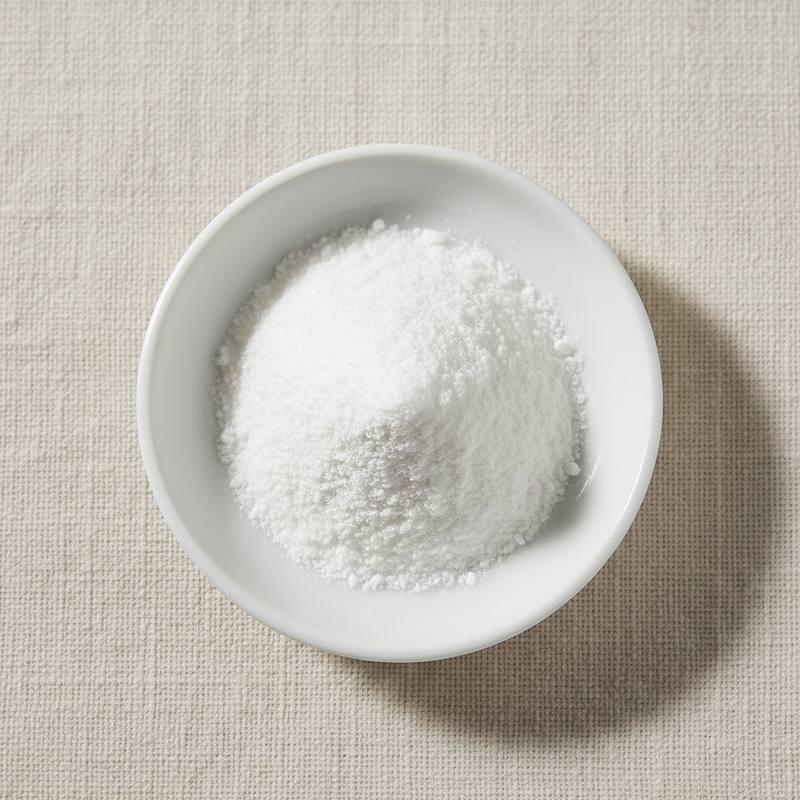
Description
The free-acid form of Sorbate, the parent compound from which Potassium Sorbate, Calcium Sorbate, and Sodium Sorbate are produced. The most effective antimycotic preservative in fat-phase applications and the standard preservative for cheese, oils, and bakery fats.
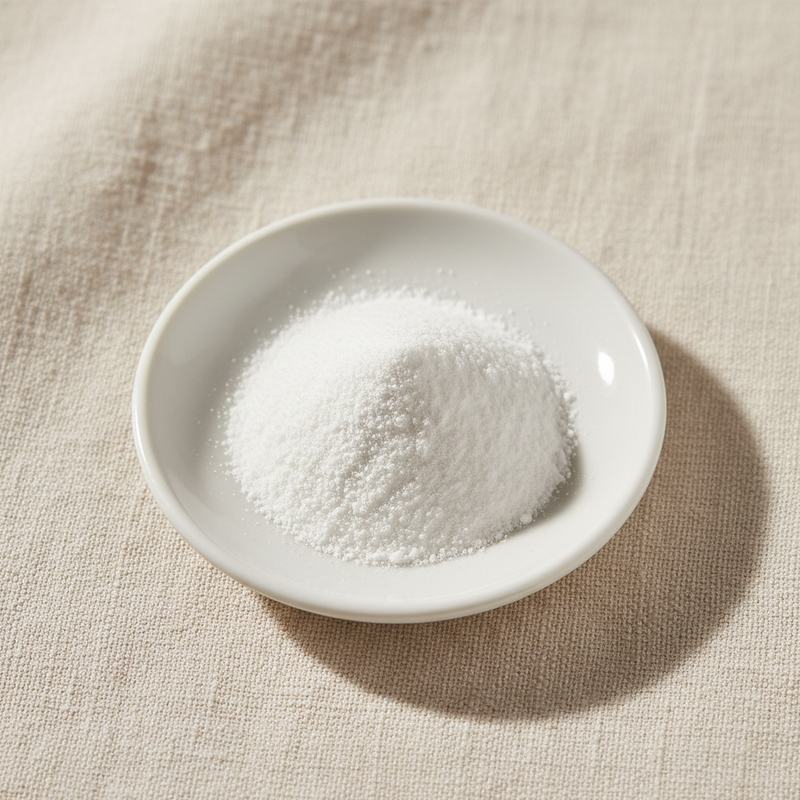
White crystalline powder with characteristic faint odor. Limited water solubility (approximately 1.6 g/L at 20 °C); freely soluble in alcohol and oils. Effective up to pH 6.5, broader range than Benzoic Acid.
We supply food-grade and pharmaceutical-grade Sorbic Acid from manufacturers in China holding ISO, Halal, Kosher and other certifications relevant to the product and production.
Common market grades include Standard Food Grade (FCC compliant), Pharmaceutical Grade meeting BP/USP/EP specifications, Granular Sorbic Acid for direct dispersion, and Encapsulated Sorbic Acid for delayed-release bakery applications.
Bulk and reduced-MOQ shipments. Batch-level COA covering assay, melting point, heavy metals, and microbiology.
Introduction
Sorbic Acid was first isolated from the unripe berries of mountain ash (Sorbus aucuparia) in 1859 by August Wilhelm von Hofmann. Its preservative properties were not commercialized until the 1940s when the post-World War II food industry began seeking alternatives to Benzoate.
Industrial production proceeds by condensation of crotonaldehyde and ketene under acid catalysis, followed by hydrolysis and crystallization. Yields and purity have improved dramatically since the 1950s, making Sorbic Acid the dominant antimycotic preservative globally by volume.
Regulated as E200 in the EU, classified as Generally Recognized as Safe by the U.S. FDA, listed in BP, USP, EP, and JP pharmacopoeias, and approved by JECFA with an Acceptable Daily Intake of 25 mg per kg body weight.
The molecule's pKa of 4.76 means antimicrobial activity holds up to pH 6.5, where the undissociated acid form remains a substantial fraction of total compound. This is meaningfully higher than Benzoic Acid's effective range (capped near pH 4.5) and is the principal reason Sorbic Acid dominates near-neutral preservation applications including cheese and baked goods.
The free-acid form versus the salt forms is selected primarily on fat-phase requirements: cheese surface treatment and bakery fat preservation use the free acid for partitioning into the lipid phase, while liquid acidic applications use Potassium Sorbate for water solubility.
Where it is used
- Cheese surface treatment: hard cheese, processed cheese, and natural-rind cheese mold prevention
- Bakery products: bread, cakes, tortillas, and pastries; mold prevention through finished-product shelf life
- Margarine, butter, and fat-based spreads
- Wine and fermented-beverage preservation, particularly bottled wine
- Pickled vegetables, sauerkraut, and acidic condiments
- Manufacturing feedstock for Potassium Sorbate and Calcium Sorbate
- Pharmaceutical preservation in topical creams, ointments, and oral suspensions
- Cosmetics and personal-care products: lipstick, sunscreen, and oil-based skincare
- Pet food and animal feed mold prevention
- Tobacco preservation in finished cigarette products
Technical data
| Item | Specification |
|---|---|
| Appearance | White crystalline powder |
| Assay (dry basis) | 99.0% to 101.0% |
| Melting point | 132 °C to 135 °C |
| Loss on drying | ≤ 0.5% |
| Residue on ignition | ≤ 0.2% |
| Heavy metals (as Pb) | ≤ 10 mg/kg |
| Arsenic | ≤ 3 mg/kg |
| Aldehydes (as formaldehyde) | ≤ 0.1% |
| Particle size | Per customer specification |
Related ingredients
Ready to discuss business?
Send us your spec and requirement. We will respond with availability and pricing within 24 hours.