Description
The free-acid form of Benzoate, the parent compound from which Sodium Benzoate, Potassium Benzoate, and Calcium Benzoate salts are produced. Active against yeasts, molds, and acid-tolerant bacteria in low-pH applications.
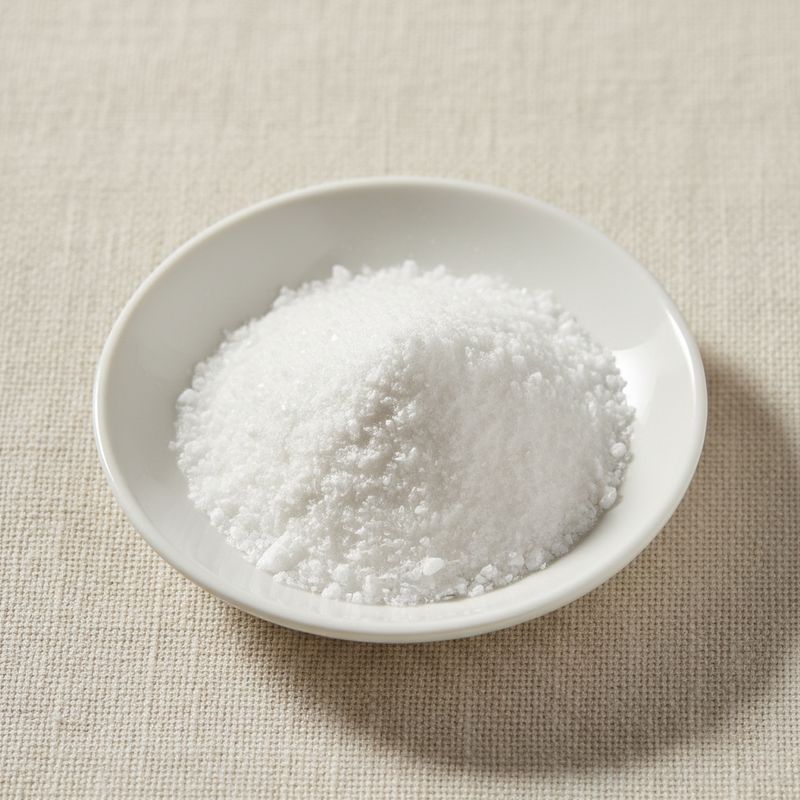
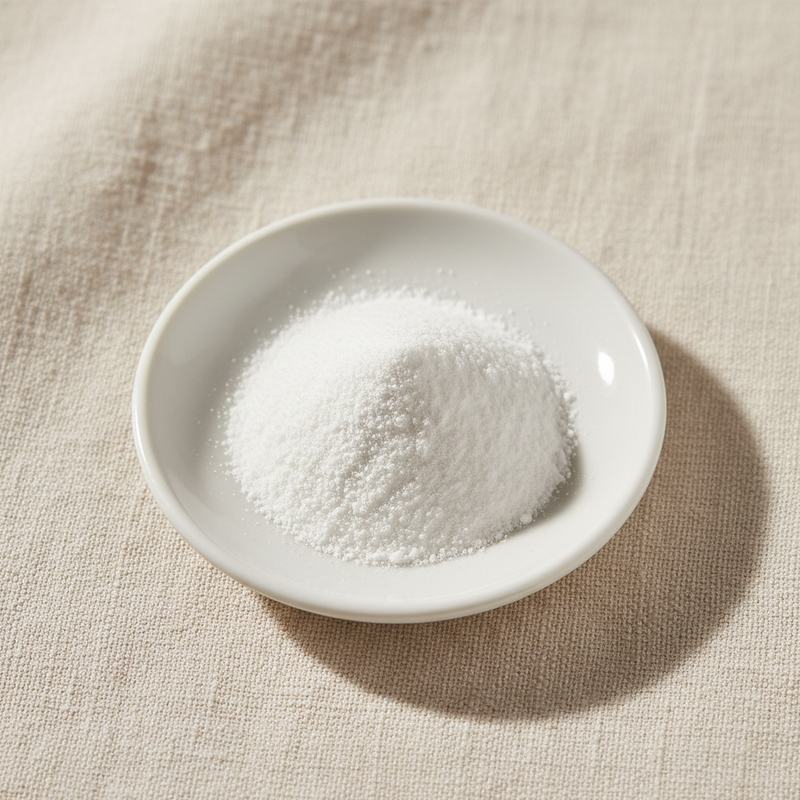
White crystalline solid with characteristic faint odor. Limited water solubility (approximately 3.4 g/L at 20 °C); freely soluble in alcohol, ether, and oils. Used directly in fat-phase applications where the salt forms would not partition.
We supply food-grade and pharmaceutical-grade Benzoic Acid from manufacturers in China holding ISO, Halal, Kosher and other certifications relevant to the product and production.
Common market grades include Standard Food Grade (FCC compliant), Pharmaceutical Grade meeting BP/USP/EP/JP specifications, Industrial Grade for chemical synthesis use, and Sublimed Grade for premium pharmaceutical applications.
Bulk and reduced-MOQ shipments. Batch-level COA covering assay, melting point, heavy metals, and microbiology.
Introduction
Benzoic Acid was first isolated from gum benzoin by Nostradamus in 1556 and was the first preservative formally approved for food use under U.S. FDA regulations in 1909. It occurs naturally in cranberries, prunes, plums, cinnamon, cloves, and many other foods at concentrations up to 0.1 percent.
Industrial production today proceeds primarily by partial oxidation of toluene with oxygen under cobalt or manganese catalysis, yielding Benzoic Acid in high yield. Older processes from benzaldehyde and from benzotrichloride hydrolysis remain operational at smaller scale.
Regulated as E210 in the EU, classified as Generally Recognized as Safe by the U.S. FDA, listed in BP, USP, EP, and JP pharmacopoeias, and approved by JECFA with an Acceptable Daily Intake of 5 mg per kg body weight.
The molecule's pKa of 4.19 means antimicrobial activity is concentrated below pH 4.5, where the undissociated acid form predominates. The acid form is the active species; the dissociated benzoate ion has limited antimicrobial activity. This pH dependence is identical to Sodium Benzoate and shapes both compounds' application range.
The principal advantage of the free-acid form over the salts is fat-phase compatibility. Salt forms partition almost entirely into the aqueous phase; the free acid distributes between aqueous and lipid phases, providing preservative function at the oil-water interface where many spoilage organisms grow.
Where it is used
- Direct preservative in fat-phase food applications: butter, margarine, and oil-based dressings
- Manufacturing feedstock for Sodium Benzoate, Potassium Benzoate, and Calcium Benzoate
- Tobacco preservation and industrial cigarette manufacturing
- Pharmaceutical pH-buffer and preservative in oral and topical formulations
- Cosmetic preservation in oil-based skincare and lipsticks
- Plasticizer and solvent in industrial chemical applications
- Mordant in textile dyeing and printing
- Production of benzoyl chloride, benzyl alcohol, and other organic synthesis intermediates
- Animal feed preservation in fat-containing applications
Technical data
| Item | Specification |
|---|---|
| Appearance | White crystalline solid |
| Assay (dry basis) | 99.5% to 100.5% |
| Melting point | 121 °C to 123 °C |
| Loss on drying | ≤ 0.5% |
| Residue on ignition | ≤ 0.05% |
| Heavy metals (as Pb) | ≤ 10 mg/kg |
| Arsenic | ≤ 3 mg/kg |
| Chlorinated compounds | ≤ 0.07% |
| Particle size | Per customer specification |
Related ingredients
Ready to discuss business?
Send us your spec and requirement. We will respond with availability and pricing within 24 hours.