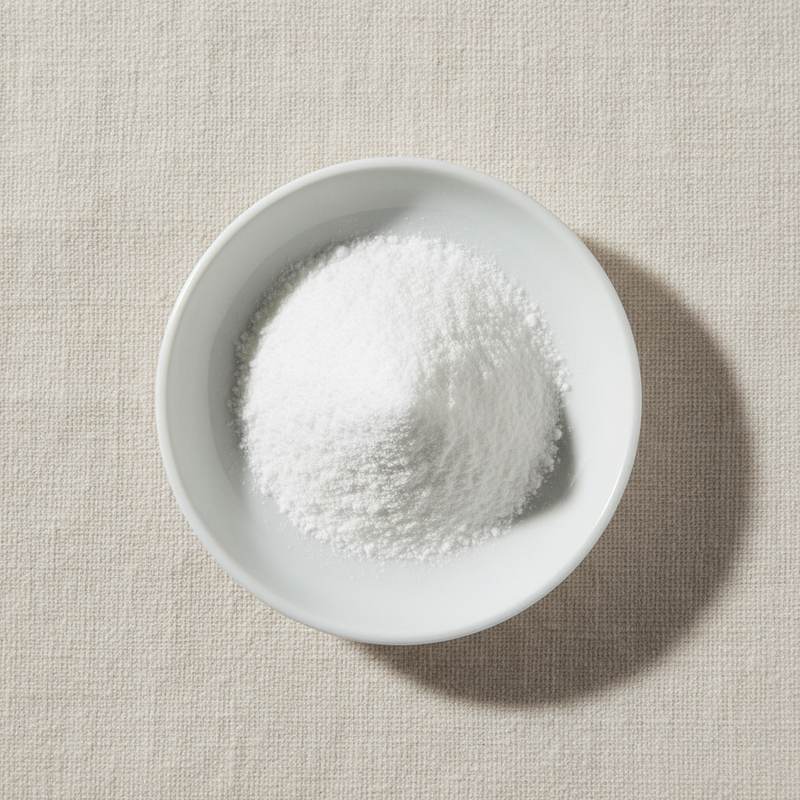
Description
The sodium salt of carboxymethyl ether of starch, crosslinked to prevent solubilization and used at 2 to 8 percent of tablet weight as a primary pharmaceutical superdisintegrant. The third member of the modern superdisintegrant triad alongside Croscarmellose Sodium and Crospovidone.
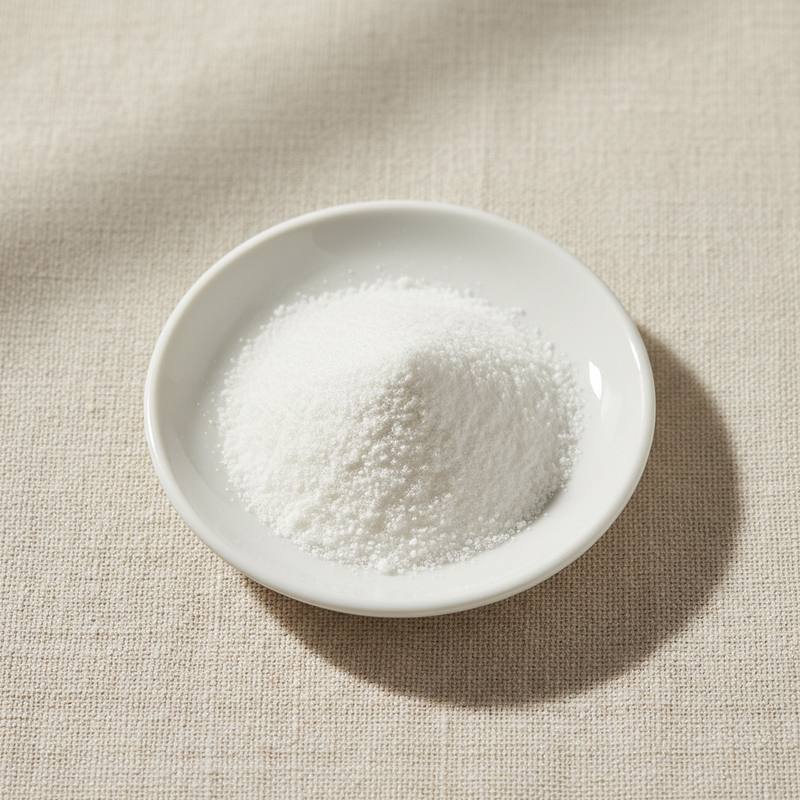
White to off-white free-flowing powder. Highly hygroscopic. On contact with water it absorbs many times its weight in seconds and swells by a factor of 200 to 300 percent, generating the disintegration force that breaks the tablet matrix.
We supply pharmaceutical-grade Sodium Starch Glycolate from manufacturers in China holding ISO, GMP, USP/EP/JP DMF, Halal, Kosher, and other certifications relevant to the product and production.
Common market grades include Type A (low sodium, high pH, the most common pharmaceutical grade), Type B (low pH variant), and Type C (low sodium, low residual glycolate, for high-purity applications), with potato, maize, or rice starch as the base source.
Bulk and reduced-MOQ shipments. Batch-level COA covering identification, sodium content, sodium chloride, sodium glycolate, pH, swelling, loss on drying, iron, heavy metals, and microbiology against USP, EP, JP, and BP monographs.
Introduction
Sodium Starch Glycolate was introduced as a pharmaceutical superdisintegrant in the 1970s and has since become one of the three dominant superdisintegrants in regulated solid-dose markets. The pharmacopoeial monograph appeared in the 1980s and has since been harmonized across USP, EP, JP, and BP.
Production starts from food-grade potato, maize, or rice starch, which is reacted with sodium monochloroacetate in alkaline conditions to introduce carboxymethyl substituents at C-2 and C-6 of the anhydroglucose units, and crosslinked with sodium trimetaphosphate or phosphoryl chloride to prevent solubilization. The product is washed, neutralized, and spray dried.
Listed in USP-NF, EP, JP, and BP monographs. FDA Inactive Ingredient Database listed for oral solid routes.
The disintegration mechanism is dominated by swelling: water uptake is fast and swelling factor is high (200 to 300 percent), driving rapid tablet break-up. Performance is somewhat sensitive to the lubricant level and to extended blending with magnesium stearate, which can over-hydrophobize the disintegrant surface.
Strategic position: along with Croscarmellose Sodium and Crospovidone, Sodium Starch Glycolate is the default superdisintegrant for conventional and chewable tablet formulations. Cost per dose is lower than Crospovidone, and grade selection between Types A, B, and C is driven by pH compatibility with the API.
Where it is used
- Tablet superdisintegrant at 2 to 8 percent of tablet weight
- Orally disintegrating tablet disintegrant in moisture-protected formats
- Capsule formulation disintegrant
- Disintegrant in nutraceutical and OTC tablet formulations
- Disintegrant in chewable tablet systems
- Disintegrant in moisture-tolerant film-coated tablets
- Intragranular plus extragranular split for optimized disintegration
- Disintegrant in pediatric dispersible tablets
Technical data
| Item | Specification |
|---|---|
| Appearance | White to off-white free-flowing powder |
| Compliance | USP/NF, EP, JP, BP current edition (Type A, B, or C) |
| Identification | Conforms to pharmacopoeial tests |
| Sodium content (Type A, dried basis) | 2.8% to 4.2% |
| Sodium chloride | ≤ 7.0% |
| Sodium glycolate | ≤ 2.0% |
| Loss on drying | ≤ 10.0% |
| pH (3.3% slurry, Type A) | 5.5 to 7.5 |
| Swelling power (water uptake) | Conforms to monograph |
| Iron | ≤ 20 mg/kg |
| Heavy metals (as Pb) | ≤ 10 mg/kg |
| Particle size | D50 typical 30 to 50 microns |
| Bulk density | 0.70 to 0.85 g/mL |
| Total aerobic count | ≤ 1,000 CFU/g |
| Yeast and mould | ≤ 100 CFU/g |
| E. coli, Salmonella | Absent |
| Source | Potato, maize, or rice starch, declared per batch |
Related ingredients
Ready to discuss business?
Send us your spec and requirement. We will respond with availability and pricing within 24 hours.