Description
An insoluble crosslinked homopolymer of N-vinyl-2-pyrrolidone and one of the three dominant pharmaceutical superdisintegrants. Particularly favored in orally disintegrating tablets and in moisture-tolerant formulations because the polymer matrix is non-ionic and non-hygroscopic.
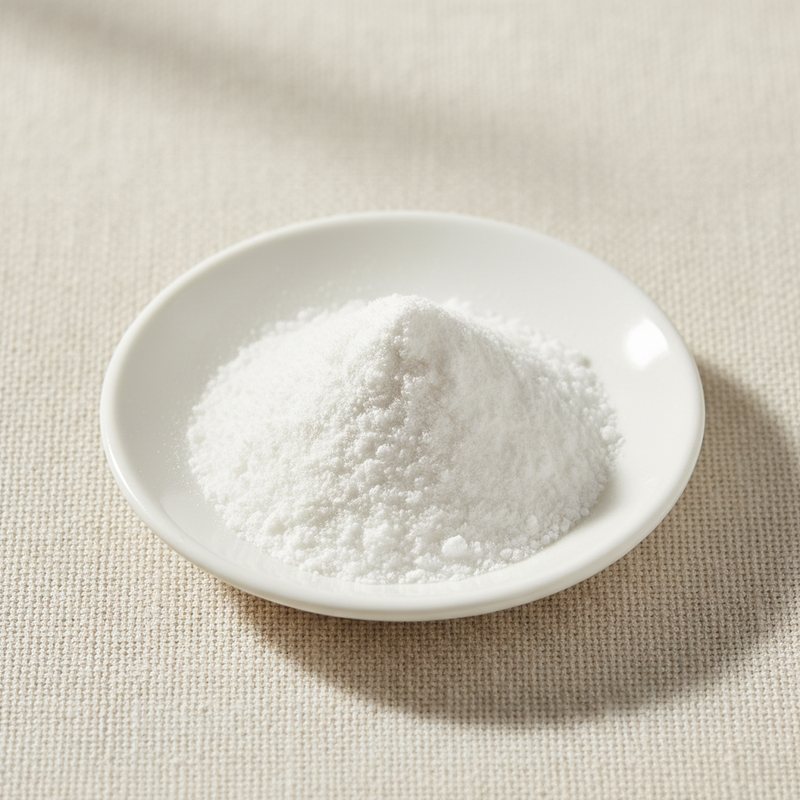
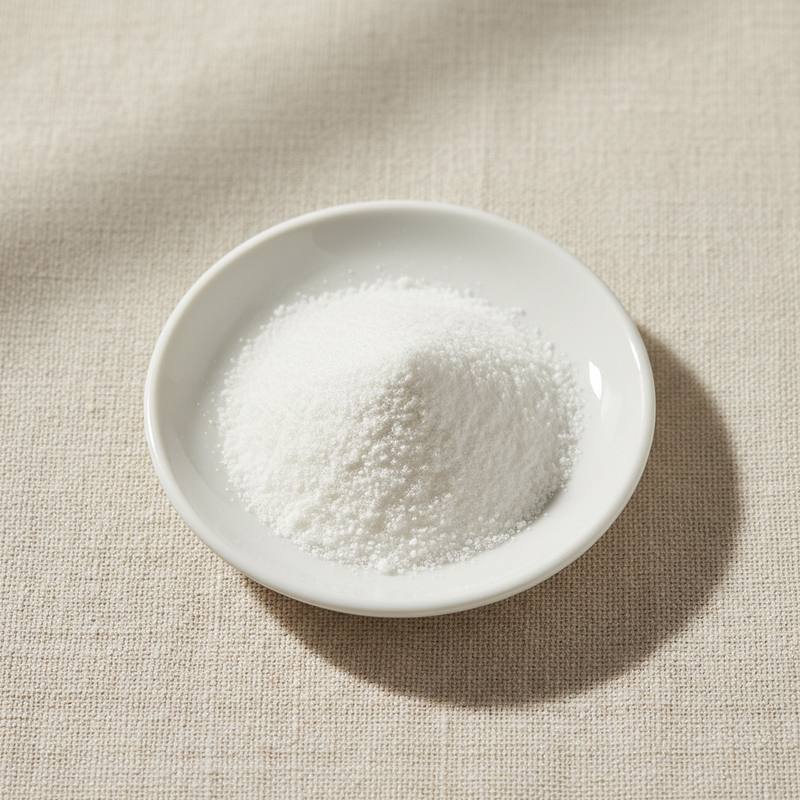
White to slightly cream-colored free-flowing powder. Insoluble in water and common organic solvents. On contact with water it rapidly absorbs water by capillary wicking through the porous internal structure rather than by bulk swelling, which drives a fast and pressure-independent disintegration.
We supply pharmaceutical-grade Crospovidone from manufacturers in China holding ISO, GMP, USP/EP/JP DMF, Halal, Kosher, and other certifications relevant to the product and production.
Common market grades include Type A (standard particle size, 100 to 130 microns, the workhorse tablet superdisintegrant) and Type B (fine grade, 15 to 50 microns, for orally disintegrating tablets and for direct-compression blends requiring uniform distribution at low inclusion).
Bulk and reduced-MOQ shipments. Batch-level COA covering identification, residual N-vinyl-2-pyrrolidone monomer, peroxides, loss on drying, water-soluble matter, particle size, heavy metals, and microbiology against USP, EP, JP, and BP monographs.
Introduction
Crospovidone was introduced by BASF as Kollidon CL in the 1970s and has since become one of the three dominant pharmaceutical superdisintegrants. The pharmacopoeial monograph appeared in the 1980s and has since been harmonized across USP, EP, JP, and BP.
Production proceeds by free-radical polymerization of N-vinyl-2-pyrrolidone in aqueous medium, with controlled crosslinking that prevents dissolution while preserving the porous internal structure that enables capillary water uptake.
Listed in USP-NF, EP, JP, and BP monographs. FDA Inactive Ingredient Database listed for oral solid, oral liquid, and topical routes.
The disintegration mechanism is dominated by capillary wicking through the polymer's intrinsic porous structure rather than by bulk swelling. This makes Crospovidone the most consistent superdisintegrant across a wide range of tablet hardnesses, lubricant levels, and coating thicknesses. The mechanism also explains its use as a solubility enhancer for poorly soluble APIs in solid dispersions, where the polymer's surface area and hydrogen-bonding capacity stabilize amorphous API forms.
Strategic position: in orally disintegrating tablets and in moisture-sensitive formulations Crospovidone is the default choice. Type B fine grade is the standard for ODTs; Type A standard grade is the workhorse for conventional immediate-release tablets.
Where it is used
- Tablet superdisintegrant at 2 to 5 percent of tablet weight
- Orally disintegrating tablet disintegrant (Type B fine grade)
- Disintegrant in chewable and effervescent tablets
- Capsule formulation disintegrant
- Solubility enhancer for poorly soluble APIs in solid dispersions
- Disintegrant in moisture-sensitive formulations (non-hygroscopic matrix)
- Disintegrant in coated and sustained-release immediate-release cores
- Disintegrant in pediatric dispersible tablet formulations
Technical data
| Item | Specification |
|---|---|
| Appearance | White to slightly cream free-flowing powder |
| Compliance | USP/NF, EP, JP, BP current edition (Type A or B) |
| Identification | Conforms to pharmacopoeial tests |
| Residual N-vinyl-2-pyrrolidone | ≤ 10 mg/kg |
| Peroxides (as H2O2) | ≤ 400 mg/kg |
| Loss on drying | ≤ 5.0% |
| Water-soluble matter | ≤ 1.5% |
| Sulfated ash | ≤ 0.1% |
| pH (1% slurry) | 5.0 to 8.0 |
| Nitrogen content | 11.0% to 12.8% |
| Particle size (Type A, D50) | 100 to 130 microns |
| Particle size (Type B, D50) | 15 to 50 microns |
| Heavy metals (as Pb) | ≤ 10 mg/kg |
| Total aerobic count | ≤ 100 CFU/g |
| Yeast and mould | ≤ 100 CFU/g |
| E. coli, Salmonella | Absent |
| Source | Synthetic crosslinked poly(N-vinyl-2-pyrrolidone) |
Related ingredients
Ready to discuss business?
Send us your spec and requirement. We will respond with availability and pricing within 24 hours.