Description
An anionic water-soluble cellulose ether used in pharmaceutical solid and liquid dosage forms as a viscosity builder, suspending agent, binder, and tablet disintegrant. The internally crosslinked variant, Croscarmellose Sodium, is one of the three dominant superdisintegrants in modern tablet formulation.
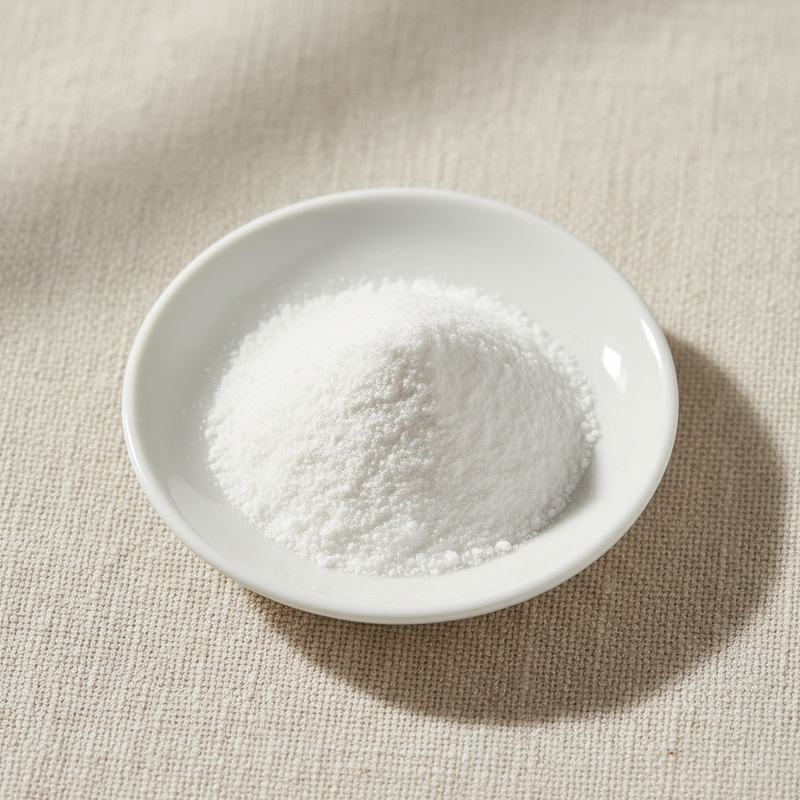
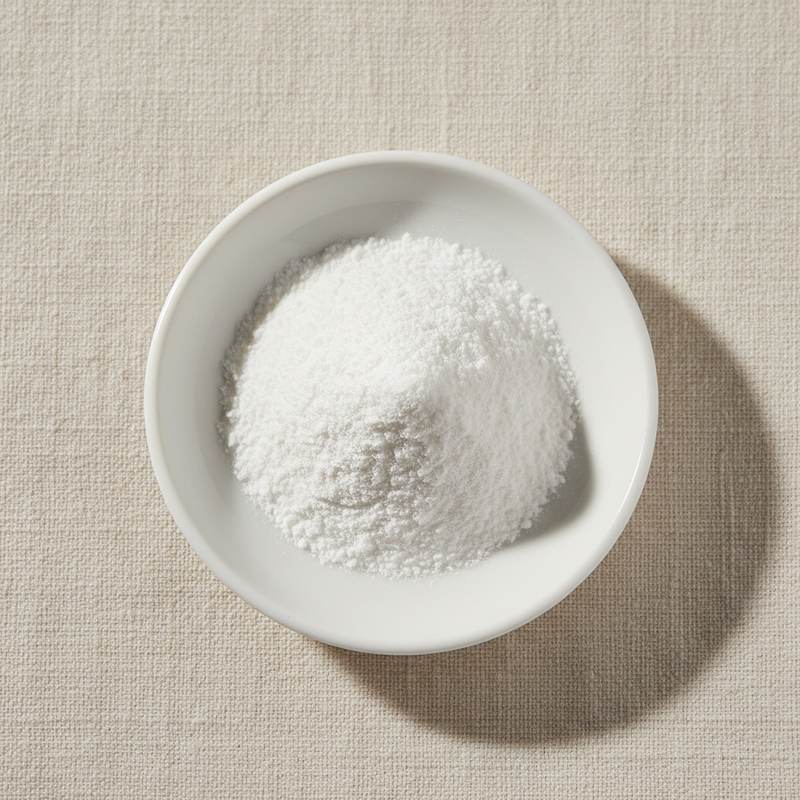
White to off-white free-flowing powder or granules, freely soluble in water yielding clear, viscous, pseudoplastic solutions. Viscosity grade is selected by degree of substitution and polymer chain length.
We supply pharmaceutical-grade Carmellose Sodium and Croscarmellose Sodium from manufacturers in China holding ISO, GMP, USP/EP/JP DMF, Halal, Kosher, and other certifications relevant to the product and production.
Common market grades include low-viscosity (10 to 100 mPa·s in 2% solution) and high-viscosity (above 1,000 mPa·s) Carmellose Sodium for binder and thickener applications, and Croscarmellose Sodium superdisintegrant for tablets at typical inclusion of 2 to 5 percent of tablet weight.
Bulk and reduced-MOQ shipments. Batch-level COA covering identification, assay, degree of substitution, viscosity, loss on drying, sodium chloride, heavy metals, and microbiology against USP, EP, JP, and BP monographs.
Introduction
Carboxymethylcellulose was patented in Germany in 1918 and reached commercial pharmaceutical scale in the 1940s. The internally crosslinked superdisintegrant grade, Croscarmellose Sodium, was introduced in the 1980s and is now one of the three dominant tablet superdisintegrants alongside crospovidone and sodium starch glycolate.
Production begins with purified alkali cellulose, which is reacted with monochloroacetic acid in an alcoholic medium to introduce carboxymethyl substituents. The reaction product is purified, neutralized to the sodium salt, dried, and milled. For Croscarmellose Sodium an additional controlled thermal crosslinking step generates the internal network that prevents dissolution while preserving rapid water uptake and swelling.
Listed in USP-NF, EP, JP, and BP monographs (separate monographs for Carmellose Sodium and Croscarmellose Sodium). FDA Inactive Ingredient Database listed for oral, topical, ophthalmic, and parenteral routes.
Croscarmellose's disintegration mechanism is wicking plus rapid swelling: the crosslinked fibers absorb water within seconds, expand several times in volume, and rupture the tablet matrix from within. Typical disintegration time falls below one minute at 2 to 5 percent inclusion, with optimal performance when the disintegrant is split between intragranular and extragranular phases.
Strategic position: along with crospovidone, Croscarmellose Sodium is the default superdisintegrant for orally disintegrating tablets, fast-melt formulations, and high-throughput direct-compression tablets in regulated markets.
Where it is used
- Tablet superdisintegrant (Croscarmellose Sodium) at 2 to 5 percent inclusion
- Tablet binder in wet and dry granulation
- Viscosity builder in oral suspensions and syrups
- Suspending agent for poorly soluble actives in liquid formulations
- Film former in tablet coating premixes
- Stabilizer in topical creams, gels, and ophthalmic preparations
- Mucoadhesive component in buccal and sublingual systems
- Bulking agent in lyophilized formulations
Technical data
| Item | Specification |
|---|---|
| Appearance | White to off-white powder or granules |
| Compliance | USP/NF, EP, JP, BP current edition |
| Identification | Conforms to pharmacopoeial tests |
| Assay (dried basis) | 99.5% to 102.0% (Croscarmellose Na, sodium content basis) |
| Degree of substitution | 0.60 to 0.85 (Carmellose Na) |
| Viscosity (2% aqueous solution, 25 °C) | Grade dependent; 10 to 12,000 mPa·s |
| Settling volume (Croscarmellose Na, swelling) | Conforms to monograph |
| Loss on drying | ≤ 10.0% |
| pH (1% solution) | 5.0 to 7.0 (Croscarmellose Na) |
| Sodium chloride and sodium glycolate | ≤ 0.5% |
| Heavy metals (as Pb) | ≤ 10 mg/kg |
| Lead | ≤ 2 mg/kg |
| Particle size | Per grade specification |
| Total aerobic count | ≤ 1,000 CFU/g |
| Yeast and mould | ≤ 100 CFU/g |
| E. coli, Salmonella | Absent |
| Source | Purified wood pulp or cotton-linter cellulose |
Related ingredients
Ready to discuss business?
Send us your spec and requirement. We will respond with availability and pricing within 24 hours.