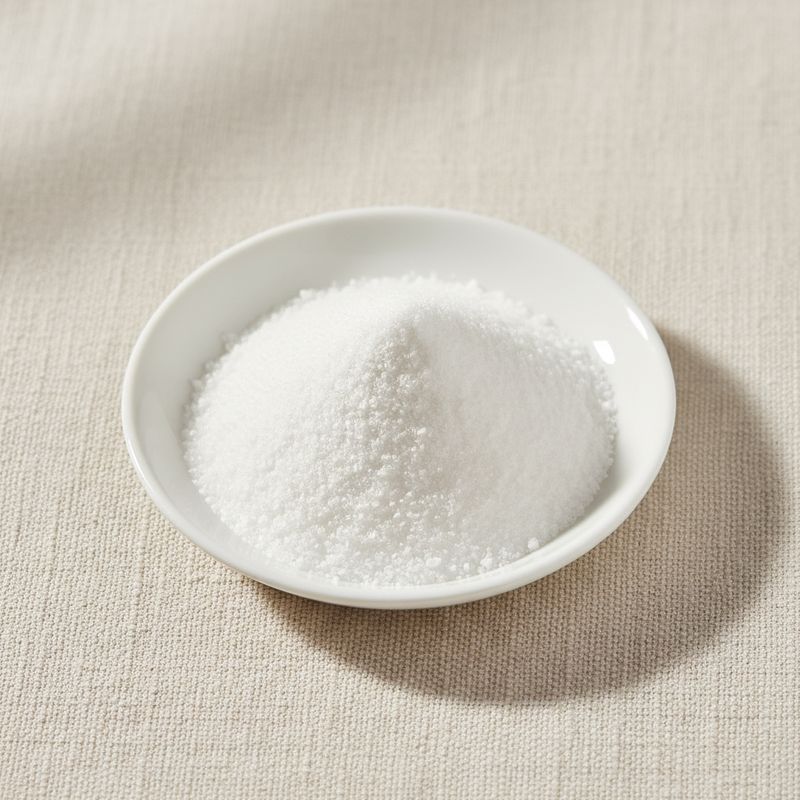
Description
The sodium salt of Erythorbic Acid, providing identical antioxidant and color-fixative chemistry with neutral pH on dissolution. The workhorse cure accelerator in industrial brine-injected cured meat manufacturing globally, where neutral pH avoids the protein-precipitation issues of the parent acid.
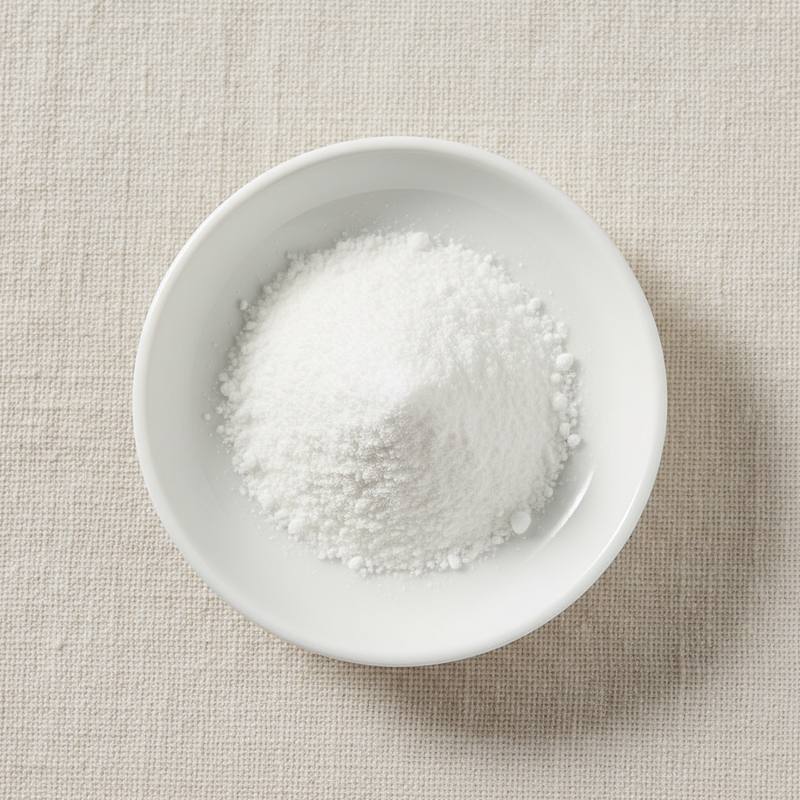
White to pale yellow crystalline powder or granular solid. Highly water-soluble with near-neutral solution pH. Stable as dry solid; oxidizes in solution.
We supply food-grade Sodium Erythorbate from manufacturers in China holding ISO, Halal, Kosher and other certifications relevant to the product and production.
Common market grades include Standard Food Grade (FCC compliant, 98 percent assay minimum), Fine Granular for brine-injection systems, and finer mesh powders for dry-rub seasoning blends.
Bulk and reduced-MOQ shipments. Batch-level COA covering assay, specific rotation, pH, sodium content, heavy metals, and microbiology.
Introduction
Sodium Erythorbate is the sodium salt of D-erythorbic acid, produced by neutralization of Erythorbic Acid with sodium carbonate or sodium bicarbonate. The salt form retains the full antioxidant and reducing capacity of the parent acid while shifting solution pH from approximately 2.2 to approximately 7.0.
The neutral pH is the deciding feature in brine-injected cured meat manufacturing: brines are injected through fine-bore needles, and an acidic brine would denature surface proteins, clog the injection system, and produce uneven distribution within the meat. The salt form solves these problems while delivering the same nitrite-reducing and color-fixative chemistry as the acid.
Regulated as E316 in the EU, classified as Generally Recognized as Safe by the U.S. FDA, and approved by JECFA without a numerical Acceptable Daily Intake limit. Permitted in cured meat in essentially all major markets at parity with Sodium Ascorbate.
Strategic role is dominant in industrial cured meat manufacturing globally. The compound is used at typical inclusion of 500 to 550 mg per kg of meat (matched to nitrite levels in stoichiometric ratio), accelerating the cure reaction and shortening processing time substantially compared with cures using only nitrite. The choice between Sodium Erythorbate and Sodium Ascorbate is driven by cost (Sodium Erythorbate is typically 20 to 30 percent less expensive) and label claim requirements (Sodium Erythorbate does not support Vitamin C labeling).
Where it is used
- Brine-injected cured meat: the dominant cure accelerator in industrial ham, bacon, frankfurter, and deli-meat manufacturing globally
- Dry-cured sausage and salami applications where neutral pH is required
- Fresh ground meat color preservation and oxidation protection
- Processed poultry and turkey products
- Fish and seafood color preservation
- Canned vegetables: color and quality preservation
- Frozen fruit applications: prevents enzymatic browning
- Beverage oxygen scavenger in industrial applications where Vitamin C labeling is not required
- Wine and brewing antioxidant applications
Technical data
| Item | Specification |
|---|---|
| Appearance | White to pale yellow crystalline powder or granular solid |
| Assay (dry basis) | 98.0% to 100.5% |
| Specific rotation | +95° to +98° |
| Loss on drying | ≤ 0.25% |
| pH (10% solution) | 6.5 to 8.0 |
| Heavy metals (as Pb) | ≤ 10 mg/kg |
| Arsenic | ≤ 3 mg/kg |
| Sodium content | 10.6% to 11.6% |
| Particle size | Per customer specification |
Related ingredients
Ready to discuss business?
Send us your spec and requirement. We will respond with availability and pricing within 24 hours.