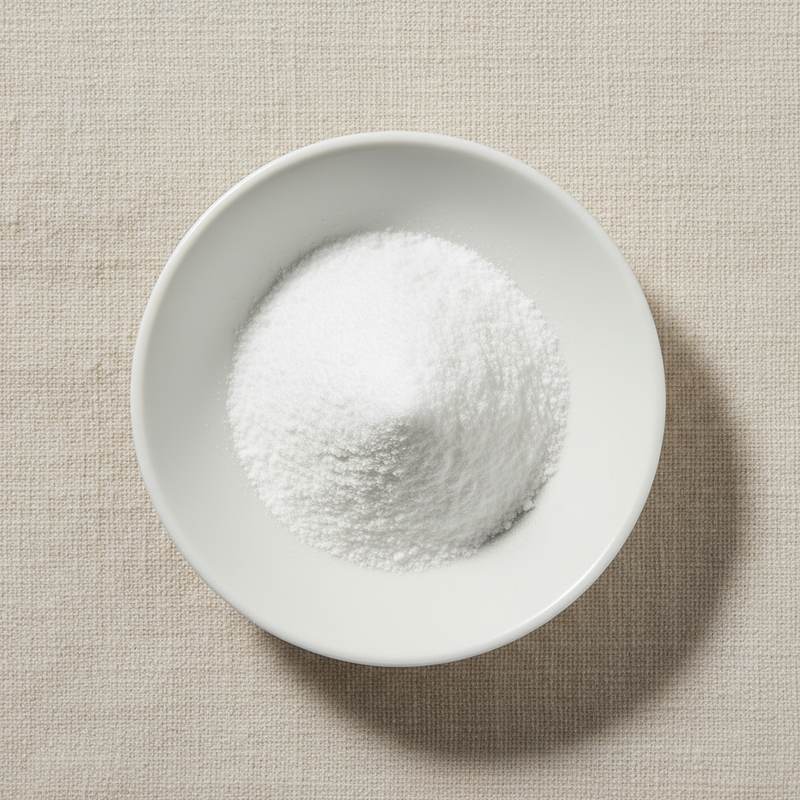
Description
Sodium hydrogen carbonate, NaHCO3. The universal alkaline leavening base of chemical baking, paired in finished products with a leavening acid such as MCP, SAPP, SALP, or cream of tartar to release CO2.
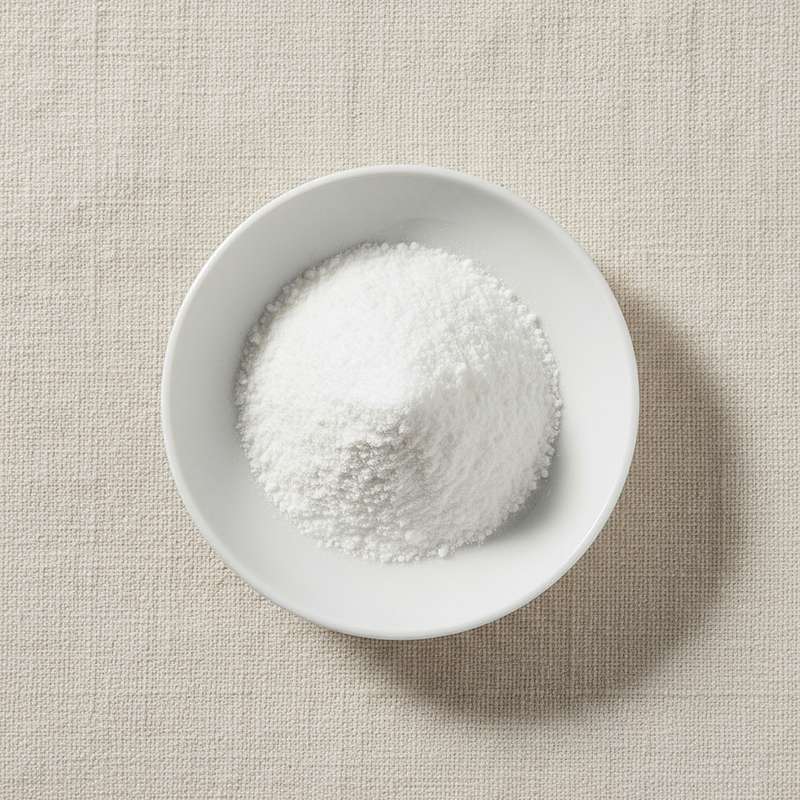
White crystalline powder, odorless, with a slight saline-alkaline taste. Soluble in water; decomposes on heating above 50 °C to yield sodium carbonate, water, and carbon dioxide.
We supply food-grade and pharmaceutical-grade Sodium Bicarbonate from manufacturers in China holding ISO, Halal, Kosher and other certifications relevant to the product and production.
Common market grades include food-grade Fine, Extra-Fine, and Granular for baking, beverage, and dairy use; pharmaceutical USP/EP/BP grade for antacid tablets and hemodialysis; refined feed grade for ruminant nutrition; and industrial grade for non-food applications.
Bulk and reduced-MOQ shipments. Batch-level COA covering assay, alkali metals, ammonium, chloride, sulfate, heavy metals, and microbiology.
Introduction
Sodium Bicarbonate occurs naturally in mineral deposits of nahcolite and is precipitated from sodium carbonate solutions in the Solvay process, the dominant industrial synthesis route. The Solvay process combines salt brine, ammonia, and carbon dioxide to yield sodium bicarbonate, which can be isolated directly or converted to sodium carbonate (soda ash).
Modern food-grade Sodium Bicarbonate is produced by carbonating purified sodium carbonate solutions, crystallizing the bicarbonate, and milling to specification. Particle size is the primary differentiator across food-grade grades: fine particles dissolve rapidly and react quickly with leavening acids; granular grades hold their structure in dough longer for delayed action.
Regulated in the EU as E500(ii), classified as Generally Recognized as Safe by the U.S. FDA under 21 CFR 184.1736, listed in USP, EP, JP, and BP pharmacopoeias, and approved by JECFA without a numerical Acceptable Daily Intake limit.
Mechanism in baked goods is straightforward acid-base reaction with the paired leavening acid, producing carbon dioxide that expands the dough or batter. In the absence of an acid, thermal decomposition above approximately 80 °C still generates some CO2, which is the basis for soda bread and soft pretzel browning chemistry.
Strategic positioning: Sodium Bicarbonate is the universal leavening base. Process choice rather than chemistry differentiates suppliers: low-sodium-carbonate impurity profile, controlled particle size, and consistent dissolution kinetics are what professional bakeries and tablet manufacturers buy.
Where it is used
- Chemical leavening base in all baking powder, self-rising flour, cake mix, and biscuit formulations
- Direct leavening in soda bread, soda crackers, Irish soda bread, and pancake mixes
- pH regulation in cocoa Dutching, where alkalization darkens color and softens flavor profile
- Pharmaceutical antacid tablets and effervescent formulations; the active ingredient in many heartburn products
- Beverage acidity regulation in carbonated waters and isotonic sports drinks
- Hemodialysis concentrate component; pharmaceutical-grade USP material is required
- Feed-grade buffer for dairy and beef cattle to control rumen pH
- Cleaning, deodorizing, and personal-care toothpaste formulations
- Fire-extinguishing agent in dry chemical extinguishers
Technical data
| Item | Specification |
|---|---|
| Appearance | White crystalline powder |
| Assay (NaHCO3, dry basis) | ≥ 99.0% |
| pH (1% solution) | 8.0 to 8.6 |
| Loss on drying | ≤ 0.25% |
| Chloride (as Cl) | ≤ 0.05% |
| Sulfate (as SO4) | ≤ 0.015% |
| Ammonium (as NH4) | ≤ 0.001% |
| Heavy metals (as Pb) | ≤ 5 mg/kg |
| Arsenic | ≤ 1 mg/kg |
| Particle size | Fine, Extra-Fine, or Granular per customer specification |
Related ingredients
Ready to discuss business?
Send us your spec and requirement. We will respond with availability and pricing within 24 hours.