Description
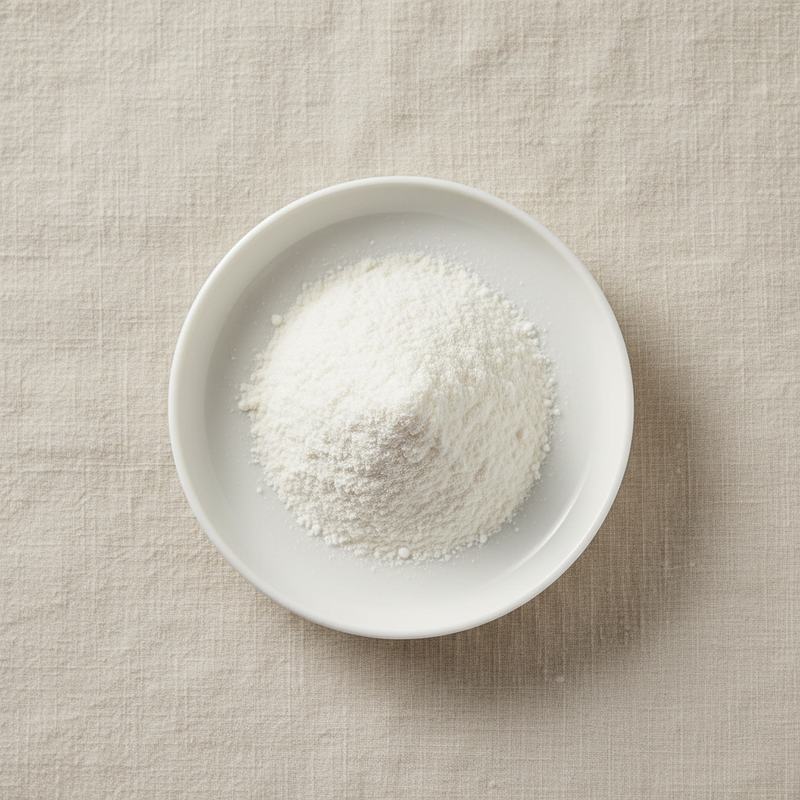
The fine-mesh particle-size format of Konjac glucomannan, with particles passing 80 to 120 mesh. The standard food-application format, distinguished from coarser Konjac Powder by particle size and from micronized Konjac by being intermediate between the two.
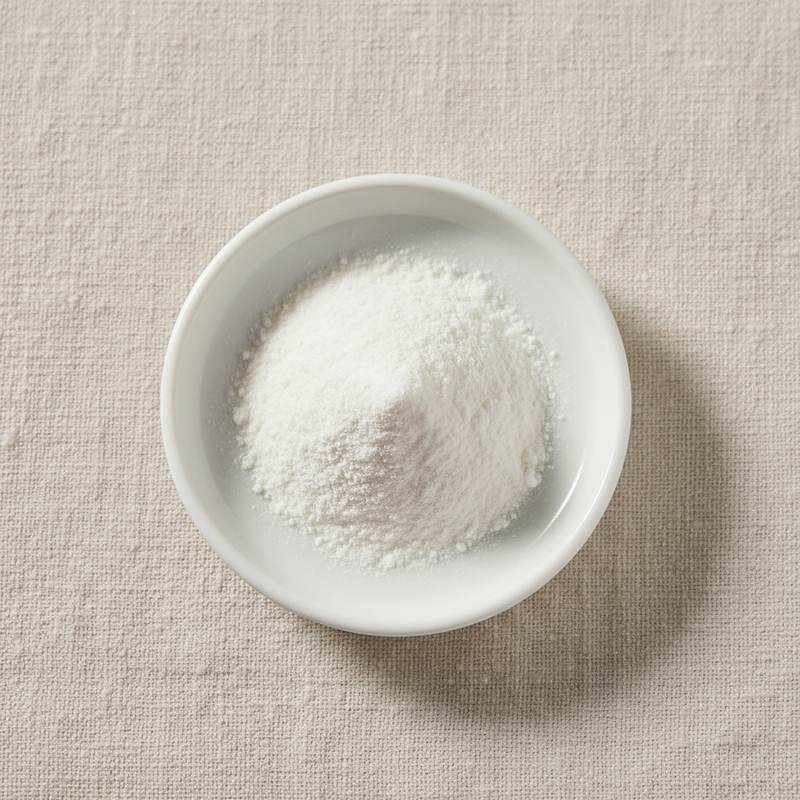
Off-white to cream-colored free-flowing fine powder. The fine-mesh format hydrates faster than coarser Konjac Powder while remaining more economical than micronized grades.
We supply food-grade Konjac Fine Flour from manufacturers in China holding ISO, Halal, Kosher and other certifications relevant to the product and production.
Common market grades include Standard Fine Flour (80 to 120 mesh, the workhorse food-grade format), Premium Fine Flour with tighter glucomannan content tolerances, and pre-blended Fine Flour with synergistic hydrocolloid systems.
Bulk and reduced-MOQ shipments. Batch-level COA covering glucomannan content, viscosity, particle size, sulphur dioxide, heavy metals, and microbiology.
Introduction
This SKU is the standard fine-mesh format of Konjac glucomannan powder, distinct from coarser Konjac Powder (id 26159) by particle size and from micronized Konjac (id 26158) by being one step coarser.
Production follows the standard Konjac process: milling and washing of dried Konjac corms, alcohol-based purification, drying, and final milling to the target particle size. The fine flour format is achieved by mid-stage milling with 80 to 120 mesh classification screens.
Regulatory status follows that of standard Konjac (E425 in the EU, GRAS in the U.S., JECFA-approved without ADI limit), with the same restrictions on jelly mini-cup applications.
The molecule's functional behavior matches standard Konjac across all applications. The differentiator is hydration kinetics and finished-product texture: the fine-mesh format produces smoother finished products and hydrates faster than coarser Konjac Powder grades.
Strategic positioning serves the bulk of standard Konjac food applications globally. Most mass-market konjac noodles, konjac jelly, and Asian Konjac dessert products use this fine-flour format as the workhorse grade.
Where it is used
- Konjac noodle production: shirataki, ito-konnyaku, and Asian noodle applications
- Konjac jelly and konjac dessert products
- Vegan meat alternatives: plant-based burger and sausage formulations
- Bakery applications: gluten-free baked goods and fiber fortification
- Functional beverages and shake mixes
- Sugar-free confectionery
- Cosmetic facial mask formulations
- Pet food fiber and texture applications
Technical data
| Item | Specification |
|---|---|
| Appearance | Off-white to cream-colored free-flowing fine powder |
| Glucomannan content | ≥ 90% |
| Viscosity (1% solution) | 26000 to 36000 cP |
| Particle size | 80 to 120 mesh |
| Sulphur dioxide | ≤ 900 mg/kg |
| Loss on drying | ≤ 12.0% |
| Ash | ≤ 5.5% |
| Heavy metals (as Pb) | ≤ 5 mg/kg |
Related ingredients
Ready to discuss business?
Send us your spec and requirement. We will respond with availability and pricing within 24 hours.