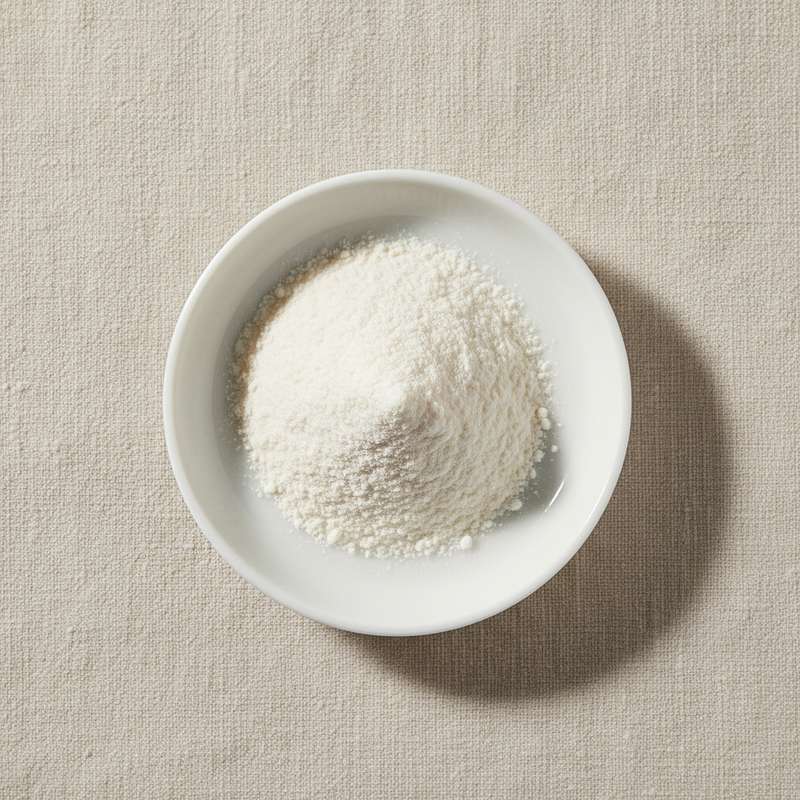
Description
The monoester of glycerol and stearic acid, one of the most widely used food emulsifiers globally. Functions as an oil-in-water emulsifier, starch-complexing crumb softener, fat-crystal modifier, and texture stabilizer across bakery, dairy, and confectionery applications.
White to off-white waxy flakes, beads, or powder. Standard commercial grade is approximately 40 percent monoester. Distilled grades concentrate the monoester to 90 percent or higher and are sold under separate specification.
We supply food-grade Glycerol Monostearate from manufacturers in China holding ISO, Halal, Kosher and other certifications relevant to the product and production.
Common market grades include 40 percent monoglyceride for general emulsification, self-emulsifying variants with added sodium stearoyl lactylate or polysorbate for direct hydration in cold water, and powder formats for dry pre-mix incorporation.
Bulk and reduced-MOQ shipments. Batch-level COA covering monoglyceride content, free glycerol, acid value, heavy metals, and microbiology.
Introduction
Monoglycerides emerged as the first commercial food emulsifiers in the United States during the 1930s and remain the dominant emulsifier class by global volume across food and feed applications.
Industrial production proceeds by glycerolysis of edible fats and oils, in which fully refined fat is reacted with food-grade glycerin under alkaline catalysis at elevated temperature. The resulting mixture contains roughly 40 to 50 percent monoester, 40 to 50 percent diester, and small amounts of triglyceride and free glycerol. Molecular distillation under high vacuum upgrades the standard grade to 90 percent or higher monoester content.
Regulated as E471 in the EU under Commission Regulation 1333/2008, classified as Generally Recognized as Safe by the U.S. FDA under 21 CFR 184.1505, and approved by JECFA without a numerical Acceptable Daily Intake limit.
The bakery functional mechanism is starch complexation. The stearate chain inserts into the helical interior of amylose during gelatinization, forming an inclusion complex that resists retrogradation. The practical consequence is delayed staling, longer-lasting crumb softness, and improved freeze-thaw stability of frozen baked goods.
Strategic positioning places standard 40 percent GMS as the lowest-cost, broadest-utility emulsifier in food manufacturing. Distilled monoglyceride competes where higher activity per unit weight justifies the price premium, typically in premium ice cream, low-fat margarine, and high-volume bread.
Where it is used
- Crumb softening and anti-staling action in bread, buns, and rolls
- Aeration and crumb structure in cake batters, sponges, and pound cakes
- Fat distribution and overrun control in ice cream and frozen desserts
- Emulsification in margarine, shortening, and fat-based spreads
- Crystal modification and bloom retardation in chocolate and confectionery coatings
- Starch complexing in pasta, noodles, and instant rice products
- Foam stabilization in whipped toppings and aerated desserts
- Texture and machinability in chewing gum bases and candy
Technical data
| Item | Specification |
|---|---|
| Appearance | White to off-white waxy flakes, beads, or powder |
| Monoglyceride content | ≥ 40.0% |
| Free glycerol | ≤ 7.0% |
| Acid value | ≤ 5.0 mg KOH/g |
| Iodine value | ≤ 3.0 g I2/100 g |
| Melting point | 58 °C to 65 °C |
| Heavy metals (as Pb) | ≤ 2 mg/kg |
| Arsenic | ≤ 2 mg/kg |
| Lead | ≤ 2 mg/kg |
| Particle size | Flakes, beads, or powder per customer specification |
Related ingredients
Ready to discuss business?
Send us your spec and requirement. We will respond with availability and pricing within 24 hours.