Description
Glucoamylase (amyloglucosidase) is an exo-acting carbohydrase that hydrolyses both alpha-1,4 and alpha-1,6 glucosidic bonds from the non-reducing ends of starch and dextrin chains, releasing free glucose. It is the saccharification enzyme that converts liquefied starch to dextrose syrup.
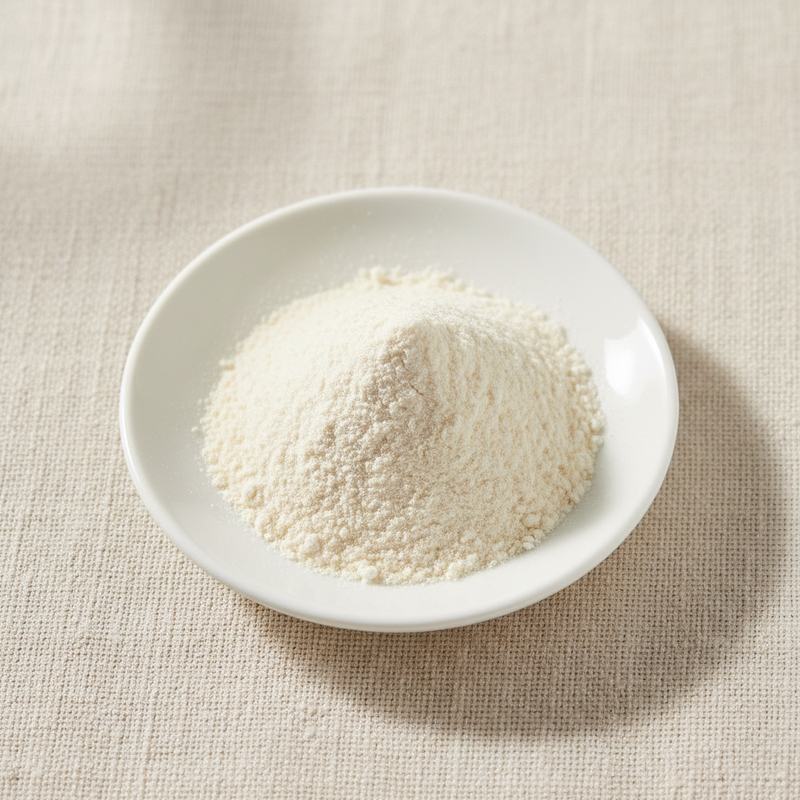
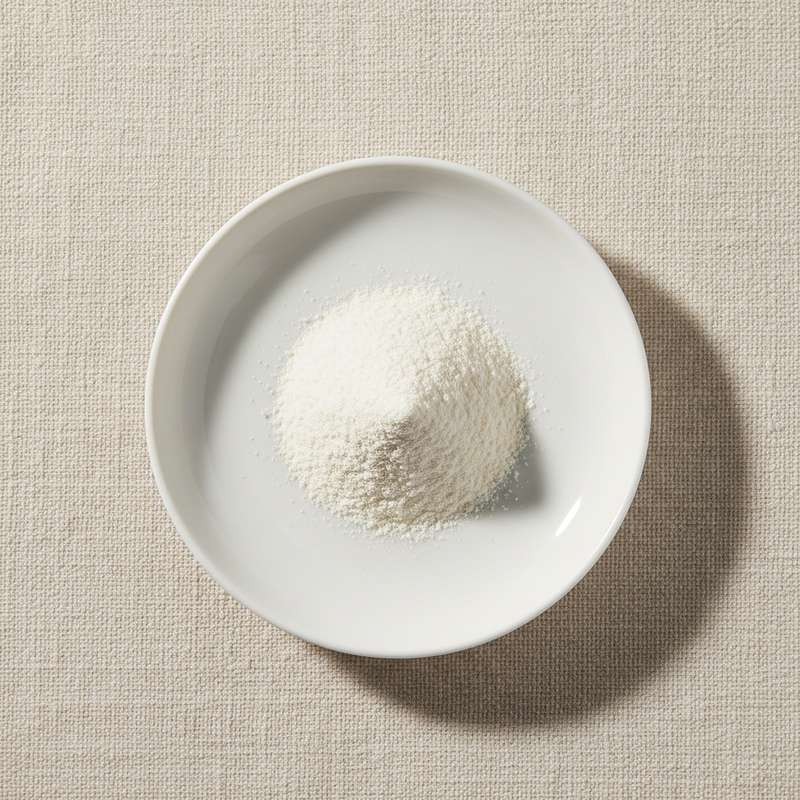
Dark brown to amber liquid, or off-white powder for blended dosing. Activity is standardised in Amyloglucosidase Units (AGU) or Glucoamylase Units depending on supplier convention.
We supply food-grade Glucoamylase from manufacturers in China holding ISO 22000, Halal, Kosher and other certifications relevant to the product and production. Aspergillus niger is the dominant source organism, with Rhizopus oryzae preparations available for distillery and clean-label applications.
Common market grades include 100,000 AGU/g standard saccharification grade, 200,000 AGU/g concentrated for low-volume dosing, 260,000 AGU/g premium high-purity grade, and acid-fungal blends combined with pullulanase for dextrose equivalents above 96.
Bulk and reduced-MOQ shipments. Batch-level COA covering activity, pH optimum, temperature optimum, transglucosidase side activity, heavy metals and microbiology.
Introduction
Glucoamylase was characterised industrially in the 1950s and 1960s as the Japanese sake industry refined koji-mould fermentation processes. Commercial-scale enzyme production from Aspergillus niger reached maturity in the 1970s and underpinned the rapid global growth of the high-fructose corn syrup industry.
Industrial production is by submerged fermentation of selected Aspergillus niger strains, with downstream filtration, concentration and stabilisation in either liquid or spray-dried powder form. Rhizopus oryzae is used in some Asian distillery and traditional fermentation contexts where the koji-style flavour profile is valued.
The enzyme is Generally Recognized as Safe by the U.S. FDA from approved Aspergillus niger strains, listed in the JECFA enzyme compendium, and approved as a processing aid under EU Regulation 1332/2008. No Acceptable Daily Intake is assigned.
Mechanistically, glucoamylase removes single glucose units from the non-reducing chain end and can hydrolyse the alpha-1,6 branch points that beta-amylase cannot cross, although more slowly than alpha-1,4 bonds. Combined with a dedicated debranching enzyme such as pullulanase, glucoamylase achieves dextrose equivalents above 97 with minimal residual oligosaccharides.
The strategic position of glucoamylase in industrial food processing is foundational: it is the enzyme that turns starch into glucose, the substrate for every subsequent sweetener industry segment from HFCS to crystalline dextrose to fermentation feedstocks. The HFCS, distilling and bioethanol industries are built on glucoamylase economics.
Where it is used
- Saccharification of liquefied starch to dextrose syrup (DE 95 to 98); the dominant enzyme step in HFCS, glucose and dextrose monohydrate production
- Alcohol fermentation in distilleries; converts dextrins to fermentable glucose for yeast
- Beer brewing of light and low-carbohydrate beers; eliminates residual dextrins
- Crystalline dextrose monohydrate and anhydrous dextrose manufacture
- Vinegar production; supports complete starch-to-glucose conversion
- Bioethanol fermentation feedstock; widely used as a food-grade enzyme also serving fuel ethanol
- Bakery dough conditioning where glucose generation is required for accelerated fermentation
- Sake and Asian rice-wine fermentation
Technical data
| Item | Specification |
|---|---|
| Appearance | Dark brown to amber liquid or off-white powder |
| Activity (liquid) | 100,000 to 260,000 AGU/g or per customer specification |
| Activity (powder) | 50,000 to 150,000 AGU/g |
| pH optimum | 4.0 to 4.5 |
| Temperature optimum | 58 °C to 65 °C |
| Moisture (powder) | ≤ 8.0% |
| Heavy metals (as Pb) | ≤ 10 mg/kg |
| Arsenic | ≤ 3 mg/kg |
| Total plate count | ≤ 50,000 CFU/g |
| Coliforms | ≤ 30 CFU/g |
| Salmonella | Absent in 25 g |
| E. coli | Absent in 25 g |
| Source organism | Aspergillus niger or Rhizopus oryzae |
Related ingredients
Ready to discuss business?
Send us your spec and requirement. We will respond with availability and pricing within 24 hours.