Description
A microbial beta-1,3-glucan polysaccharide produced by aerobic fermentation of Agrobacterium biobar 1. Forms thermo-irreversible gels on heating, the unique property that distinguishes Curdlan from all other commercial hydrocolloids.
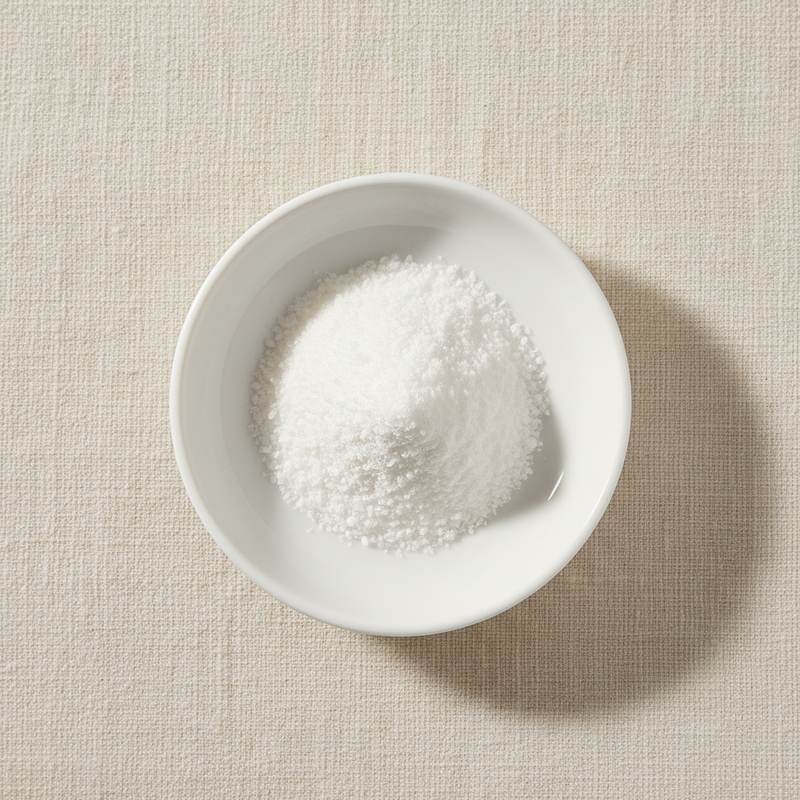
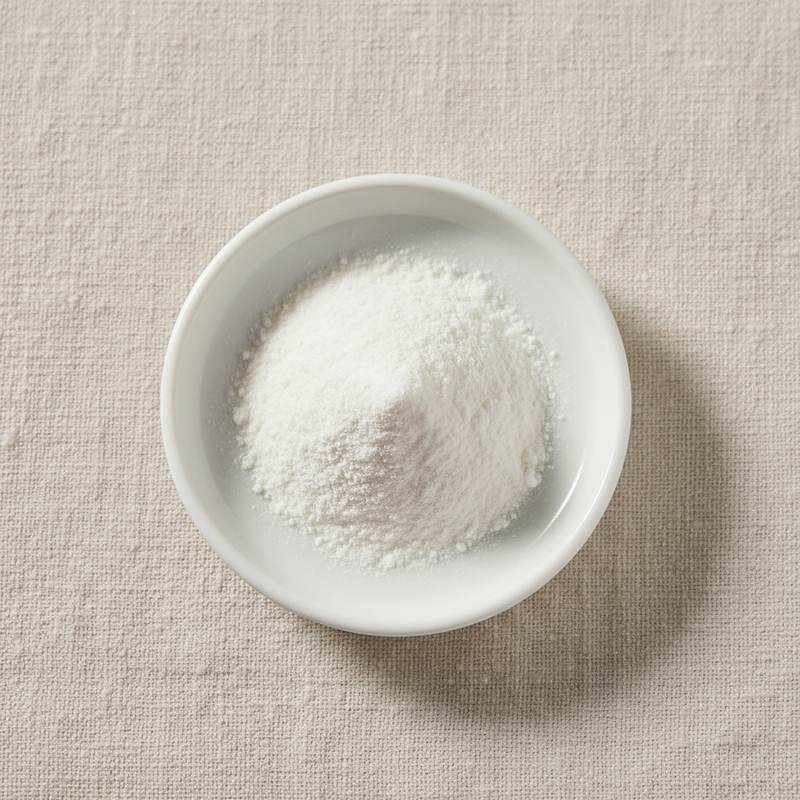
White to off-white free-flowing powder. Insoluble in cold water; suspends in cold water and forms firm gels on heating to 55 °C (low-set) or 80 °C (high-set), with high-set gels being thermo-irreversible.
We supply food-grade Curdlan Gum from manufacturers in China holding ISO, Halal, Kosher and other certifications relevant to the product and production.
Common market grades include Standard Food Grade (the workhorse for noodle and meat applications), High-Purity Pharmaceutical Grade, and pre-blended Curdlan-with-other-hydrocolloid systems for engineered texture profiles.
Bulk and reduced-MOQ shipments. Batch-level COA covering glucose content, gel strength, particle size, heavy metals, and microbiology.
Introduction
Curdlan was discovered in 1966 by Japanese researchers and brought to commercial scale by Takeda Chemical (now Takeda Pharmaceutical) in the 1970s. The compound is a linear beta-1,3-glucan polysaccharide produced by submerged aerobic fermentation of Agrobacterium biobar 1 (formerly classified as Alcaligenes faecalis).
Industrial production proceeds by submerged aerobic fermentation on glucose and inorganic salts, followed by alkaline extraction (the polymer dissolves only in dilute alkali), neutralization, washing, and drying. Modern production yields and purity have improved substantially since the original Takeda process.
Regulated as E424 in the EU (limited applications), classified as Generally Recognized as Safe by the U.S. FDA for specific food applications, and approved by JECFA without a numerical Acceptable Daily Intake limit.
The molecule's defining property is thermo-irreversible gelling: heating a Curdlan suspension to 55 °C produces a soft gel that re-melts on cooling; heating to 80 °C or higher produces a firm gel that does not re-melt at any practical food temperature. No other commercial hydrocolloid shows this thermo-irreversible behavior.
Strategic positioning targets the Asian noodle, restructured-meat, and plant-based-meat segments specifically, where the thermo-irreversible gel survives cooking, retort sterilization, and reheating without softening. This makes Curdlan the preferred hydrocolloid for products that must hold structure through multiple heat treatments, where alginate, agar, and carrageenan would all soften or melt.
Where it is used
- Asian noodle products: ramen, instant noodles, and Chinese noodle varieties; firm bite and cooking-water resistance
- Restructured fish products: imitation crab sticks, fish balls, and fish sausage
- Restructured meat products: ham, sausage, and meatball binding
- Plant-based meat alternatives: vegan burgers and meat-analog structural components
- Frozen dim sum, dumplings, and Asian frozen prepared foods
- Tofu products: silken tofu and pressed tofu specialty applications
- Asian dessert applications: traditional jellies and steamed cakes
- Pharmaceutical and biotech applications: drug-delivery matrices and immunomodulator formulations
Technical data
| Item | Specification |
|---|---|
| Appearance | White to off-white free-flowing powder |
| Beta-1,3-glucan content (dry basis) | ≥ 80.0% |
| Loss on drying | ≤ 10.0% |
| Ash | ≤ 6.0% |
| Nitrogen content | ≤ 1.5% |
| Heavy metals (as Pb) | ≤ 5 mg/kg |
| Arsenic | ≤ 3 mg/kg |
| Particle size | ≥ 95% through 200 mesh |
| Total plate count | ≤ 5000 cfu/g |
Related ingredients
Ready to discuss business?
Send us your spec and requirement. We will respond with availability and pricing within 24 hours.