Description
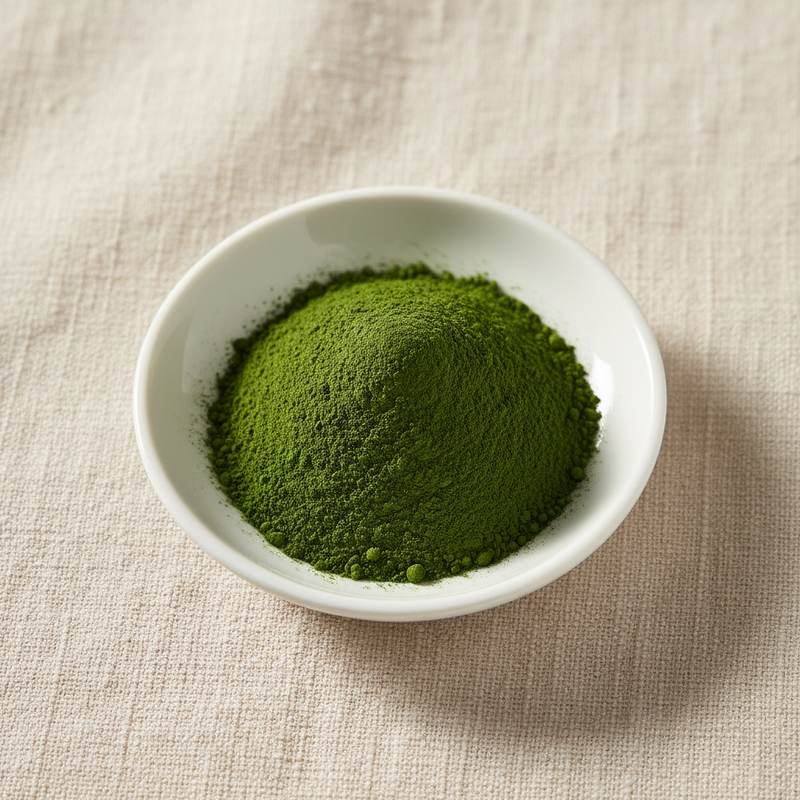
The whole-cell dried powder of Chlorella (Chlorella vulgaris or Chlorella pyrenoidosa), a freshwater unicellular green microalga with approximately 60 percent crude protein content along with chlorophyll, beta-glucan, lutein, and a complete profile of vitamins and minerals. The dominant superfood algae alongside Spirulina globally.
Dark green free-flowing powder with characteristic mild algal odor. The cell-wall-broken format (cracked-cell or ruptured-cell Chlorella) substantially improves digestibility and nutrient bioavailability versus intact-cell material.
We supply food-grade Chlorella from manufacturers in China holding ISO, Halal, Kosher and other certifications relevant to the product and production. Organic-certified and Non-GMO grades are available.
Common market grades include Standard Chlorella Powder (intact-cell, the commodity grade), Cell-Wall-Broken Chlorella Powder (the supplement workhorse grade), Organic Cell-Wall-Broken Chlorella, and Tablet-Compressed Chlorella (the finished-supplement format).
Bulk and reduced-MOQ shipments. Batch-level COA covering crude protein, chlorophyll, cell-wall-breakage ratio, heavy metals (with particular emphasis on lead and cadmium given the algal feedstock), microcystin testing where applicable, and microbiology.
Introduction
Chlorella was identified in 1890 by Dutch microbiologist Martinus Beijerinck and became a focus of intensive food-application research in mid-20th-century Japan, Taiwan, and Germany as a candidate single-cell protein for the projected post-war global food gap. The algae has remained a premium dietary supplement category in East Asia since the 1960s, with growing Western uptake since the 2000s.
Industrial production proceeds by photoautotrophic cultivation of Chlorella in outdoor open ponds, tubular photobioreactors, or fermentation-style heterotrophic culture, followed by harvest, washing, cell-wall-breakage processing (where applicable), and spray-drying. Cell-wall-breakage uses mechanical processing to disrupt the thick cellulose-glucan-rich cell wall and improve digestibility.
Recognized as a permitted food ingredient by the U.S. FDA (GRAS), the European Food Safety Authority (with Chlorella vulgaris listed in the Novel Food catalog as not requiring authorization), and equivalent regulators worldwide. Other Chlorella species require Novel Food authorization in the EU.
Strategic positioning targets premium dietary supplement and superfood applications globally, with Japan, Korea, and Taiwan remaining the highest-value per-capita consumption markets and growing demand in U.S. and European clean-label supplement segments.
Where it is used
- Premium dietary supplements: whole-food and superfood-positioned formulations (the dominant commercial application)
- Detoxification-positioned supplement formulations (heavy-metal binding claims)
- Combination superfood supplements with Spirulina, Wheatgrass, and Barley Grass
- Functional beverages: green superfood smoothies and wellness shots
- Plant-based protein supplements and meal-replacement products
- Cosmetic skincare: antioxidant and detoxifying formulations
- Sustainable food applications: alternative protein development and aquafeed
- Premium pet food: superfood pet formulations
Technical data
| Item | Specification |
|---|---|
| Appearance | Dark green free-flowing powder |
| Crude protein | ≥ 55% |
| Chlorophyll | ≥ 2% |
| Cell-wall-breakage ratio | ≥ 95% (cell-wall-broken grade) |
| Loss on drying | ≤ 6.0% |
| Lead | ≤ 1 mg/kg |
| Cadmium | ≤ 1 mg/kg |
| Source | Chlorella vulgaris or Chlorella pyrenoidosa cultivated biomass |
Related ingredients
Ready to discuss business?
Send us your spec and requirement. We will respond with availability and pricing within 24 hours.