Description
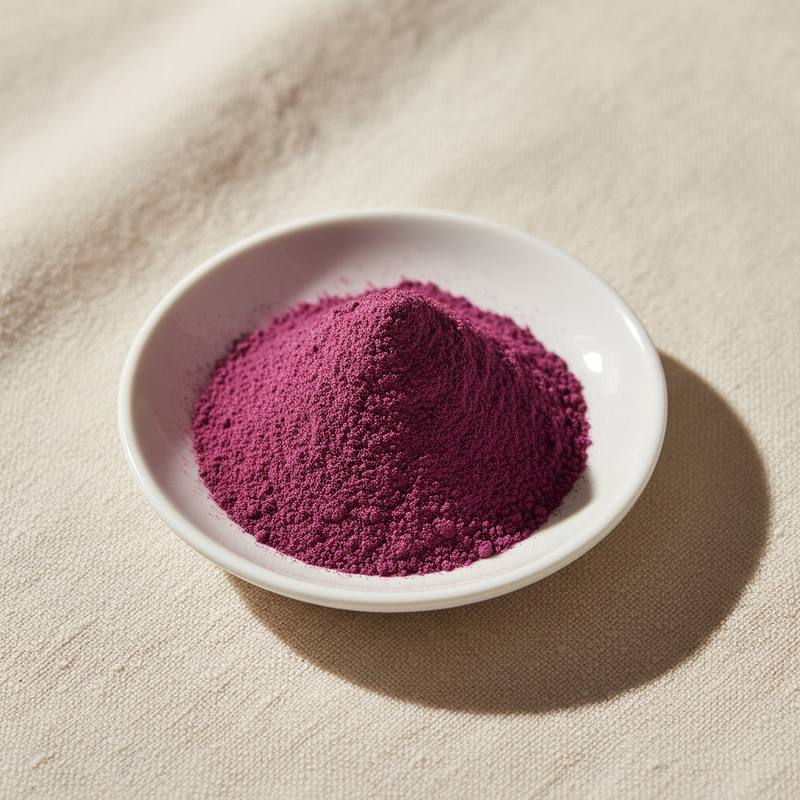
The standardized extract of European bilberry (Vaccinium myrtillus) fruit, valued for its anthocyanidin content of typically 25 percent (the long-established Bilberry 25 percent Anthocyanidins specification). The dominant evidence-supported botanical for eye-health and microcirculation supplement applications.
Dark purple to violet-black free-flowing powder. Highly water-soluble; produces a deep red to purple solution.
We supply food-grade Bilberry Anthocyanins from manufacturers in China holding ISO, Halal, Kosher and other certifications relevant to the product and production.
Common market grades include 5 percent Anthocyanins (cost-effective baseline), 10 percent Anthocyanins (mid-range), 25 percent Anthocyanidins (the clinical-research standardization, the dominant premium grade), and 36 percent Anthocyanins (high-end concentrated grade).
Bulk and reduced-MOQ shipments. Batch-level COA covering anthocyanin and anthocyanidin content (UV and HPLC), source identity verification (commercially important due to occasional substitution with cheaper berry sources), residual solvents, heavy metals, pesticides, and microbiology.
Introduction
Bilberry has been used in traditional European medicine for centuries for vision and circulatory complaints. Modern interest accelerated after World War II reports that Royal Air Force pilots consumed bilberry preserves to improve night vision, prompting decades of pharmacological investigation into the fruit's anthocyanin content.
Industrial production proceeds by hydroalcoholic extraction of dried bilberry fruit, followed by chromatographic enrichment and standardization to 25 percent anthocyanidins (the pharmacopoeial specification used in most clinical trials).
Recognized as a permitted food ingredient by the U.S. FDA, the European Food Safety Authority, and equivalent regulators worldwide. Listed in the European Pharmacopoeia (Myrtilli fructus siccus extractum siccum raffinatum et normatum).
Identity testing is commercially critical. The high price of authentic bilberry relative to other anthocyanin sources (black soybean hull, black rice, mulberry) creates economic pressure for adulteration. Reputable suppliers provide HPLC fingerprint testing against the characteristic 15-anthocyanin profile of authentic Vaccinium myrtillus.
Strategic positioning targets the established eye-health supplement category and the growing microcirculation and vascular-support segments.
Where it is used
- Eye-health dietary supplements: the dominant commercial application worldwide
- Microcirculation and vascular-support supplement formulations
- Cosmetic skincare: antioxidant and microcirculation-supporting formulations
- Premium functional beverages with vision-health positioning
- Pharmaceutical applications: vasculoprotective medications in European markets
- Sports nutrition: vision and visual-acuity positioning for esports and shooting sports
- Senior-health supplements with macular and night-vision claims
- Veterinary applications for ocular and vascular support
Technical data
| Item | Specification |
|---|---|
| Appearance | Dark purple to violet-black free-flowing powder |
| Anthocyanidins (UV) | 25% (pharmacopoeial grade) |
| Anthocyanins (HPLC) | 36% (high-end grade) |
| Particle size | 100% through 80 mesh |
| Loss on drying | ≤ 5.0% |
| Heavy metals (as Pb) | ≤ 2 mg/kg |
| Total plate count | ≤ 1000 cfu/g |
| Source | Vaccinium myrtillus fruit (HPLC-fingerprint verified) |
Related ingredients
Ready to discuss business?
Send us your spec and requirement. We will respond with availability and pricing within 24 hours.