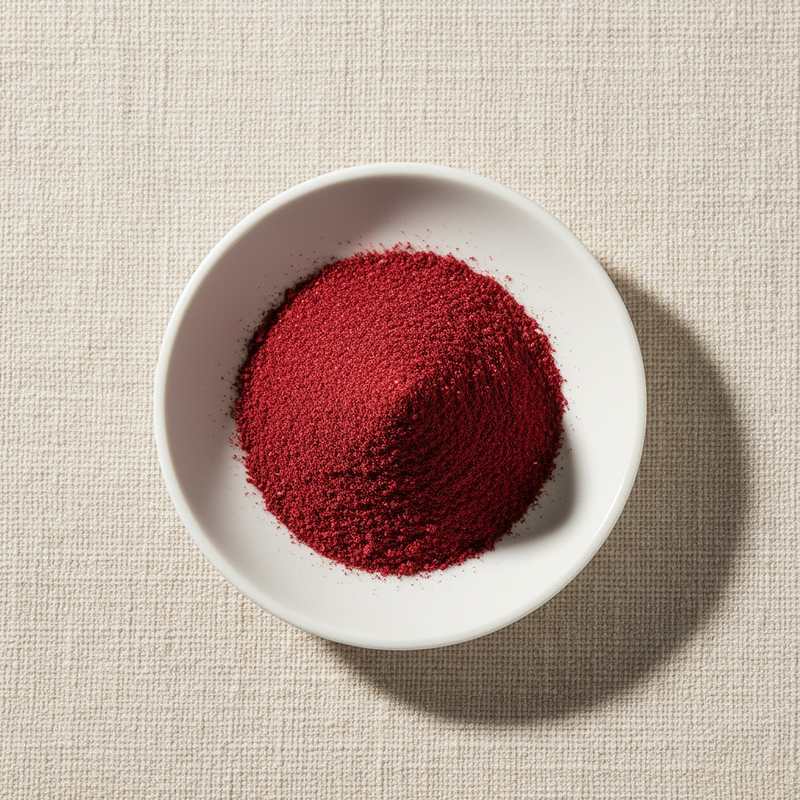
Description
A high-potency carotenoid antioxidant supplied as the synthetic form for cost-sensitive aquaculture pigmentation and feed applications. Distinct from natural Haematococcus pluvialis astaxanthin in source and stereoisomer profile, with effectively equivalent pigmentation and antioxidant function in aquaculture and feed use.
Dark red to violet-red crystalline powder, or as a 10 percent beadlet for ease of feed-pellet incorporation. Oil-soluble; essentially insoluble in water. Light-sensitive and oxygen-sensitive; supplied with antioxidant carrier and protective packaging.
We supply feed-grade Synthetic Astaxanthin from manufacturers in China holding ISO and other certifications relevant to the product and production.
Common market grades include 10 percent beadlet (the dominant aquaculture feed grade, supplied as a stabilized formulation for premix incorporation), Crystal Powder (pharmaceutical and research applications), and Oil Suspension (specialty feed and supplement applications).
Bulk and reduced-MOQ shipments. Batch-level COA covering astaxanthin content (HPLC), stereoisomer profile, total carotenoids, residual solvents, heavy metals, and microbiology.
Introduction
Astaxanthin is a keto-carotenoid pigment that occurs naturally in salmon, trout, shrimp, krill, and the microalga Haematococcus pluvialis. The molecule provides the pink-to-red coloration of these species and serves as a potent antioxidant in their lipid metabolism.
Industrial production of synthetic Astaxanthin proceeds by total chemical synthesis from C15 phosphonium salt intermediates by the Wittig reaction, producing a racemic mixture of the three stereoisomers (3S,3S-prime, 3R,3R-prime, and 3S,3R-prime meso form) at roughly 1:1:2 ratio. The synthetic stereoisomer profile differs from natural Haematococcus-derived Astaxanthin, which is predominantly the 3S,3S-prime form, but for pigmentation purposes the difference is negligible.
Regulated for animal feed use in essentially all major markets, with maximum permitted levels in salmonid feed typically 100 mg per kg of feed. Approved by JECFA for animal feed applications. The synthetic form is not generally approved for direct human food use in most jurisdictions; the natural Haematococcus form is the preferred source for human dietary supplements.
The molecule's antioxidant mechanism involves singlet-oxygen quenching, radical scavenging through the conjugated polyene chain, and reduction of lipid peroxidation. Astaxanthin's antioxidant capacity in standard assays exceeds beta-carotene, lutein, and zeaxanthin in lipid systems.
Strategic position is dominant in industrial salmonid aquaculture. Volume is large (global synthetic Astaxanthin market is several thousand metric tons annually) and the application is essentially captive to the salmon-farming industry, where consumer expectation of pink-orange flesh color is a non-negotiable product attribute.
Where it is used
- Salmonid aquaculture: salmon and trout pigmentation; the dominant industrial color source for farmed salmon globally
- Shrimp and crustacean aquaculture: pigmentation and antioxidant function
- Poultry feed for egg yolk and skin pigmentation
- Ornamental fish feed pigmentation
- Animal feed antioxidant in high-value species
- Cosmetic and personal-care applications: anti-aging skincare formulations
- Industrial pigmentation applications
Technical data
| Item | Specification |
|---|---|
| Appearance | Dark red to violet-red crystalline powder, or 10% red beadlet |
| Astaxanthin content (HPLC) | ≥ 10% (beadlet) / ≥ 96% (crystal powder) |
| Total carotenoids | ≥ 98% of declared astaxanthin |
| Stereoisomer profile | 3S3S-prime : 3R3R-prime : meso approximately 1:1:2 |
| Loss on drying | ≤ 8.0% |
| Heavy metals (as Pb) | ≤ 10 mg/kg |
| Arsenic | ≤ 3 mg/kg |
| Total plate count | ≤ 1000 cfu/g |
| Particle size (beadlet) | 0.25 mm to 1.0 mm |
Related ingredients
Ready to discuss business?
Send us your spec and requirement. We will respond with availability and pricing within 24 hours.