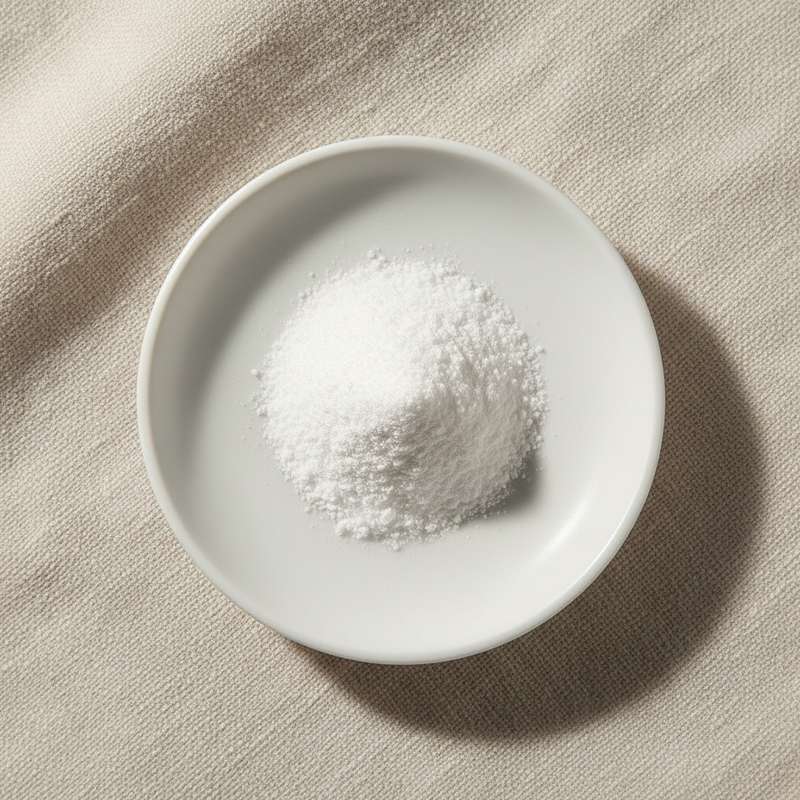
Description
A synthetic lysine analogue originally developed as a pharmaceutical antifibrinolytic, repurposed as a topical brightening active with documented efficacy against melasma, post-inflammatory hyperpigmentation, and persistent facial redness.
White crystalline powder. Fully water-soluble, stable across the cosmetic pH range, and compatible with most actives including niacinamide, vitamin C derivatives, and alpha-arbutin.
We supply cosmetic-grade Tranexamic Acid from manufacturers in China holding ISO 22716, ISO 9001, Halal, Kosher and pharmaceutical-GMP certifications relevant to the product and production.
Common market grades include Cosmetic Grade 99% min and Pharmaceutical Grade USP/EP/JP for crossover use. Most cosmetic supply is the pharmacopoeial-grade material at modest price premium.
Bulk and reduced-MOQ shipments. Batch-level COA covering HPLC purity, related substances, residual solvents, heavy metals, and microbiology.
Introduction
Tranexamic Acid was developed in Japan in the 1960s by Shosuke and Utako Okamoto as a pharmaceutical antifibrinolytic for control of menorrhagia and surgical bleeding. Topical and oral use for melasma emerged in dermatological practice in Japan in the 1980s and gained international traction in the 2010s.
Industrial production is by total chemical synthesis from para-methylbenzonitrile through hydrogenation and hydrolysis, yielding the trans isomer at high purity. The cosmetic supply chain typically uses pharmacopoeial-grade material because the price differential is modest.
Regulatory status is that of a listed cosmetic ingredient in CosIng, the PCPC INCI dictionary, and China IECIC. In Japan, tranexamic acid at 2 percent is a PMDA-approved quasi-drug whitening active and a pharmaceutical-grade anti-inflammatory. Topical concentrations of 2 to 5 percent are typical in cosmetic use.
Clinical evidence is substantial: peer-reviewed double-blind studies at 2 to 5 percent topical concentration show significant improvement in melasma severity scores and post-inflammatory hyperpigmentation over 8 to 12 weeks. Mechanism is inhibition of the plasminogen-plasmin pathway in keratinocytes, which downregulates melanogenesis through reduced melanocyte signaling, and reduction of UV-induced erythema through anti-inflammatory action.
Strategically, tranexamic acid is one of the fastest-growing brightening actives globally, displacing share from arbutin and hydroquinone in dermocosmetic and prestige channels. Demand growth is driven by global interest in melasma treatment and post-inflammatory hyperpigmentation in deeper skin tones.
Where it is used
- Brightening serums and lotions targeting melasma and hyperpigmentation
- Anti-redness and rosacea-adjunct cosmetic products
- Post-procedure recovery products for laser and microneedling
- Spot correctors and concentrated treatments
- Combination formulations with niacinamide and alpha-arbutin
- Sun care and post-sun lotions for sensitive skin
- Premium dermocosmetic brightening lines
- Sheet mask essences targeting uneven tone
Technical data
| Item | Specification |
|---|---|
| Appearance | White crystalline powder |
| INCI Name | Tranexamic Acid |
| Assay (HPLC, dry basis) | ≥ 99.0% |
| Trans isomer | ≥ 99.0% |
| Related substances (each) | ≤ 0.1% |
| Loss on drying | ≤ 0.5% |
| pH (5% solution) | 7.0 to 8.0 |
| Heavy metals (as Pb) | ≤ 10 mg/kg |
| Arsenic | ≤ 2 mg/kg |
| Residue on ignition | ≤ 0.1% |
| Total plate count | ≤ 100 CFU/g |
| E. coli, Salmonella, S. aureus, P. aeruginosa | Negative |
| Source | Synthetic, pharmacopoeial-grade chemistry |
Related ingredients
Ready to discuss business?
Send us your spec and requirement. We will respond with availability and pricing within 24 hours.