Description
The alpha-anomer glucoside of hydroquinone, biosynthetically produced to deliver targeted tyrosinase inhibition with substantially better efficacy and skin compatibility than the natural beta-arbutin found in bearberry leaf.
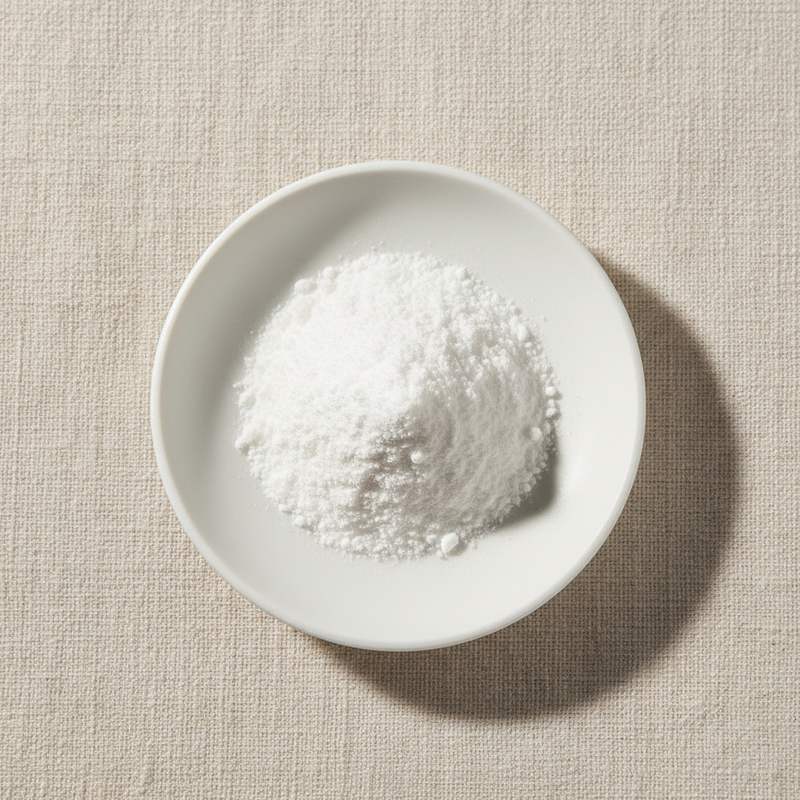
White to off-white crystalline powder. Fully water-soluble, stable across the cosmetic pH range, and compatible with most actives including niacinamide, vitamin C derivatives, and peptides.
We supply cosmetic-grade Alpha-Arbutin from manufacturers in China holding ISO 22716, ISO 9001, Halal and Kosher certifications relevant to the product and production.
Common market grades include Alpha-Arbutin 99% min (HPLC), supplied as fine crystalline powder. Beta-arbutin is also available as a lower-cost natural alternative, though efficacy is several-fold lower at equal dose.
Bulk and reduced-MOQ shipments. Batch-level COA covering HPLC purity, hydroquinone content (strictly controlled), alpha-anomer purity, heavy metals, and microbiology.
Introduction
Alpha-Arbutin was developed by Pentapharm (now DSM) in Switzerland in the 1990s as a synthetic alpha-anomer counterpart to the naturally occurring beta-arbutin extracted from bearberry, blueberry, and pear leaves.
Industrial production is by enzymatic synthesis using sucrose phosphorylase or alpha-glucosidase to couple alpha-D-glucose to hydroquinone in stereoselective fashion, followed by chromatographic purification to remove unreacted hydroquinone and the beta-anomer.
Regulatory status is that of a listed cosmetic ingredient in CosIng, the PCPC INCI dictionary, and China IECIC. The EU SCCS reviewed alpha-arbutin in 2015 and 2022 and considered concentrations up to 2 percent in face creams and 0.5 percent in body lotions safe. Free hydroquinone is the principal impurity of regulatory concern and is strictly controlled at the ppm level.
Clinical evidence: alpha-arbutin shows tyrosinase inhibition approximately 10 times stronger than beta-arbutin in in vitro assays. Human clinical work at 2 percent over 8 to 12 weeks demonstrates statistically significant reduction in melanin index and hyperpigmentation appearance, with a favorable tolerability profile compared with hydroquinone or kojic acid.
Strategically, alpha-arbutin is the premium brightening active in the global cosmetic market, positioned above natural beta-arbutin and below physician-channel hydroquinone. Demand is concentrated in East Asia and growing rapidly in South Asia and the Middle East.
Where it is used
- Brightening serums and lotions positioned around dark spots and hyperpigmentation
- Spot-treatment products and concentrated correctors
- Post-inflammatory hyperpigmentation products for acne-prone skin
- Anti-aging creams targeting age-related uneven tone
- Combination formulations with niacinamide, vitamin C derivatives, or tranexamic acid
- Sun care formulations and post-sun recovery lotions
- Melasma-positioned products in dermocosmetic channels
- Premium night creams and sleeping masks
Technical data
| Item | Specification |
|---|---|
| Appearance | White to off-white crystalline powder |
| INCI Name | Alpha-Arbutin |
| Assay (HPLC) | ≥ 99.0% |
| Free hydroquinone | ≤ 10 ppm |
| Alpha-anomer ratio | ≥ 99.0% |
| Loss on drying | ≤ 1.0% |
| pH (5% solution) | 5.0 to 7.0 |
| Specific rotation | +180° to +185° |
| Heavy metals (as Pb) | ≤ 10 mg/kg |
| Arsenic | ≤ 2 mg/kg |
| Total plate count | ≤ 100 CFU/g |
| E. coli, Salmonella, S. aureus, P. aeruginosa | Negative |
| Source | Enzymatic synthesis, hydroquinone with alpha-D-glucose |
Related ingredients
Ready to discuss business?
Send us your spec and requirement. We will respond with availability and pricing within 24 hours.